
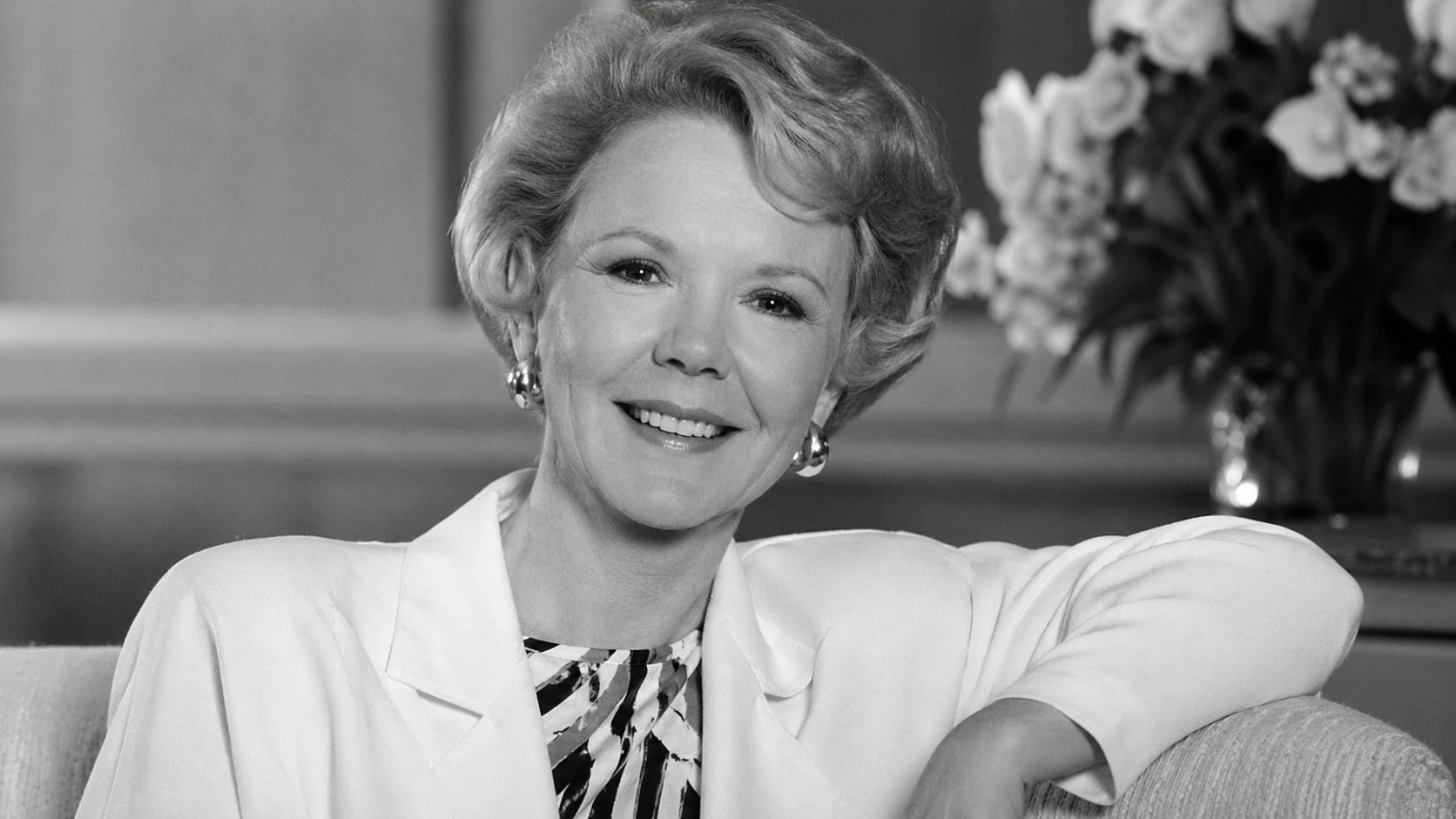
Marilyn Kroc Barg lived close to one of the most famous business stories in modern American life, but she never became a public character in it. As the only child of Ray Kroc, the man who turned McDonald’s into a global fast-food empire, she is often searched for by readers who want to understand the family behind the golden arches. Yet Marilyn’s own life was not lived in boardrooms, memoirs, television interviews, or public philanthropy campaigns. It was quieter, more private, and much harder to reconstruct than the legend surrounding her father.
That contrast is what makes her story interesting. Ray Kroc became a name associated with ambition, franchising, wealth, and American consumer culture. Marilyn Kroc Barg, born Marilyn Janet Kroc, remained largely outside that public glare, even as her family name became one of the most recognizable in business. The result is a biography built less on spectacle than on careful fact, family context, and the limits of what public records can honestly tell us.
Early Life and Family Background
Marilyn Janet Kroc was born in 1924 in Illinois, during a very different chapter of the Kroc family story. Her parents were Raymond Albert Kroc and Ethel Janet Fleming Kroc, Ray’s first wife. At the time of Marilyn’s birth, Ray Kroc was not yet the McDonald’s mogul remembered by business historians. He was still a working salesman and musician trying to build a stable career.
This timing matters because Marilyn did not grow up as the daughter of a fast-food tycoon. She grew up during Ray Kroc’s long period of hustle before fame, when his work included selling paper cups and later restaurant equipment. The McDonald’s opportunity that changed his life would not arrive until 1954, when Marilyn was already an adult. Any account that imagines her childhood inside a McDonald’s fortune gets the chronology wrong.
Her mother, Ethel Fleming, belonged to Ray Kroc’s life before the company made him wealthy. Ethel and Ray’s marriage lasted through the years when he was still searching for the business that would define him. Marilyn was their only child, which made her the direct family link between Kroc’s early domestic life and his later public legacy. She was close to the origin of the Kroc family story, but not to the public image that later surrounded the name.
Growing Up Before McDonald’s
Marilyn’s early years unfolded before Ray Kroc met Richard and Maurice McDonald. That alone separates her from the mythology that now follows the Kroc surname. The McDonald brothers had created a streamlined restaurant operation in California, but Ray Kroc would not encounter their model until decades after Marilyn’s birth. By then, she had already passed through childhood and young adulthood.
The world Marilyn grew up in was far removed from the later corporate culture of McDonald’s. Her father’s career was still defined by sales calls, travel, persistence, and financial uncertainty. Ray Kroc’s later image as a relentless builder did not appear overnight; it came after years of modest jobs and rejected opportunities. Marilyn’s family life was shaped by that earlier reality.
That background helps explain why Marilyn never became a public face of the McDonald’s story. She was not a child raised inside a finished empire, groomed in public as an heir. She was an adult by the time her father entered the restaurant business that made him famous. Her connection to McDonald’s was deeply personal, but public evidence does not show her as a company architect.
Ray Kroc’s Rise and Marilyn’s Place in the Story
Ray Kroc’s business breakthrough came when he visited the McDonald brothers’ restaurant in San Bernardino, California, in 1954. He was selling Multimixer milkshake machines and saw unusual potential in their fast, standardized, high-volume operation. In 1955, he opened a McDonald’s franchise in Des Plaines, Illinois, a location often treated as the symbolic start of the modern McDonald’s corporation. In 1961, he bought out the McDonald brothers’ rights and pushed the brand into a new phase of expansion.
Marilyn was alive for that rise, but she was not the protagonist of it. She would have watched her father become increasingly successful, wealthy, and public during her adult years. Still, the public record does not establish that she held a visible executive role, founded company programs, or became a spokesperson for the brand. The safest account is that she was family, not a documented corporate leader.
That distinction is important because many online summaries blur it. Some suggest that Marilyn helped shape McDonald’s or sat on its board, but those claims are rarely supported by strong public records. A famous surname can tempt writers to fill gaps with assumptions. A responsible biography should resist that temptation and keep Marilyn’s actual record separate from her father’s business achievements.
Marriage and Adult Life
Marilyn’s adult life is most clearly documented through her married name, Marilyn Kroc Barg, and through records that also identify her as Lynn J. Barg. She married James W. Barg, and her death notice later described her as his wife. Public records also associate her with Arlington Heights and Evanston, both in Illinois. These details place her life firmly in the Chicago-area world from which the Kroc family emerged.
Some genealogical sources also connect Marilyn to an earlier marriage to Sylvester Nordly Nelson. That relationship appears in family-history references, though not every detail is easy to verify from widely accessible public documents. This is a common issue with private mid-century lives, especially those recorded through family trees rather than full archival biographies. The most careful wording is that she is publicly documented as James W. Barg’s wife and is also often listed in genealogical sources with an earlier Nelson marriage.
Unlike many relatives of famous business figures, Marilyn did not leave behind a large public record of interviews, social campaigns, or personal statements. That does not mean she lacked a full life. It means her life was not publicly archived in the way her father’s was. For a biography, that requires restraint rather than invention.
Was Marilyn Kroc Barg Involved in McDonald’s?
One of the most common questions about Marilyn Kroc Barg is whether she worked for McDonald’s. The available public evidence does not show her as a major company executive or public operator. McDonald’s official history focuses on the McDonald brothers, Ray Kroc, franchise growth, restaurant design, menu development, and later corporate expansion. Marilyn does not appear as a central figure in that public business timeline.
That does not prove she had no private conversations with her father about his work. Family members often influence business leaders in ways that never appear in annual reports or company histories. But private influence and public corporate responsibility are different things. Without records showing her title, duties, or decisions, it would be misleading to describe her as a McDonald’s executive.
The confusion is understandable because the Kroc name carries weight. Readers often assume that the daughter of Ray Kroc must have played some role in the company or inherited a defined position. But Marilyn’s documented life points in another direction. She appears to have remained a private person whose connection to McDonald’s came through family rather than public leadership.
Philanthropy and the Ronald McDonald House Confusion
Another frequent claim links Marilyn Kroc Barg to Ronald McDonald House charities. This claim should be handled carefully because the chronology does not support the strongest versions of it. The first Ronald McDonald House opened in Philadelphia in 1974, after Marilyn’s death in 1973. That makes it highly unlikely that she founded or led the organization in the way some online profiles suggest.
The Ronald McDonald House origin story is usually connected to Dr. Audrey Evans, the Philadelphia Eagles, Fred Hill’s family, local McDonald’s operators, and community fundraising in Philadelphia. Ray Kroc’s company name became part of that charitable identity, but Marilyn does not appear as a documented founder in the standard account. Her death before the first house opened is a key fact readers should know. It corrects a claim that has been repeated too casually.
Some of the confusion may come from Joan Kroc, Ray Kroc’s third wife, who became a major philanthropist after Ray’s death. Joan Kroc gave enormous sums to charitable causes, including a historic gift to the Salvation Army. Because Joan’s philanthropy is strongly tied to the Kroc fortune, later writers sometimes blur Kroc family members together. Marilyn and Joan were different people, with very different public lives.
Money, Inheritance, and Net Worth
Searches for Marilyn Kroc Barg often include questions about net worth. That is natural, given her father’s wealth and McDonald’s eventual scale. But there is no reliable public basis for assigning Marilyn a precise personal net worth. Online numbers that appear without probate records, financial filings, or trustworthy documentation should be treated as estimates at best and speculation at worst.
The timeline again matters. Marilyn died in 1973, more than a decade before Ray Kroc died in 1984. She was not alive for the final settlement of his estate. The later Kroc fortune is most often discussed through Joan Kroc, who survived Ray and became widely known for large charitable gifts after her death. That does not tell us what Marilyn may have received during her lifetime.
It is fair to say Marilyn likely lived with some degree of family privilege as Ray Kroc became wealthy. It is not fair to attach an exact figure to her name without strong evidence. A biography should explain the financial context without turning uncertainty into a headline. Her importance does not depend on a net worth estimate.
Public Image and Private Reality
Marilyn Kroc Barg’s public image today is mostly a product of search curiosity. She is not remembered because she sought fame, published a memoir, gave interviews, or built a public institution under her own name. She is remembered because readers keep trying to understand Ray Kroc’s family and the human life around the McDonald’s empire. That gives her a strange modern visibility she did not seem to pursue while alive.
The private nature of her life should not be mistaken for insignificance. Many people connected to famous figures remain outside public record, especially women from Marilyn’s generation. Their identities often appear through marriage notices, obituaries, census records, and family trees rather than public speeches or official biographies. Marilyn’s record reflects that pattern.
There is also a dignity in not forcing her life into a role it may not have had. She does not need to be reimagined as a secret corporate strategist or hidden philanthropist to matter. Her story matters because it reminds readers that public empires have private families behind them. Those families are not always neatly preserved in the historical record.
Death and Final Years
Marilyn Kroc Barg died in 1973 at the age of 48. Public records commonly place her death in Arlington Heights, Illinois. Her death notice identified her as Lynn J. Barg, wife of James W. Barg and daughter of Raymond A. Kroc and the late Ethel J. Kroc. It also stated that services were private, which fits the low public profile that marked much of her life.
The cause of her death is often reported online as complications related to diabetes. That claim appears in several modern summaries, but the brief public death notice does not confirm it. Without a death certificate or equally strong source, the most accurate way to phrase it is that diabetes-related complications are often reported but not fully verified in the accessible public notice. That caution matters because medical details deserve a higher standard than repetition.
Her death came before several major chapters in the Kroc family’s public story. Ray Kroc would continue as a powerful figure in McDonald’s history and later become owner of the San Diego Padres. Joan Kroc’s philanthropy would become a defining part of the family’s public memory after Ray’s death. Marilyn did not live to see those later developments reshape the Kroc name.
Why Her Story Is So Often Misreported
Marilyn Kroc Barg is a good example of how thin records can lead to inflated biography. Writers see the Kroc name, recognize the McDonald’s connection, and assume there must be a larger public story. From there, claims about business roles, charity work, wealth, and influence can spread quickly. Once repeated across enough low-quality pages, those claims start to look more solid than they are.
The problem is not that Marilyn’s life lacks value. The problem is that the public record is limited, and limited records require careful writing. A responsible profile should say what is known, identify what is uncertain, and avoid turning family proximity into achievement. That approach may sound less dramatic, but it is more respectful to the person being described.
Readers also bring understandable expectations to the topic. A billionaire founder’s only child sounds like someone who should have a fully documented life, with inheritance details, public appearances, and institutional connections. But real families do not always follow the script of public curiosity. Marilyn’s life appears to have remained mostly private, even as her father’s name became famous around the world.
The Kroc Family Legacy Around Her
To understand Marilyn Kroc Barg, it helps to see the different public roles within the Kroc family. Ray Kroc became the business builder whose name is inseparable from McDonald’s expansion. Ethel Fleming Kroc belongs to the earlier family story, before fame and fortune changed the family’s public standing. Joan Kroc became the philanthropist whose gifts shaped the later moral memory of the fortune.
Marilyn sits between those chapters. She was born into Ray’s early life, witnessed his rise, and died before the fullest public expression of the Kroc fortune. She was neither the originator of the McDonald’s restaurant model nor the widow who distributed vast charitable wealth. Her place is more personal than institutional.
That position can make her easy to overlook, but it also makes her revealing. She reminds us that business history often compresses family life into footnotes. Behind every public founder are marriages, children, losses, and private relationships that do not always survive as detailed records. Marilyn’s story is one of those quieter human fragments.
Frequently Asked Questions
Who was Marilyn Kroc Barg?
Marilyn Kroc Barg was the only child of Ray Kroc and his first wife, Ethel Janet Fleming Kroc. She was born Marilyn Janet Kroc in 1924 and later appeared in public records under her married name, Barg. Her father became famous for expanding McDonald’s into a major fast-food corporation. Marilyn herself remained a private person and did not become a widely documented public figure.
Was Marilyn Kroc Barg Ray Kroc’s only child?
Yes, Marilyn Kroc Barg is widely identified as Ray Kroc’s only child. She was born during his first marriage to Ethel Fleming. Her life began long before Ray Kroc became closely associated with McDonald’s. That timing is central to understanding why she was not raised as the public heir to a completed business empire.
Did Marilyn Kroc Barg work at McDonald’s?
There is no strong public evidence that Marilyn Kroc Barg worked as a major executive or public leader at McDonald’s. Some online profiles make claims about her corporate role, but those claims are not consistently supported by reliable records. Her father’s company history is well documented, while Marilyn’s professional connection to it is not. The most accurate answer is that her link to McDonald’s was primarily through family.
Was Marilyn Kroc Barg involved in Ronald McDonald House?
There is no reliable evidence that Marilyn Kroc Barg founded Ronald McDonald House. The first Ronald McDonald House opened in 1974, after Marilyn died in 1973. The documented origin story centers on Philadelphia medical and community figures, the Philadelphia Eagles, and McDonald’s operators. Claims giving Marilyn a founding role should be treated skeptically.
What was Marilyn Kroc Barg’s net worth?
Marilyn Kroc Barg’s personal net worth is not reliably documented in public sources. Figures that appear online are usually estimates and often lack supporting records. Because she died before Ray Kroc, she was not alive for the final distribution of his estate. It is safer to discuss her as part of a wealthy family context than to assign her a precise fortune.
Did Marilyn Kroc Barg have children?
Publicly accessible information does not clearly confirm that Marilyn Kroc Barg had children. Some family-history materials may contain private or user-submitted details, but the widely cited public death notice does not establish descendants. Because of that, any claim about children should be made only with clear documentary support. The public record remains limited.
How did Marilyn Kroc Barg die?
Marilyn Kroc Barg died in 1973 at the age of 48. Some modern accounts say she died from diabetes-related complications, but the commonly cited public death notice does not state a cause of death. Without a stronger medical or official record, that detail should be treated as reported but not fully confirmed. What is clear is that her services were private and that she died more than ten years before Ray Kroc.
Conclusion
Marilyn Kroc Barg’s life is best understood through contrast. She was born into Ray Kroc’s early, pre-McDonald’s world and lived to see him become one of the most famous business figures in America. Yet she did not become a public figure in the company that made the family name famous. Her biography is quieter than many readers expect.
That quietness has led some writers to overcorrect by adding roles, fortunes, and charitable achievements that the record does not firmly support. The more honest portrait is also the more human one. Marilyn was a daughter, wife, and private individual whose life intersected with a famous business dynasty without being consumed by it. Not every important life leaves behind a full public archive.
Her story still matters because it gives the Kroc legacy a human scale. McDonald’s history is often told through restaurants, contracts, sales systems, and corporate growth. Marilyn’s presence reminds us that behind the business legend was a family, shaped by ambition, change, distance, loss, and privacy. That may not be the grand myth readers expect, but it is closer to the truth.
For anyone searching Marilyn Kroc Barg today, the clearest answer is also the fairest. She was Ray Kroc’s only daughter, a woman whose public record is brief, and a figure whose name deserves accuracy rather than exaggeration. Her place in history is not as a hidden founder of McDonald’s, but as part of the private family story behind one of America’s most public brands.