
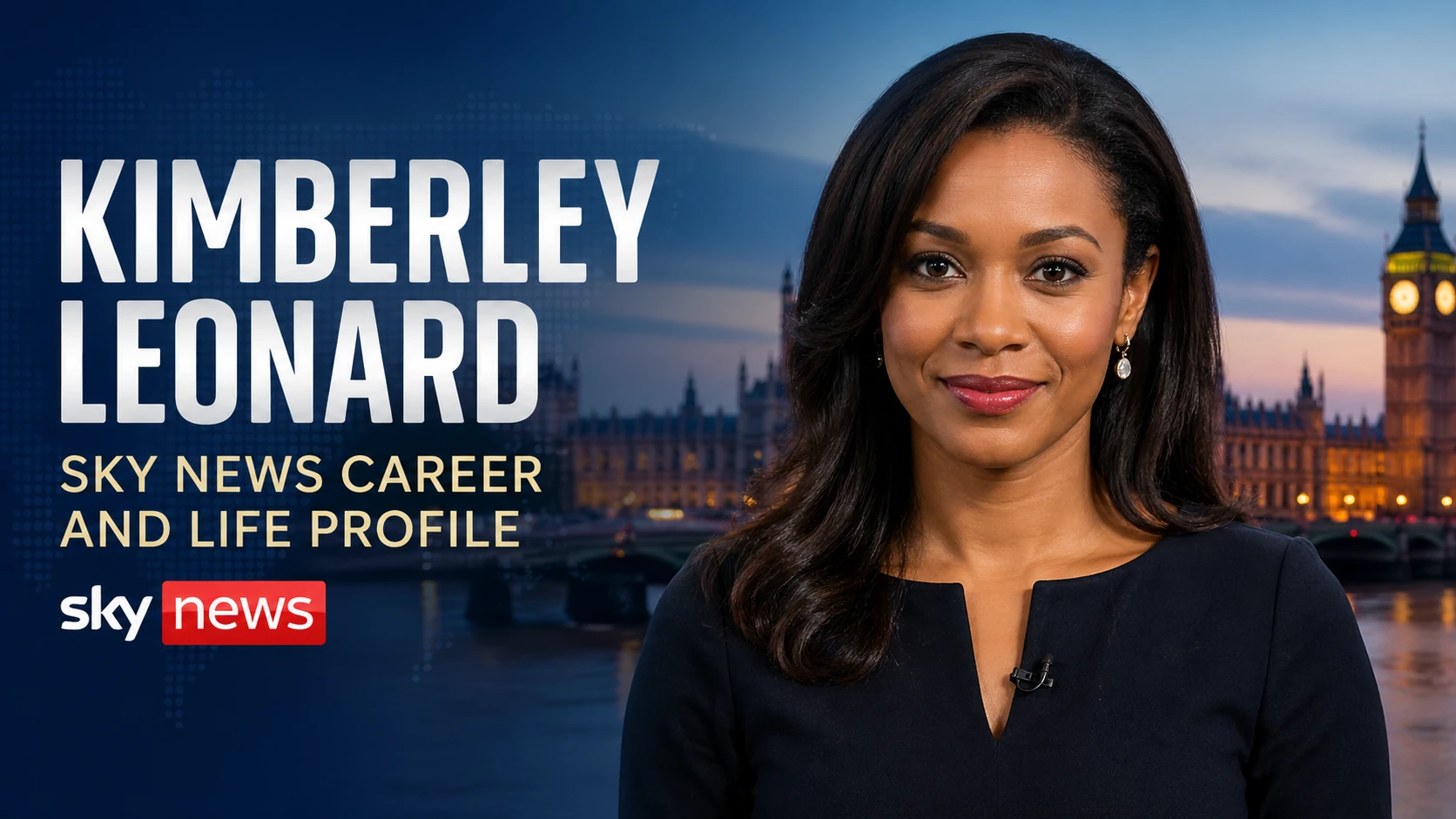
Kimberley Leonard’s final moments on Sky News said a lot about the relationship viewers can form with a television journalist. After seven years on the channel, she signed off in August 2023 with visible emotion, thanking viewers and colleagues as she prepared to leave for what she called a new adventure. It was not a loud exit or a dramatic reinvention, but it was memorable because Leonard had become familiar in the steady way news presenters often do: by being there, hour after hour, during ordinary bulletins and major breaking stories alike.
For many viewers, Leonard is best known as a former Sky News presenter. For others, especially in Kenya and across African media circles, she represents something wider: a Kenyan-born journalist who moved through Nairobi, Dubai, Doha, and London before becoming a recognizable face on British television. Her career is not a celebrity story built on scandal or spectacle. It is the story of a broadcaster who earned trust through preparation, composure, and the ability to explain live events clearly while the facts were still developing.
Early Life and Family Background
Kimberley Leonard is widely described in public profiles as Kenyan-born, though she has kept much of her private family life outside the spotlight. That restraint is part of why reliable information about her childhood, parents, siblings, and early home life is limited. Unlike many public figures who fold family details into their brand, Leonard’s public identity has centered on her work rather than her personal story. That makes it important to separate what is known from what is merely repeated online.
Her Kenyan background still matters to the story of her career. It places the beginning of her broadcasting path outside the traditional British and American media pipeline, and it helps explain why her rise has drawn interest beyond the United Kingdom. She did not emerge from a single national newsroom culture. Instead, her career moved through several media markets, each with different audiences, pressures, and expectations.
There is no strong public record confirming detailed claims about Leonard’s parents, marital status, children, or close relatives. Some websites make private-life claims, but many do not show clear sourcing. A careful biography should not turn those claims into fact simply because search pages repeat them. What can be said with confidence is that Leonard has built a public career while keeping her private life largely private.
Education and First Ambitions
Leonard’s education reflects the international shape of her later career. Public broadcast profiles say she studied at the University of Cape Town and later earned a master’s degree from the University of Westminster in London. Those two institutions point to a journalist trained across African and British academic settings. They also suggest an early seriousness about media, communication, and public life.
The University of Cape Town has long been one of Africa’s most prominent universities, and studying there would have placed Leonard in a highly competitive intellectual environment. The University of Westminster, meanwhile, has a strong media and journalism reputation in London, a city that remains one of the world’s major news centers. For an aspiring broadcaster, that combination offered both regional grounding and access to a global media capital. It is easy to see how those years helped prepare her for the moves that followed.
Public information about Leonard’s first ambitions is limited, but her career choices reveal a clear direction. She entered broadcasting early and did not confine herself to one format. Radio, television news, production, anchoring, and interviewing all became part of her professional development. That range would later become one of her strengths.
Starting Out in Nairobi Radio
Leonard’s first reported media work was in Nairobi radio. Public profiles say she began her career at a major FM station in Kenya’s capital, though the station is not consistently named in reliable public sources. That beginning is significant because radio is one of the best training grounds for a broadcast journalist. It teaches pace, clarity, listening, and the ability to make stories vivid without relying on images.
Radio also sharpens a journalist’s voice in the broader sense. A presenter has to know what matters, what can be left out, and how to carry a listener from one idea to the next without losing them. Those skills may sound simple, but they are central to strong television work as well. Leonard’s later calm on screen likely owed something to those early radio habits.
Nairobi would have offered a lively and demanding start. Kenya has a highly active media culture, with radio playing a major role in public debate, politics, entertainment, and daily information. A young journalist working in that setting would learn quickly that audiences are alert, vocal, and diverse. That kind of training can be unforgiving, but it can also make a broadcaster more adaptable.
Moving Into Television in Dubai
After her early work in Kenya, Leonard moved into television in the Gulf. Public profiles say she worked on Emirates News, the nightly news bulletin on Dubai One. That move took her into a fast-growing international media environment. Dubai’s news audience included local viewers, expatriates, business professionals, and international observers, which required a different kind of presentation style.
Working in Dubai also meant handling a mix of stories that crossed business, culture, diplomacy, travel, and regional affairs. A presenter in that setting cannot assume a single shared background among viewers. The job requires plain language, quick context, and a tone that works for people watching from many different communities. Those demands suited the kind of broadcaster Leonard would become.
The Dubai period also helped position Leonard for wider international work. Moving from Nairobi to Dubai showed that she was willing to leave familiar ground and compete in a larger media market. It also added television production and presentation experience to her radio foundation. By the time she moved on again, her career was already taking on the cross-border shape that later defined it.
The Al Jazeera Years in Doha
Leonard later worked at Al Jazeera in Doha as a broadcast journalist and producer, according to public industry profiles. That role matters because Al Jazeera is one of the most internationally visible news organizations in the world. Even behind the camera, working in such a newsroom requires speed, editorial judgment, and comfort with global stories. For Leonard, it appears to have been another step toward the kind of international broadcasting she would later do in London.
Doha would have placed her inside a newsroom where stories routinely crossed continents. Al Jazeera’s coverage has long focused on international affairs, conflict, politics, and underreported regions. A journalist in that environment learns to think beyond one national audience. That experience likely strengthened Leonard’s ability to move between stories from different parts of the world without sounding detached or underprepared.
Her work as a producer is especially important. Viewers often see only the presenter, but strong anchors usually understand what happens behind the scenes. Producing teaches story selection, script structure, guest planning, editorial risk, and live timing. Leonard’s later on-air confidence was likely helped by knowing the machinery of a newsroom from more than one side.
Joining Sky News
Leonard became best known to British audiences through Sky News, where she worked as a presenter for seven years. Her exact start date is usually placed around 2016, based on reports that she left in August 2023 after seven years at the channel. Sky News is a demanding environment for any presenter because it runs on speed, repetition, breaking updates, and constant editorial adjustment. It rewards people who can stay composed without becoming flat.
Her work at Sky included live presenting, paper reviews, interviews, and discussions around major news stories. She appeared on formats such as the Press Preview, where presenters guide guests through the next day’s newspaper front pages. She also contributed to Sky News Daily conversations, including episodes around major media stories. These formats required not just reading ability but judgment, timing, and careful control of tone.
Leonard’s presence on Sky News was not built around a single viral moment. It was built through the quieter authority of repeated live work. Viewers came to know her as someone who could hold a broadcast together without making herself the center of the story. In rolling news, that is often the mark of a strong presenter.
Her On-Air Style and Strengths
Leonard’s broadcasting style was calm, measured, and direct. She had the kind of screen presence that worked particularly well for live news, where too much personality can become a distraction. Her role required her to be warm enough to connect with viewers but disciplined enough to keep the focus on the facts. That balance is harder than it looks.
Rolling news asks presenters to make decisions in real time. They must explain what is confirmed, avoid repeating claims that have not been checked, bring guests into the discussion, and shift tone as stories develop. Leonard’s years at Sky suggest that editors trusted her with that responsibility. The viewer may only see the polished result, but the job itself is filled with moving parts.
One of the less obvious strengths of a presenter like Leonard is restraint. She did not need to dominate interviews or turn segments into personal performances. Her value came from guiding the broadcast, asking clear questions, and keeping the audience oriented. In an age of louder media personalities, that kind of discipline can feel almost old-fashioned, but it remains essential