
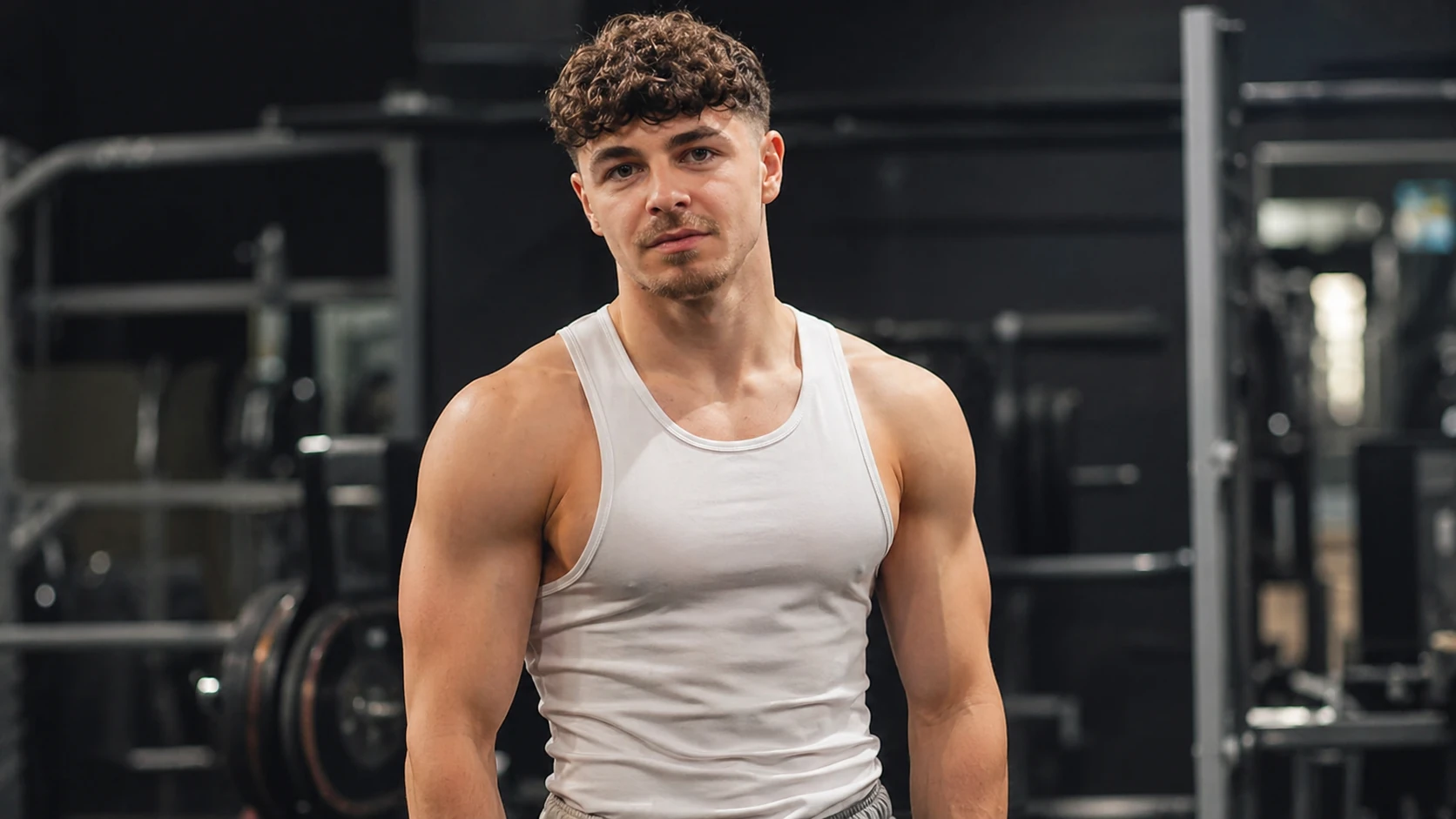
Alfie Buttle belongs to a generation of British creators whose fame was not built through film credits, record labels, or television auditions. It came through clips, gym culture, collaborations, podcasts, YouTube vlogs, and a growing creator economy that can turn a familiar online face into a mainstream name almost overnight. Known widely as AB, Buttle has become part of the UK’s fast-moving digital entertainment scene, where personality, access, humour, and friendship networks matter as much as any formal résumé.
For many people, the name Alfie Buttle first appeared through The Fellas, Sidemen-adjacent content, or the Netflix reality series Inside. For others, he was already familiar as a fitness-led creator whose online presence mixed gym confidence with comic timing and the loose, unfiltered energy of British YouTube culture. His public story is still young, which means some details remain private or only partly documented. But the shape of his career is clear enough: Buttle has moved from social-media recognition into a wider entertainment circle that now includes YouTube, podcasting, brand work, creator events, and streaming television.
Early Life and Family Background
Alfie Noah Buttle was born in August 2003, according to UK public company records. That makes him part of the first generation of British entertainers who came of age entirely inside the social-media era. He did not have to adapt to YouTube, TikTok, Instagram, and streaming platforms as new tools; for people his age, those platforms were already part of daily life, humour, ambition, and friendship.
Publicly available information about Buttle’s family, schooling, and childhood is limited. That absence matters because many online biography pages tend to fill gaps with unsourced details, especially for young creators whose audiences want quick personal facts. A careful biography should not pretend certainty where none exists. What can be said fairly is that Buttle is British, based in the UK creator scene, and has built his public image around fitness, comedy, and collaboration rather than a heavily publicized family backstory.
The privacy around his upbringing also tells us something about the kind of public figure he is. Buttle is known less through traditional press interviews and more through content appearances, videos, social posts, and group formats. That means his biography is not built from the old celebrity archive of magazine profiles and red-carpet quotes. It is built from a newer record: channel uploads, podcast credits, business filings, cast announcements, and the way audiences talk about creators in real time.
Becoming AB
Online, Alfie Buttle is often known simply as AB. The initials suit the creator economy well because they are short, memorable, and easy to carry across platforms. A name like AB can work on YouTube, TikTok, Instagram, Twitch, podcast titles, thumbnails, and merchandise references without needing much explanation. It also gives Buttle a public identity that feels more like a friend’s nickname than a formal stage name.
That casual familiarity has been central to his appeal. Buttle’s content does not depend on a distant celebrity persona. It works because he appears accessible, funny, physically confident, and comfortable inside groups of other creators. In British YouTube culture, that mix can be powerful because audiences often follow not only individual channels but whole friendship circles.
His early visibility was strongly tied to fitness and gym content. That gave him a clear visual identity at a time when many young creators were competing for attention through short-form comedy, reaction clips, and lifestyle posts. Fitness content can be aspirational, but Buttle’s public style has usually been less polished than a traditional fitness model’s brand. He has leaned into humour, physical presence, and social energy, which helped him avoid being boxed in as only a gym influencer.
Fitness, Comedy, and Creator Culture
Fitness helped give Buttle his first clear lane, but comedy helped make him more shareable. That combination is common in the British creator world, where viewers often respond to self-awareness more than perfection. A gym-focused creator who takes himself too seriously can feel distant. Buttle’s appeal has come from appearing confident without losing the ability to laugh at himself or be part of a joke.
This is one reason his career has been able to widen beyond exercise content. The creators who last are usually not just people with one skill or one look. They are people who can be placed into different rooms, formats, and groups while still feeling like themselves. Buttle has shown that kind of flexibility in vlogs, podcast-adjacent appearances, creator-house content, events, and reality entertainment.
The UK creator scene rewards that adaptability. One week, a creator might appear in a gym clip or a challenge video. The next, they may be in a podcast studio, at a football event, on a brand trip, or in a Netflix reality series. Buttle’s rise makes sense inside that system because his public personality travels well across formats.
YouTube and the Move Into Vlogging
Buttle’s YouTube presence under AB has become one of the clearest public records of his career. The channel has featured long-form videos built around travel, events, creator friendships, cars, houses, and behind-the-scenes moments from the digital entertainment world. Those uploads show a creator moving beyond short social clips into a more durable form of audience connection.
Vlogging is a demanding format because it requires more than being funny in isolated moments. It asks a creator to carry a narrative, maintain viewer attention, and make everyday access feel worth watching. For Buttle, the appeal often comes from the company he keeps and the settings he enters. Viewers get the sense of being inside a young, busy, social creator world where work and friendship constantly overlap.
That overlap is part of the modern creator economy’s appeal and its pressure. A vlog can look casual, but it is also a piece of work, a brand asset, and a public record. The people in it are friends, collaborators, competitors, and sometimes business partners. Buttle’s content reflects that new reality, where the line between hanging out and producing entertainment is often hard to see.
The Fellas Connection
One of the most important parts of Buttle’s public profile is his connection to The Fellas, the podcast and creator brand associated with Calfreezy and Chip. The Fellas has become a major name in UK creator podcasting, drawing audiences that follow YouTube personalities, internet culture, sport, relationships, and comedy. Buttle’s association with that world placed him in front of viewers who already understood the language and rhythm of British digital entertainment.
Descriptions of his exact role have varied across platforms. Some current listings present him alongside Calfreezy and Chip, while older or more formal descriptions of The Fellas focus on the original central pairing. That kind of inconsistency is common in creator-led media because shows evolve faster than static websites and platform descriptions. The safe and accurate way to frame it is that Buttle is publicly associated with The Fellas as an on-air creator figure in its current era.
The connection matters because The Fellas is not just a podcast in the old audio-only sense. It is a video-first creator brand, built for clips, YouTube viewing, social sharing, and personality-driven loyalty. For Buttle, that environment offered a wider stage without requiring him to abandon his own identity as AB. It also linked him to a professionalizing creator network at a time when podcasting, YouTube, and streaming entertainment are merging more closely.
Inside and the Netflix Breakthrough
For a wider mainstream audience, Buttle’s most visible moment came through Inside, the Sidemen-backed reality competition that reached Netflix. The show’s format places creators together under pressure, using challenges, social dynamics, prize money, and confinement to generate drama and entertainment. It is a natural fit for people already trained by the internet to perform, react, joke, compete, and build relationships on camera.
Buttle’s appearance in the Inside season 3 cast gave him exposure beyond his existing audience. That kind of platform can change how a creator is perceived because Netflix reaches viewers who may not know the difference between YouTube groups, podcast networks, and TikTok personalities. A name that once circulated mainly inside creator culture can suddenly become searchable to a much broader group of people.
The Inside appearance also placed Buttle inside the larger Sidemen ecosystem, even if he is not a Sidemen member himself. That matters because the Sidemen have become one of Britain’s clearest examples of online creators crossing into mainstream entertainment. Their projects show how YouTube-born talent can sell out stadiums, produce major events, and build formats strong enough for streaming platforms. For Buttle, being connected to that world helped raise his visibility at a key stage in his career.
Public Image and Personality
Buttle’s public image is built around confidence, humour, fitness, and social ease. He often appears as the kind of creator who can enter a room full of bigger names and still hold his own. That ability is valuable because much of creator entertainment depends on chemistry rather than script. Audiences want to feel that the reactions are real, even when the setting is carefully produced.
There is a laddish, gym-adjacent energy to parts of his brand, but reducing him to that would miss the point. The more interesting part of Buttle’s appeal is that he sits between categories. He is not only a fitness figure, not only a podcast personality, not only a YouTuber, and not only a reality contestant. He is a young creator learning how to become recognizable across all of those spaces at once.
That public image also comes with risk. Young creators are expected to be constantly visible, constantly funny, and constantly available for judgment. Mistakes, awkward moments, jokes, and private choices can be clipped and recirculated without much context. Buttle’s career so far shows the advantages of online fame, but it also places him inside a system that can be unforgiving.
Business Ventures and Income Sources
Buttle’s business profile became more formal with the incorporation of ABUTTLE LTD in January 2025. Public company records list Alfie Noah Buttle as a director and identify the company’s activity as video production. That fits the public direction of his work and suggests an effort to structure his creator activity in a more professional way.
A limited company does not reveal a person’s personal wealth. It can be used for invoicing, production work, tax planning, brand deals, rights management, or other business needs connected to media work. In Buttle’s case, it is best understood as evidence that his public-facing creator career has a business side. It should not be treated as proof of any specific income level.
His likely income sources include YouTube revenue, podcast or network-related work, sponsorships, affiliate promotions, brand collaborations, appearances, and broader video production activity. Fitness-linked brand work has also appeared in his public ecosystem, including promotional codes connected to gym and lifestyle products. But without contracts, accounts, or direct statements, no one outside his professional circle can responsibly calculate exact earnings.
Net Worth and Money Claims
Alfie Buttle’s net worth is not publicly confirmed. Many online profiles of young creators publish estimated figures, but those numbers are usually based on guesswork rather than verified financial evidence. They may use follower counts, assumed sponsorship rates, video views, or broad creator-industry averages, but those methods can be badly misleading.
A more honest answer is that Buttle likely earns money from several creator-related streams, but the size of that income is unknown. YouTube advertising revenue can vary widely depending on audience location, watch time, advertiser demand, video length, and monetization status. Brand deals can also differ dramatically, even between creators with similar follower counts. Podcast work, affiliate links, appearances, and business income add further uncertainty.
The public should be especially cautious with precise claims about creator wealth. A young creator may appear to live an expensive lifestyle because of brand access, shared houses, rented locations, gifted products, production budgets, or group travel. None of that automatically equals personal wealth. Until reliable financial records or credible reporting provide more detail, Buttle’s net worth should be described only as unverified.
Relationships and Private Life
Public information about Buttle’s romantic life and close family relationships is limited. That should not be treated as a gap to fill with speculation. Many creators share parts of their daily lives while still keeping family, dating, and private relationships away from the public record. Buttle appears to fall into that category, at least based on the strongest available public information.
This boundary is worth respecting because young internet personalities often face a strange kind of pressure. Audiences may feel close to them through vlogs, podcasts, and social posts, then assume they are entitled to private details. A biography can explain what is known without turning absence into rumor. In Buttle’s case, his public career is far better documented than his family or romantic life.
That does not make him less interesting as a subject. It simply means the focus should stay where the evidence is strongest: his creator work, public appearances, business structure, and role in the UK digital-entertainment scene. If Buttle chooses to speak more publicly about his personal life in the future, that would become part of the record. Until then, caution is the most respectful and accurate approach.
Setbacks, Pressure, and the Creator Economy
There is no major, well-established public controversy that defines Buttle’s career. That said, he works in a space where pressure is built into the job. Creators are expected to produce, appear, collaborate, react, travel, promote, and remain entertaining across platforms that reward speed and punish silence. For a young person, that can be both exciting and exhausting.
The career model itself can be unstable. Algorithms change, audiences move on, sponsorship markets rise and fall, and friendships that drive content can become strained under public attention. A creator who gains visibility through group formats must eventually prove what they can carry alone. Buttle’s YouTube channel and business activity suggest he is already trying to build a public identity that is not only dependent on other people’s platforms.
What’s surprising is how quickly that test arrives for modern creators. In older entertainment industries, young performers often had years of training, agents, auditions, and gradual press attention before becoming widely visible. Online creators can become known first and figure out the long-term structure later. Buttle’s story is part of that shift: fame and professionalization happening at the same time.
Cultural Influence and Industry Standing
Buttle is not yet a legacy figure in British entertainment, and it would be overstated to present him that way. His influence is better understood within a specific but growing cultural lane: young UK creator media. In that space, recognition is built through repeated appearances, inside jokes, audience familiarity, and association with trusted names. Buttle has become visible enough in that world that new viewers now search for his full biography.
His importance also comes from what he represents. He is part of a class of creators who do not need to choose between being a YouTuber, a podcaster, a fitness figure, or a reality contestant. The categories are blending. A creator can move from a podcast clip to a Netflix show to a vlog to a brand campaign, with the same audience following across each stop.
That blended career path is reshaping British popular culture. The Sidemen, The Fellas, and other creator-led groups have shown that online communities can become entertainment institutions in their own right. Buttle is not the architect of that movement, but he is one of the younger figures benefiting from it and helping carry it forward.
Where Alfie Buttle Is Now
As of 2026, Alfie Buttle is best described as a British content creator and rising media personality working across YouTube, podcast-linked entertainment, social platforms, and reality television. His public profile has grown through AB-branded content, The Fellas association, and his appearance in the Inside season 3 orbit. He is also connected to a formal video-production business through ABUTTLE LTD.
The next stage of his career will likely depend on whether he can convert visibility into lasting audience loyalty. Many creators get a burst of attention from a show, a viral clip, or a group appearance. Fewer manage to turn that attention into a long-term personal brand. Buttle’s advantage is that he already has several routes open: long-form YouTube, podcasting, fitness-related partnerships, creator events, and collaborations.
The challenge will be focus. A broad public identity can create opportunity, but it can also make it harder for audiences to explain exactly what someone does. Buttle’s task is not only to stay visible but to define what AB means when he is not surrounded by bigger formats or better-known names. That is the difference between being part of the scene and becoming a lasting figure within it.
Frequently Asked Questions
Who is Alfie Buttle?
Alfie Buttle, also known as AB, is a British content creator associated with fitness content, YouTube vlogging, podcast-led entertainment, and the UK creator scene. He became more widely known through his connection to The Fellas and his appearance in the orbit of Inside, the Sidemen-backed Netflix reality format. His public identity mixes gym culture, comedy, collaboration, and personality-led online entertainment.
How old is Alfie Buttle?
Alfie Buttle was born in August 2003, according to UK public company records. As of April 2026, he is 22 years old and will turn 23 in August 2026. Some online sources may give more specific birthday details, but the month and year are the strongest publicly documented facts.
What is Alfie Buttle famous for?
Alfie Buttle is famous for being a young British creator known online as AB. He is associated with fitness-led social content, YouTube vlogs, The Fellas, and creator collaborations. His profile grew further when he was named in connection with Inside season 3, bringing him to viewers beyond his original online audience.
Is Alfie Buttle part of The Fellas?
Alfie Buttle is publicly associated with The Fellas and has been presented on some platforms alongside Calfreezy and Chip. Descriptions of his exact role vary, because The Fellas brand has evolved over time and not every platform describes the current format in the same way. The most accurate wording is that AB is a current on-air creator figure linked closely with The Fellas.
What is Alfie Buttle’s net worth?
Alfie Buttle’s net worth is not publicly confirmed. He likely earns money through creator-related work such as YouTube, brand partnerships, affiliate promotions, podcast-linked activity, appearances, and video production. Any precise net worth figure should be treated as an estimate unless it is backed by credible financial records or direct reporting.
Does Alfie Buttle have a company?
Yes, public UK company records list Alfie Noah Buttle as a director of ABUTTLE LTD, incorporated in January 2025. The company is connected to video production activities, which matches the public nature of his creator work. A company filing confirms business structure, but it does not reveal personal income or total wealth.
Is Alfie Buttle married or does he have children?
There is no strong public evidence that Alfie Buttle is married or has children. His private life is not as well documented as his creator career, and responsible profiles should avoid guessing about relationships or family matters. Unless he chooses to share those details publicly, they should be treated as private.
Conclusion
Alfie Buttle’s biography is still being written in public. He is young, visible, and moving through a media world that changes quickly. What makes his story interesting is not only who he is now, but how his path shows the new machinery of British fame.
He has built recognition without following the older route of agents, auditions, and traditional celebrity gatekeepers. Instead, he has grown through fitness content, social platforms, creator friendships, podcast culture, and a streaming-era reality format. That path may look informal from the outside, but it is increasingly one of the main ways young entertainers build careers.
The truth is, Buttle’s public record is still incomplete. His private life remains largely private, his finances are not confirmed, and his long-term place in the industry is still taking shape. But the verified picture is already clear enough to matter: Alfie Buttle, known as AB, is one of the young British creators turning online familiarity into something broader.
His next chapter will show whether he becomes a lasting solo figure or remains best known through the powerful creator networks around him. Either way, his rise captures a moment in entertainment when the distance between a gym clip, a podcast sofa, a YouTube vlog, and a Netflix cast list has become very short. That is why people are searching for him now, and why his name is likely to keep appearing in the story of UK creator culture.