
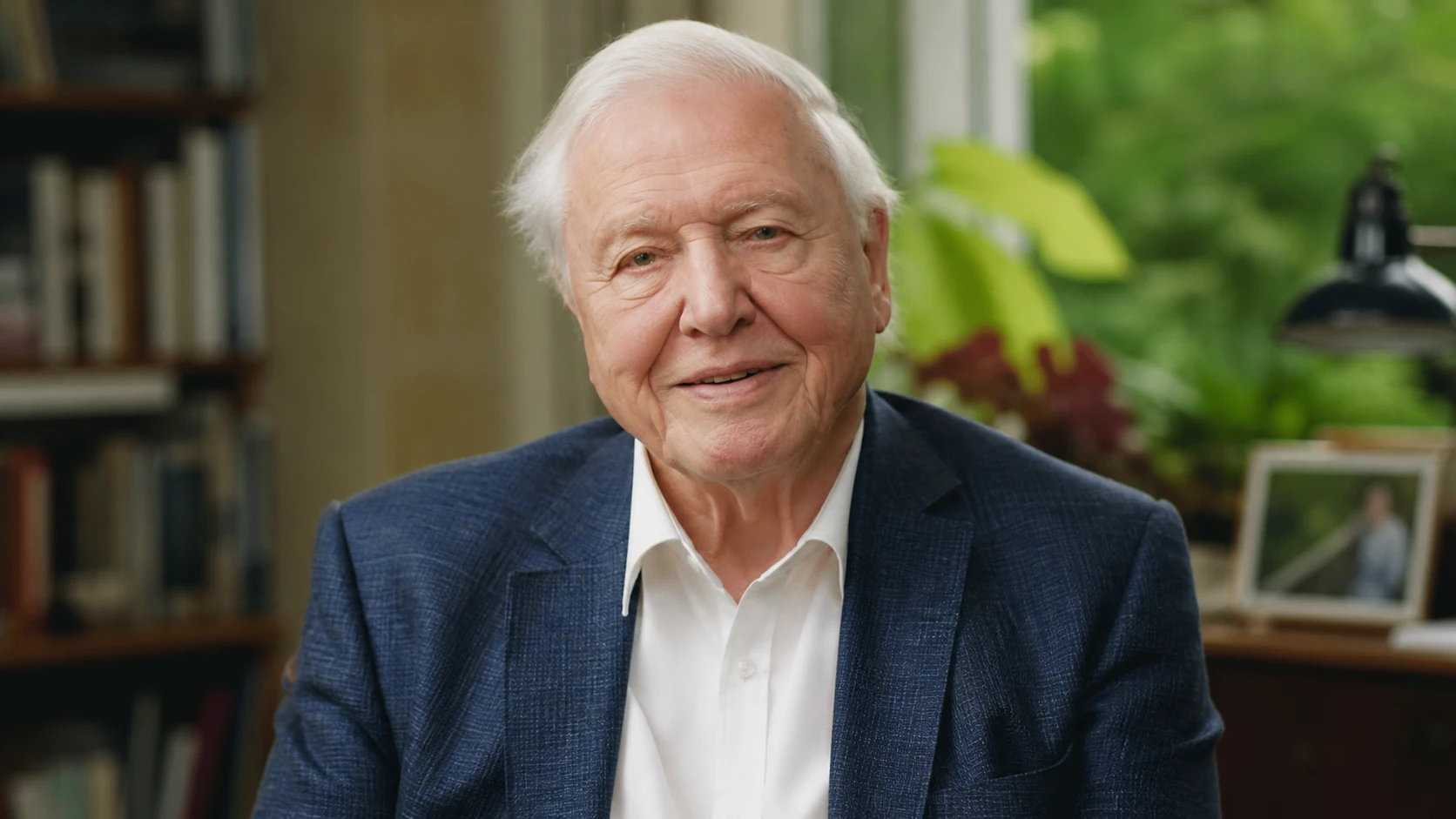
Robert Attenborough has spent most of his life in a quiet contrast to the family name he carries. As the son of David Attenborough, one of the most recognizable voices in global broadcasting, he could easily have stepped into public life. Instead, he built a career defined by research, teaching, and long stretches of fieldwork far from television studios, focusing on human biology, health, and the lived realities of communities in places like Papua New Guinea.
For many readers, the first instinct is to understand him through that famous surname. But that only explains part of the story. Robert Attenborough’s life is better understood through his academic path, his work in biological anthropology, and his decades-long engagement with human populations in the Pacific. His career offers a different kind of public contribution—less visible, but grounded in careful study and long-term commitment.
Early Life and Family
Robert Attenborough was born into one of Britain’s most culturally influential families, but not one defined solely by celebrity. His father, David Attenborough, became globally known for his natural history documentaries, while his uncle, Richard Attenborough, built a distinguished career as an actor and filmmaker. This environment placed Robert close to public life from the beginning, even if he did not ultimately choose that path.
He was one of two children born to David Attenborough and Jane Elizabeth Ebsworth Oriel. His sister, Susan Attenborough, has also largely stayed out of the public spotlight. Despite the visibility of the family, accounts of Robert’s early life remain limited, reflecting a household that balanced public achievement with a degree of privacy.
Growing up, he would have been exposed to conversations about science, storytelling, and the natural world, given his father’s work. But there is no clear record suggesting he was pushed toward broadcasting or media. Instead, his later choices suggest an early interest in science and human biology, fields that share some intellectual ground with natural history but demand a different kind of engagement.
Education and Academic Direction
Details of Robert Attenborough’s formal education are not widely documented in public sources, which is not unusual for academics who have not sought public attention. What is clear is that he pursued a path in biological anthropology, a discipline that examines humans through the lens of evolution, biology, environment, and culture.
Biological anthropology sits at the intersection of science and social inquiry. It asks how human bodies adapt, how populations change over time, and how health, nutrition, and environment interact. That choice of field placed Attenborough in a tradition of research that is both scientific and deeply human, concerned not only with data but with lived experience.
His academic training led him toward a career in teaching and research rather than public communication. That decision shaped everything that followed, including his move to Australia and his long association with one of the region’s leading universities.
Moving to Australia and Building a Career
In 1981, Robert Attenborough accepted a position at the Australian National University in Canberra. By his own account, the move was practical rather than dramatic. He had not previously visited Australia, but the opportunity offered stability and a chance to develop his academic work.
At the time, biological anthropology at ANU was still growing. Attenborough became one of the early figures helping to shape the discipline within the university. His work focused on human population biology, a field that examines variation among human groups, how populations adapt to environments, and how health patterns evolve.
His teaching covered a wide range of topics, including human physiology, population dynamics, and the biological aspects of social behavior. Students encountered not just theory but an approach that connected biology with real-world conditions. That emphasis on lived environments would become a defining feature of his research.
Over time, Attenborough became a senior lecturer and an established member of the academic community. His career at ANU lasted more than three decades, a period during which he contributed to both teaching and the broader development of the discipline.
Research Focus: Papua New Guinea
One of the most important threads in Robert Attenborough’s career is his long-standing research in Papua New Guinea. The country offers a unique setting for anthropological study due to its extraordinary diversity in language, culture, and environment within a relatively small geographic area.
Attenborough’s work there focused on health, nutrition, and population biology. He studied how communities adapt to environmental pressures, how disease affects populations, and how social structures influence biological outcomes. This kind of research requires not just technical knowledge but sustained engagement with communities over time.
What’s striking is the continuity of this focus. Rather than shifting topics frequently, Attenborough developed deep expertise in a specific region. That allowed him to contribute to long-term research conversations about human adaptation, disease patterns, and demographic change.
His work also involved collaboration across disciplines. Anthropologists, geneticists, medical researchers, and linguists often intersect in New Guinea studies, and Attenborough’s projects reflected that broader approach. The result was research that connected biological data with cultural and environmental context.
Major Publications and Academic Contributions
Robert Attenborough’s contributions are best seen through his publications, particularly edited volumes that bring together research from multiple fields. One of the most significant is Human Biology in Papua New Guinea: The Small Cosmos, co-edited with Michael P. Alpers and published by Oxford University Press in 1992.
The book examined the complexity of human biology in Papua New Guinea by linking it to geography, linguistics, genetics, and epidemiology. It presented the country as a concentrated example of human diversity, where many scientific questions could be studied together. The work remains part of the scholarly record in Pacific anthropology.
Another major contribution came with Papuan Pasts: Cultural, Linguistic and Biological Histories of Papuan-Speaking Peoples, published in 2005. This volume grew out of an international conference and brought together researchers from different disciplines. It explored how biological, cultural, and linguistic histories intersect in the region.
Attenborough also continued publishing into later stages of his career. His work has included studies on human nutrition, social behavior, and genetic adaptation. A more recent example is a 2020 study on hunter-gatherer populations, which examined the relationship between hunting success and nutritional outcomes.
In 2025, he co-authored research on genetic adaptation in New Guinea, focusing on how populations respond to environmental pressures such as malaria. This shows that even after formal retirement, he has remained engaged in academic work.
Life Beyond ANU and Work at Cambridge
Robert Attenborough retired from his full-time position at ANU in 2013, but retirement did not mark an end to his academic involvement. He continued to maintain connections with the university and remained active in research.
Following his retirement, he took up a position at the University of Cambridge, where he became affiliated with the McDonald Institute for Archaeological Research. His role there as a Senior Fellow reflects both his experience and his ongoing contribution to the field.
This phase of his career highlights a common pattern in academia. Senior scholars often continue to teach, write, and collaborate well beyond formal retirement. In Attenborough’s case, his expertise in New Guinea studies and biological anthropology kept him connected to active research networks.
Relationship to the Attenborough Legacy
The Attenborough name carries significant cultural weight, particularly because of David Attenborough’s influence on public understanding of the natural world. Robert Attenborough’s career, while related in subject matter, took a different form.
Both father and son share an interest in life on Earth, but they approach it from different angles. David Attenborough communicates science to a global audience through film and television. Robert Attenborough works within academia, contributing to knowledge through research and teaching.
That contrast is important because it reflects two complementary ways of engaging with science. One brings ideas to the public, while the other builds the underlying knowledge base. Robert Attenborough’s work belongs firmly in the latter category.
There is no strong evidence suggesting he sought to avoid public life because of his family. Instead, his career appears to have followed its own logic, shaped by academic interests and opportunities rather than by media expectations.
Personal Life and Privacy
Robert Attenborough has kept his personal life largely private, and there is limited publicly confirmed information about his relationships, marriage, or children. This is consistent with many academics who do not occupy public-facing roles.
What is known is primarily drawn from official records. For example, UK company filings list him as a director of David Attenborough (Productions) Limited, alongside his sister. These records also indicate that he was born in August 1951, though exact details are not widely published.
Beyond that, reliable information becomes sparse. There are no widely confirmed public interviews or personal statements that offer insight into his private life. That absence is not unusual, but it does require careful handling to avoid speculation.
Business Interests and Net Worth
Robert Attenborough’s financial profile is not publicly detailed in the way that many public figures’ finances are. His primary career has been in academia, which typically does not involve large public earnings.
His role as a director of David Attenborough (Productions) Limited suggests some involvement in the business side of his father’s work. However, the extent of his financial stake or income from this role is not publicly disclosed.
Any estimates of his net worth would be speculative and should be treated as such. There is no widely accepted figure reported in credible sources. What can be said is that his career reflects a focus on scholarship rather than commercial ventures.
Public Image and Current Status
Robert Attenborough’s public image is shaped more by absence than presence. He is not a regular figure in media coverage, and his name appears mainly in academic contexts or in connection with his family.
That said, his work continues to be cited and referenced in research on Papua New Guinea and human population biology. His ongoing affiliation with Cambridge and his recent publications suggest that he remains engaged in scholarly activity.
This kind of quiet influence is common in academia. A researcher may not be widely known outside their field, but their work can still shape how others understand complex issues.
Frequently Asked Questions
Who is Robert Attenborough?
Robert Attenborough is a British biological anthropologist and academic. He is known for his research on human population biology, particularly in Papua New Guinea, and for his long career at the Australian National University.
He is also the son of David Attenborough, which explains much of the public interest in his life. However, his own career is distinct and centered on academic research rather than broadcasting.
Is Robert Attenborough related to David Attenborough?
Yes, Robert Attenborough is the son of David Attenborough. He is one of two children, alongside his sister Susan. The family connection is well documented in biographical records of David Attenborough.
Despite this connection, Robert Attenborough has pursued a different career path focused on science and academia.
What does Robert Attenborough do?
He is a biological anthropologist who studies human populations, health, and adaptation. His work often examines how environmental and social factors affect human biology.
He has taught at the Australian National University and has been affiliated with the University of Cambridge.
Where has Robert Attenborough worked?
Most of his career was spent at the Australian National University in Canberra, where he worked as a lecturer and researcher for over 30 years. He later became affiliated with the University of Cambridge.
These institutions reflect his standing within the academic community and his ongoing involvement in research.
What is Robert Attenborough’s age?
Public records indicate that he was born in August 1951. This would make him in his seventies as of the mid-2020s.
Exact details of his birth date are not widely published, and available information comes primarily from official filings.
What are his major contributions?
His work includes research on human biology in Papua New Guinea, as well as edited volumes that bring together interdisciplinary studies of the region. These publications are used within academic fields such as anthropology and human biology.
He has also contributed to ongoing research into genetic adaptation and health in human populations.
Conclusion
Robert Attenborough’s life is a reminder that influence does not always come with visibility. While his father became one of the most recognized figures in natural history, Robert built a career grounded in research, teaching, and sustained academic work.
His contributions to biological anthropology, particularly in Papua New Guinea, reflect a commitment to understanding human life in its environmental and social context. That work may not attract headlines, but it adds to the knowledge that shapes how we understand ourselves as a species.
There is something quietly deliberate about his path. He did not follow the obvious route suggested by his family name, nor did he seek to redefine it publicly. Instead, he chose a field that requires patience, careful observation, and long-term engagement.
Today, he remains a figure of interest not because of celebrity, but because of the steady, often unseen work that underpins scientific understanding. That, in its own way, is a legacy worth paying attention to.