
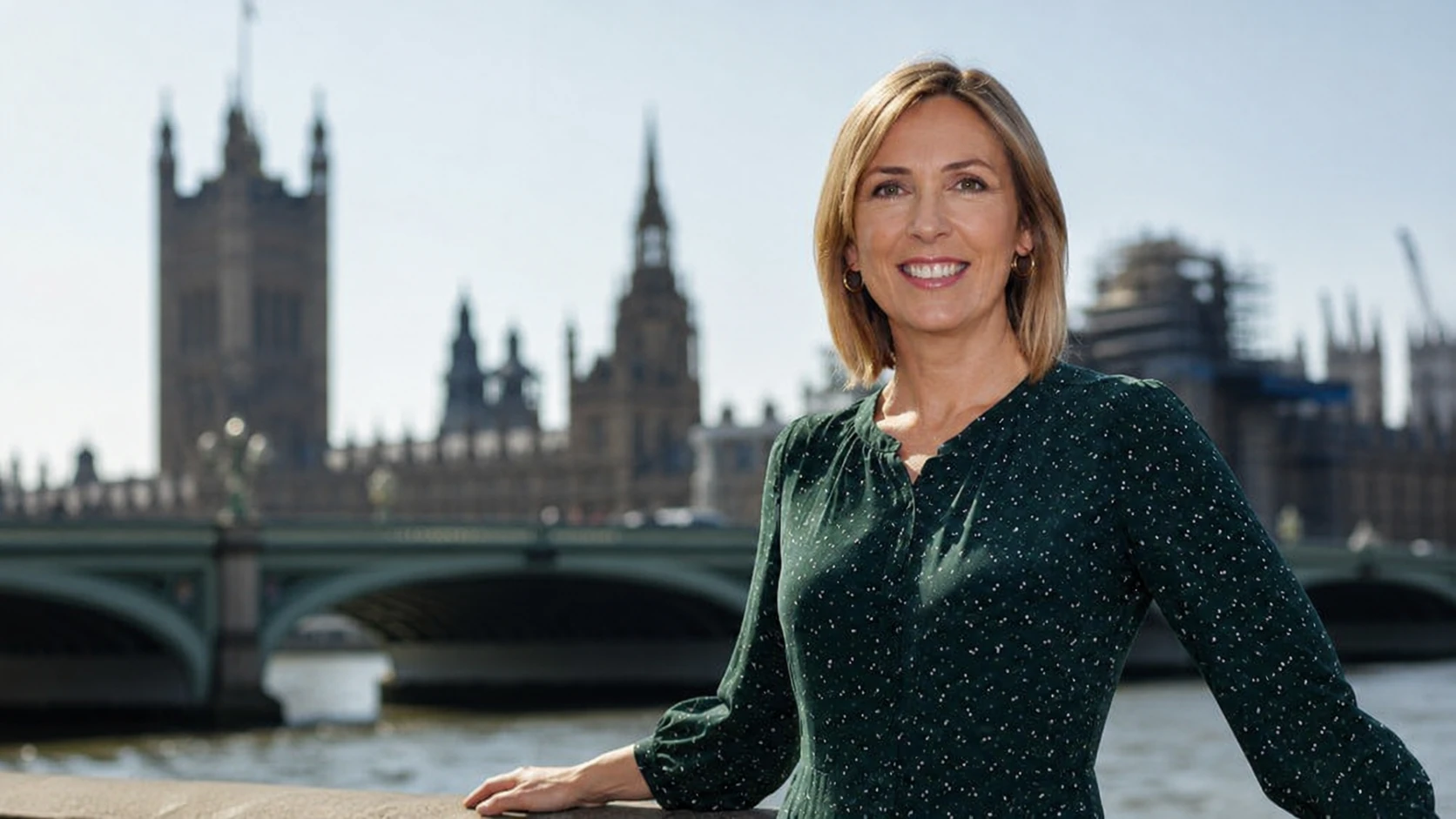
For years, millions of British viewers have seen Vicki Young standing outside Westminster, speaking calmly into a BBC microphone while governments shifted, prime ministers resigned, and political crises unfolded almost weekly. She built her reputation in a profession that often rewards noise by doing something very different. She became known for clarity, restraint, and deep institutional knowledge at a time when British politics frequently felt chaotic.
Young is not a celebrity journalist in the modern influencer sense. She rarely places her private life at the center of her public image, and she has never relied on confrontation or theatrical broadcasting to command attention. Instead, she has spent decades becoming one of the BBC’s most dependable political journalists, eventually rising to Deputy Political Editor and later taking over as presenter of Politics Live, one of the corporation’s most visible daily political programs.
Her career traces the changing shape of British political journalism itself. From regional reporting in Wales to covering Brexit, general elections, and Downing Street upheavals, Young has become part of the way many viewers understand Westminster. For audiences searching her name, the interest usually begins with a simple question: who is the journalist explaining Britain’s political drama every day? The answer turns out to be far more interesting than a short television biography.
Early Life and Family
Vicki Young has kept much of her early personal life private, which is fairly common among senior BBC journalists. Unlike entertainers or social media personalities, many political correspondents spend years building careers where professional credibility matters more than personal exposure. Even so, some details about Young’s upbringing and education are publicly known through school records and BBC reporting.
She grew up in Cornwall and attended Truro High School for Girls, where she served as Head Girl before leaving in 1988. Former teachers and school publications later described her as academically strong, articulate, and ambitious long before she became a familiar face on national television. Cornwall remained part of her identity even after her career moved into the London-centered world of Westminster politics.
Young later studied at Cambridge University, attending New Hall, the women’s college now known as Murray Edwards College. Cambridge has long been associated with British media and politics, but her later success cannot be reduced to elite education alone. The BBC’s political newsroom is intensely competitive, and long-term survival there depends more on accuracy, judgment, and stamina than credentials.
What’s surprising is how little Young has attempted to mythologize her background. There are no carefully polished “origin stories” attached to her public image. That absence says something about the generation of journalists she came from, where professional authority was expected to emerge through reporting rather than branding.
Education and Early Ambitions
Young’s academic path suggested early intellectual confidence, but journalism itself became the defining direction of her career. Political reporting in Britain has traditionally attracted people interested not only in news but also in institutions, public debate, and government power. The work requires curiosity about how decisions are made and how those decisions affect ordinary lives.
There is little evidence that Young entered journalism chasing celebrity or television fame. Her early career choices point instead toward reporting as a craft. That distinction matters because viewers often encounter television journalists only after years of unseen newsroom work. By the time Young became recognizable nationally, she had already spent years learning the mechanics of broadcasting, political sourcing, and editorial judgment.
Regional journalism proved especially important in shaping her approach. Before Westminster, Young worked at BBC Wales, where reporters often cover everything from local government and courts to community stories and national policy impacts. Those environments can produce journalists who explain complicated subjects clearly because regional audiences rarely tolerate insider jargon.
The truth is, regional reporting remains one of the best training grounds in British journalism. It teaches reporters how to speak to audiences who care less about Westminster gamesmanship and more about practical consequences. Young carried that style into her later political work.
Starting at BBC Wales
Young’s BBC career began in Wales, where she worked as a reporter before moving into parliamentary journalism. BBC Wales has historically been an important training environment for broadcasters who later moved into national roles. It demands flexibility, speed, and the ability to cover stories with limited time and resources.
Her years there gave her direct reporting experience before she entered the heavily scrutinized world of Westminster broadcasting. That transition mattered because political journalism can become detached from everyday concerns if reporters spend too long inside Parliament without broader newsroom experience. Young’s background helped her avoid some of that insularity.
Not many people know this, but many of Britain’s strongest political journalists started outside London. The BBC’s regional network has often functioned as a proving ground where correspondents learn to report accurately under pressure. Young’s career fits that pattern closely.
She eventually moved into the BBC’s parliamentary team, a step that changed the scale of her reporting but not the core demands of the job. Westminster coverage requires speed and precision because political stories can shift within minutes. Governments survive votes unexpectedly, ministers resign suddenly, and anonymous briefings often collide with reality before the end of the day.
Building a Reputation at Westminster
By the 2000s, Young had become an established member of the BBC’s Westminster operation. Her reporting covered governments led by Tony Blair, Gordon Brown, David Cameron, Theresa May, Boris Johnson, Liz Truss, and Rishi Sunak, giving her direct experience across one of the most politically unstable stretches in modern British history.
Political journalism changed dramatically during those years. Earlier generations of correspondents often reported on Parliament through scheduled bulletins and newspaper deadlines. Young’s era brought rolling news channels, social media pressure, instant analysis, and constant online reaction. Reporters no longer had hours to assess events before speaking publicly.
That said, Young’s style remained notably measured. She rarely adopted the hyper-dramatic tone that became common in parts of modern political broadcasting. Instead, she focused on explanation and context. For viewers overwhelmed by Westminster’s constant turbulence, that steadiness became part of her appeal.
Her reporting style also reflected BBC editorial culture at its strongest. The corporation’s political journalists operate under intense scrutiny from audiences, politicians, newspapers, and regulators. Every phrase can be examined for perceived bias. Surviving in that environment for decades requires unusual discipline.
Becoming Chief Political Correspondent
Young became BBC News Chief Political Correspondent in 2015, a promotion that placed her among the corporation’s most senior Westminster journalists. The appointment came at a particularly dramatic moment in British politics. Within a year, the Brexit referendum would transform the country’s political system and dominate national life for years.
The referendum period changed political reporting permanently. Parliament became nightly television drama, constitutional arguments entered everyday conversation, and public trust in institutions fractured sharply. Journalists covering Brexit faced criticism from all sides, often simultaneously. The BBC itself became a constant target from both Leave and Remain supporters.
Young emerged during that period as one of the BBC’s more trusted explanatory voices. She regularly appeared on television and radio to untangle parliamentary procedure, cabinet tensions, and leadership struggles. Viewers did not always agree with the conclusions reached by BBC coverage, but Young’s reporting was generally seen as careful rather than sensational.
Her role also involved extensive live broadcasting. Westminster reporting increasingly requires correspondents to explain developments in real time while information is still incomplete. That is one of the hardest skills in political journalism because the pressure to speculate can become enormous. Young’s strength was often her refusal to move beyond what could actually be confirmed.
Covering Britain’s Political Crises
Few political correspondents have worked through a more unstable period in modern British politics than Young. Brexit alone would have defined many journalistic careers. Instead, it became only one chapter in a sequence that also included constitutional disputes, the coronavirus pandemic, repeated Conservative leadership contests, and extraordinary ministerial turnover.
During Theresa May’s government, parliamentary votes became major national television events. Reporters like Young had to explain procedural rules that most viewers had never encountered before. Terms such as “meaningful vote,” “backstop,” and “indicative votes” suddenly became household language.
Then came Boris Johnson’s premiership, which introduced a faster, more combative media environment. The relationship between government and political journalists became increasingly tense. Reporters covering Downing Street during that period faced accusations of bias from supporters and critics alike.
The pandemic added another layer of pressure. Political reporting suddenly intersected with public health, scientific advice, economic shutdowns, and national anxiety. Every government briefing carried real-world consequences for schools, workplaces, hospitals, and families. Journalists had to process changing information quickly while avoiding exaggeration or panic.
Young’s broadcasting during those years reflected an understanding that audiences needed explanation more than drama. Her work was not built around sharp personal branding. Instead, she positioned herself as a translator between Westminster and viewers trying to make sense of events.
Deputy Political Editor at the BBC
In October 2020, Young was promoted to Deputy Political Editor of BBC News. The role represented one of the highest positions in the BBC’s political reporting structure short of Political Editor itself. By then, she had already spent roughly 25 years at the corporation.
The Deputy Political Editor role involves far more than appearing on television. It includes editorial planning, managing coverage priorities, helping shape political reporting strategy, and responding rapidly to breaking developments. Senior political editors also act as public representatives for the BBC during periods of criticism or controversy.
Here’s where it gets interesting. Young’s promotion arrived during a period when trust in political journalism itself was under strain. Social media had accelerated audience fragmentation, and many viewers increasingly consumed news through partisan or personality-driven channels. The BBC’s traditional authority no longer went unquestioned.
Young’s rise suggested the corporation still valued experienced institutional journalists who emphasized reporting discipline over ideological performance. Whether audiences always appreciated that approach is another question, but it clearly shaped how the BBC structured its political operation.
Taking Over Politics Live
In 2025, the BBC announced that Young would become the new presenter of Politics Live, replacing veteran broadcaster Jo Coburn. The move represented one of the most visible transitions in British political television that year.
Politics Live occupies a complicated space in BBC programming. It combines news, debate, interviews, and commentary while trying to maintain balance across strongly divided political audiences. The presenter must manage politicians, journalists, campaigners, and commentators in real time without allowing discussions to collapse into chaos.
Young’s appointment made professional sense because she brought both reporting authority and institutional knowledge. Unlike presenters who enter political broadcasting mainly through hosting roles, she arrived with decades of newsroom experience behind her. That background gave her credibility when questioning ministers or interpreting political developments.
The transition also reflected broader generational change at the BBC. Coburn had become closely associated with daytime political television, and replacing her required someone audiences already trusted. Young fit that description naturally.
Personal Life and Family
Compared with many public figures, Young has maintained strong boundaries around her private life. Publicly available information suggests she is married and has children, but she has never turned family life into part of her professional brand. That restraint has helped keep attention focused on her journalism rather than celebrity-style coverage.
There are practical reasons for that separation. Political journalists can become targets for intense criticism online, especially during divisive national debates. Many broadcasters choose to protect their families from public exposure whenever possible.
The BBC itself has historically encouraged journalists to maintain some distance between personal identity and reporting work. While that culture has changed somewhat in the social media era, many senior correspondents from Young’s generation still follow older professional norms around privacy.
Readers searching for dramatic revelations about Young’s personal relationships are unlikely to find them. Her public identity remains closely tied to her reporting rather than lifestyle coverage or entertainment media attention.
Public Image and Industry Reputation
Inside British political journalism, Young is widely regarded as experienced, careful, and dependable. Those qualities may sound understated, but they matter enormously in a profession where credibility can disappear quickly.
Political correspondents operate in a difficult environment because every editorial decision becomes politically charged. A single interview clip or phrasing choice can trigger days of criticism from partisan audiences online. Journalists covering Westminster are constantly accused of being either too aggressive or too soft, often at the same time.
Young’s reputation has largely avoided extremes. She is not typically associated with ideological broadcasting or overt opinion-led journalism. Instead, colleagues and viewers tend to describe her reporting style as balanced and explanatory.
That image has helped sustain her career through years when trust in media institutions became increasingly fragile. The BBC’s political journalists often become lightning rods during national crises, yet Young has largely maintained professional credibility across changing governments and political climates.
Net Worth and Career Earnings
There is no officially confirmed public figure for Vicki Young’s net worth. Like many BBC journalists, her salary details have not been fully disclosed publicly unless they crossed the corporation’s published high-earner thresholds. Estimates circulating online vary widely and should be treated cautiously because many celebrity finance websites rely on speculation rather than verified financial reporting.
That said, senior BBC political correspondents and presenters are generally well-paid professionals within British journalism. Young’s long tenure, leadership roles, and high-profile presenting responsibilities suggest a stable and successful career financially, even if exact figures remain private.
Her income likely comes primarily from her BBC salary and broadcasting work rather than external celebrity ventures. Unlike some media personalities, Young has not become strongly associated with commercial branding, major publishing deals, or extensive side businesses.
The truth is, her professional identity has remained unusually traditional for modern television journalism. She built status through institutional reporting rather than through personal monetization strategies common in contemporary media culture.
Awards and Professional Standing
Young is not widely defined by major television celebrity awards, but professional respect within journalism can matter more than trophy visibility. Political correspondents are often judged internally by reliability, sourcing quality, editorial judgment, and their ability to perform under pressure during breaking news.
Her rise through the BBC hierarchy itself signals substantial institutional confidence. The corporation does not place inexperienced journalists into senior Westminster positions lightly because political coverage remains central to its public role.
She has also become part of a generation of women who helped reshape political broadcasting in Britain. Westminster journalism was historically dominated by male correspondents, especially in senior television roles. Over time, journalists like Young, Laura Kuenssberg, Jo Coburn, Beth Rigby, and others became increasingly central to political coverage.
That shift changed not only who reported politics but also how political broadcasting looked and sounded. Younger journalists entering the field now encounter a very different professional environment from the one that existed decades earlier.
Where Vicki Young Is Now
As of 2026, Young remains one of the BBC’s leading political broadcasters and the presenter of Politics Live. Her role places her at the center of daily political discussion during another uncertain period in British public life.
The United Kingdom continues to face economic pressure, public service debates, constitutional questions, and changing party dynamics. Political journalism remains highly charged, and audiences remain deeply divided about media trust. That environment makes experienced broadcasters especially valuable.
Young’s current position reflects years of accumulated institutional memory. She has covered enough governments and crises to recognize recurring political patterns while still adapting to new media demands. That balance helps explain why the BBC continued promoting her into more visible roles.
What’s surprising is how consistent her professional identity has remained despite enormous changes in broadcasting. Many television journalists reinvent themselves repeatedly to match changing media trends. Young instead stayed closely aligned with traditional reporting values while gradually becoming more publicly prominent.
Frequently Asked Questions
Who is Vicki Young?
Vicki Young is a British journalist and broadcaster best known for her work with BBC News. She has served as BBC Deputy Political Editor and later became presenter of Politics Live. Her career has focused mainly on Westminster and British political reporting.
What is Vicki Young’s BBC role?
Young became Deputy Political Editor of BBC News in 2020 after years as Chief Political Correspondent. In 2025, she also took over as presenter of Politics Live, making her one of the BBC’s most visible political broadcasters.
Where did Vicki Young study?
Young attended Truro High School for Girls in Cornwall before studying at Cambridge University. She attended New Hall, the Cambridge college now known as Murray Edwards College.
Is Vicki Young married?
Public reports suggest that Young is married and has children, although she keeps her family life largely private. She has not publicly shared extensive details about her personal relationships, and most coverage of her focuses on her journalism career.
What is Vicki Young known for?
She is known for political reporting, election coverage, Westminster analysis, and BBC television appearances during major British political events. Many viewers recognize her from Brexit-era reporting and her later role hosting Politics Live.
What is Vicki Young’s net worth?
There is no officially confirmed public figure for her net worth. Online estimates vary and should be treated carefully because they are rarely backed by verified financial disclosures. Her career suggests long-term professional success within BBC broadcasting.
Did Vicki Young replace Jo Coburn?
Yes. In 2025, Young was announced as the new presenter of Politics Live, replacing longtime presenter Jo Coburn. The appointment marked a major transition in BBC daytime political programming.
Conclusion
Vicki Young’s career says something important about the value of steady journalism in unstable times. She became one of Britain’s most recognizable political broadcasters without turning herself into a political celebrity. Instead, she spent years building trust through reporting, explanation, and consistency.
Her rise inside the BBC also reflects the changing nature of Westminster coverage. Political journalism now moves faster, reaches audiences differently, and faces far more public scrutiny than it did earlier in her career. Through all of that, Young maintained a style rooted in careful broadcasting rather than performance.
There is a reason audiences continue searching her name after seeing her on television. Viewers sense experience when they watch her work. Even people who disagree with BBC coverage often recognize the discipline behind her reporting.
Young’s story is ultimately less about fame than endurance. In a media environment built around speed and reaction, she built a career by remaining calm enough to explain what was actually happening. That quality may be quieter than political spectacle, but it is also far harder to sustain.