
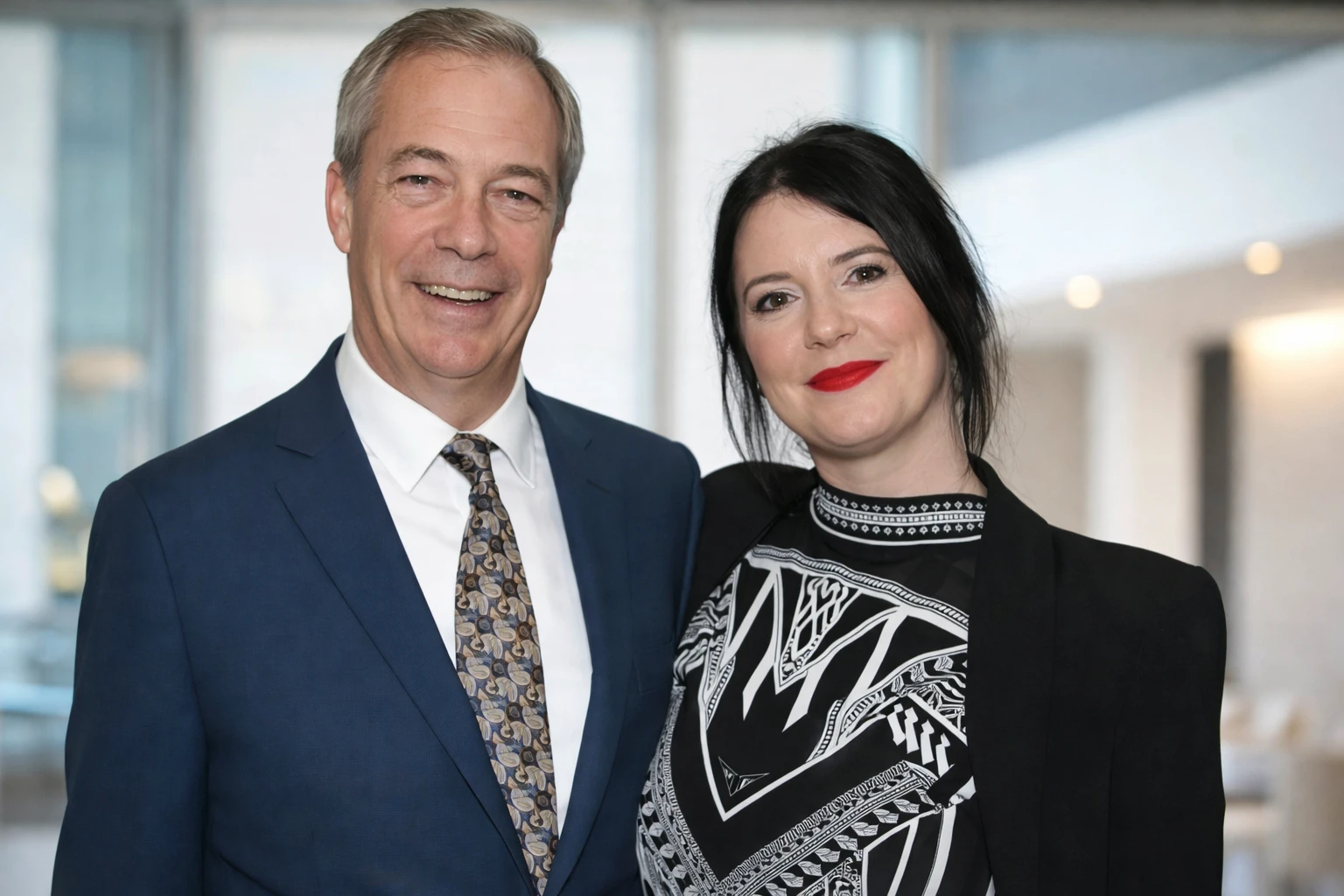
Gráinne Hayes enters the public record almost by accident—literally. In November 1985, a young London commodities trader named Nigel Farage was struck by a car and left seriously injured. During his recovery, an Irish nurse named Gráinne Hayes treated him. The two would later marry, and for a time, their lives were closely intertwined. Yet despite this dramatic beginning and her connection to one of Britain’s most recognizable political figures, Hayes herself has remained largely outside the spotlight. Her story, such as it is known, is defined as much by absence as by presence.
That contrast—between public curiosity and private reality—explains why Hayes continues to be searched, discussed, and often misunderstood. While the internet has attempted to fill in gaps with speculation or recycled claims, the verifiable details of her life are relatively few. What emerges instead is a portrait shaped by careful reporting, fragments of biography, and a clear choice to live away from public attention.
Early Life and Irish Roots
Gráinne Hayes is widely described in reliable sources as Irish, though specific details about her early life remain scarce. Unlike many figures connected to high-profile personalities, she has never been the subject of in-depth interviews or autobiographical accounts. There are no widely confirmed records detailing her exact date of birth, hometown, or family background.
What can be said with confidence is that Hayes trained as a nurse, a profession that requires formal education and clinical discipline. Nursing in Ireland during the late 20th century involved rigorous training, often through hospital-based programs or affiliated institutions. That background suggests a structured early adulthood focused on healthcare, even if the specifics of her training remain unpublicized.
This absence of detail is not unusual for individuals who did not seek public roles. It reflects a broader pattern in which personal histories remain largely undocumented unless the individual steps into public life. In Hayes’s case, her entry into the public narrative came not through ambition or career visibility, but through a chance encounter that would alter the course of her life.
The Accident That Changed Everything
In November 1985, Nigel Farage was involved in a serious road accident in Orpington, Kent. He was struck by a vehicle and sustained injuries significant enough to require prolonged hospitalization. Reports from later years describe a lengthy recovery process, including time in traction and extended rehabilitation.
Gráinne Hayes was one of the nurses involved in his care during this period. The circumstances of their meeting have been recounted in various profiles of Farage’s life, often framed as a moment that led to a lasting personal connection. Farage himself has referred to marrying the nurse who treated him, turning a private relationship into part of his broader life story.
What stands out is how this moment has been preserved in public memory. While many details of Hayes’s life remain unrecorded, this episode is consistently cited across credible sources. It serves as the anchor point for understanding her place in the historical record and explains why her name continues to surface in connection with Farage’s biography.
Marriage and Family Life
Gráinne Hayes and Nigel Farage married in 1988, a few years after his recovery from the accident. At the time, Farage was still in the early stages of his career in commodities trading and had not yet entered the political arena that would later define him. Their marriage unfolded largely outside public view, long before Farage became a polarizing figure in British politics.
The couple had two sons, Samuel and Thomas. These names appear consistently in reliable reports about Farage’s family, offering one of the few stable points of information about Hayes’s personal life. Their upbringing has been described only in broad terms, with both children largely kept out of media attention.
The marriage lasted for nearly a decade before ending in divorce in 1997. Accounts suggest that the separation was relatively amicable, though details are limited. What is clear is that the divorce occurred just before Farage’s rise to prominence, meaning Hayes was not part of his later public career.
This timing is significant. It places her firmly in a chapter of Farage’s life that predates his political identity, reinforcing the idea that her public relevance is tied to a specific period rather than an ongoing role.
Life After Divorce
After her divorce from Farage, Gráinne Hayes effectively disappeared from the public narrative. There are no widely confirmed reports detailing her career path, personal relationships, or place of residence in the years that followed. This absence has fueled speculation online, but reliable sources remain cautious.
What’s known is that Hayes did not pursue public visibility after the marriage ended. Unlike some individuals connected to prominent figures, she did not write memoirs, give interviews, or engage with media coverage. Her post-divorce life appears to have been intentionally private.
This decision has shaped how she is perceived today. In an era where personal histories are often documented in detail, Hayes stands out as someone who stepped away from the spotlight and stayed there. The result is a public profile defined by restraint rather than exposure.
Nigel Farage’s Rise and Renewed Interest
Interest in Gráinne Hayes has grown alongside Nigel Farage’s political career. After their divorce, Farage became a leading figure in the UK Independence Party (UKIP) and later played a prominent role in the Brexit campaign. His visibility brought renewed attention to earlier parts of his life, including his first marriage.
Media profiles of Farage often include brief references to Hayes, usually in the context of his personal history. These mentions tend to focus on their meeting after the accident, their marriage, and their children. Rarely do they extend beyond those points.
This pattern reflects a broader tendency in political reporting. Personal relationships are included to provide context, but they are not explored in depth unless the individuals involved choose to participate. In Hayes’s case, her continued absence from public discourse has limited the scope of coverage.
Public Image and Misconceptions
The limited availability of verified information has led to a range of misconceptions about Gráinne Hayes. Many online articles attempt to construct detailed biographies, often presenting unverified claims as established fact. These can include specifics about her upbringing, current life, or personal beliefs that are not supported by credible sources.
What’s surprising is how quickly such claims can spread. Once a detail appears on multiple websites, it can create the impression of confirmation, even when the original source is unclear. This cycle has contributed to a distorted understanding of Hayes’s life.
A careful reading of reliable material reveals a much simpler picture. The core facts are consistent and well supported, while additional details tend to lack clear sourcing. Recognizing this distinction is essential for anyone seeking accurate information.
Distinguishing Between Individuals with the Same Name
Another source of confusion is the existence of other individuals named Gráinne Hayes. One notable example is an academic at the University of Limerick, whose work in exercise physiology is well documented. This person has a clearly defined public profile, including educational background and research contributions.
These overlapping identities can lead to mistaken assumptions. Readers may encounter information about one Gráinne Hayes and attribute it to another, especially when search results do not clearly differentiate between them. This underscores the importance of verifying context and source credibility.
In the case of Nigel Farage’s former wife, the available information remains limited to her role as a nurse, her marriage, and her family connection. Any additional claims should be approached with caution unless supported by reliable reporting.
Financial and Professional Life
There is no publicly verified information about Gráinne Hayes’s net worth, income sources, or professional activities after her marriage to Farage. Estimates occasionally appear online, but they are not grounded in credible evidence and should be treated as speculative.
During her time as a nurse, Hayes would have been part of a profession with standardized pay structures, particularly within public healthcare systems. Beyond that, her financial situation has not been documented in reliable sources.
This lack of information reflects her broader absence from public life. Without business ventures, media appearances, or public roles, there is little basis for assessing her financial standing. It serves as another reminder of how much of her life remains private.
Where Gráinne Hayes Is Now
The most honest answer to this question is that her current life is not publicly documented. There are no confirmed reports detailing her location, occupation, or personal circumstances in recent years. While speculation exists, it is not supported by reliable evidence.
This silence should not be mistaken for mystery in a dramatic sense. Instead, it reflects a deliberate choice to remain outside public attention. For many individuals, especially those who did not seek fame, this is a natural and understandable path.
In a media environment that often rewards visibility, Hayes’s absence is striking. It suggests a life lived on her own terms, separate from the narratives that have grown around her name.
Frequently Asked Questions
Who is Gráinne Hayes?
Gráinne Hayes is known primarily as the first wife of British politician Nigel Farage. She was an Irish nurse who treated him after a serious car accident in 1985, and they later married. Her public profile is limited to this connection and basic family details.
When did Gráinne Hayes and Nigel Farage marry?
They married in 1988, a few years after meeting during Farage’s recovery from his accident. Their marriage lasted until 1997, when they divorced. This timeline is consistently reported in reliable sources.
How many children does Gráinne Hayes have?
Gráinne Hayes has two sons with Nigel Farage, named Samuel and Thomas. Their names appear in multiple reports about Farage’s family. Both have largely stayed out of the public eye.
What is Gráinne Hayes doing now?
There is no confirmed public information about her current activities or location. She appears to have maintained a private life since her divorce. Any claims beyond this are not supported by reliable evidence.
Is Gráinne Hayes a public figure?
She is not a public figure in the traditional sense. Her visibility comes from her past relationship with Nigel Farage rather than her own career or public activities. She has not engaged with media or public discourse.
Are there other people named Gráinne Hayes?
Yes, there are other individuals with the same name, including an academic at the University of Limerick. These are separate individuals and should not be confused with Nigel Farage’s former wife. Context is essential when interpreting search results.
Conclusion
Gráinne Hayes occupies an unusual place in the public imagination. She is widely searched but lightly documented, familiar yet largely unknown. Her story illustrates how public curiosity can outpace available evidence, creating a narrative that is both compelling and incomplete.
Her life, as far as it can be verified, is defined by a few key moments: her work as a nurse, her marriage to Nigel Farage, and her role as a mother. Beyond that, the details fade, replaced by silence that reflects her decision to remain private.
That silence is not a gap to be filled but a boundary to be respected. In a world where personal histories are often exposed in detail, Hayes’s story stands as a reminder that not every life needs to be fully documented to be understood.
What remains is a clear, grounded portrait of a person who briefly intersected with public history and then stepped away. For readers, that may be less dramatic than the internet suggests, but it is far closer to the truth.