
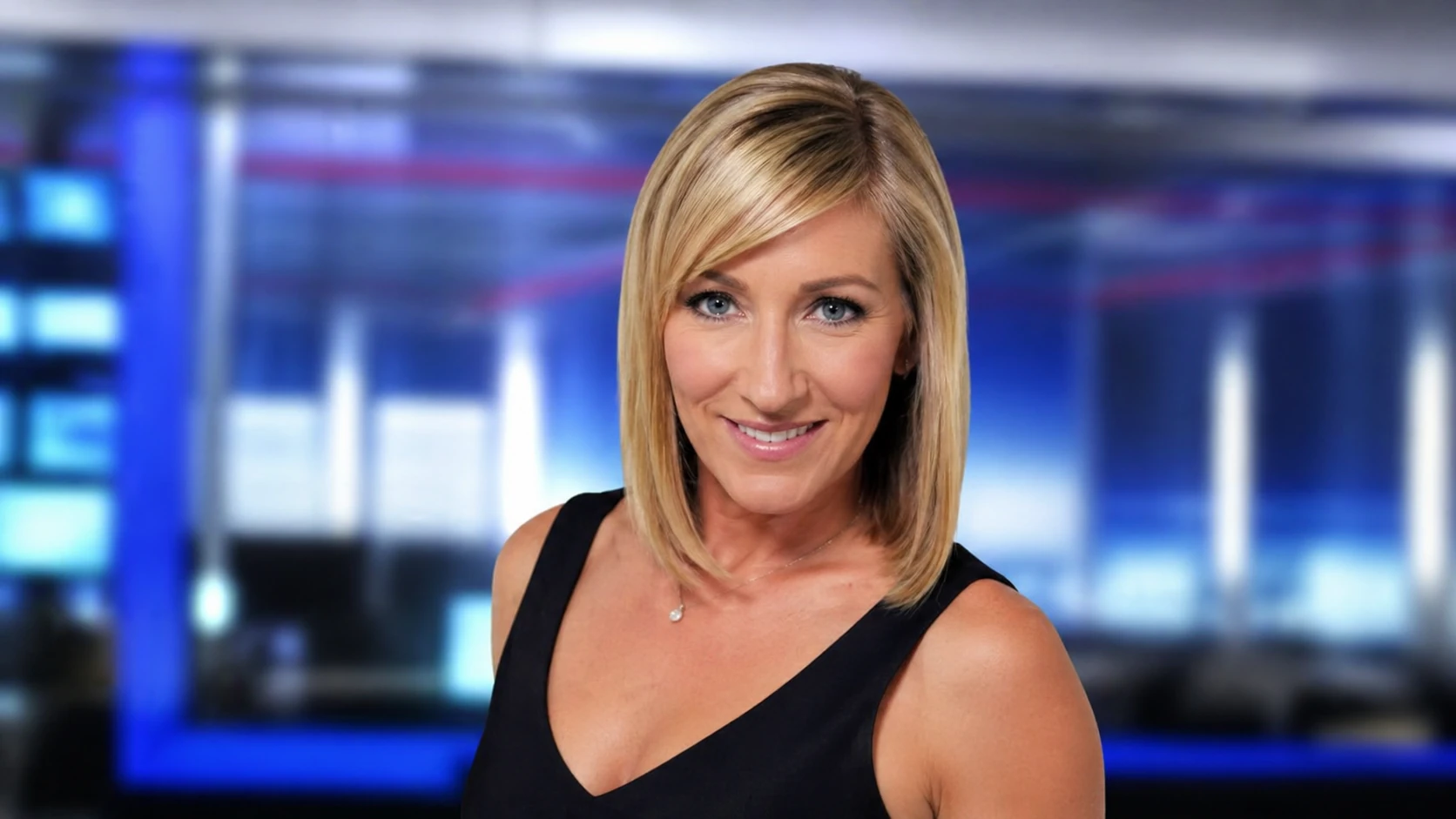
Vicky Gomersall has built the kind of broadcasting career that depends less on spectacle than on steadiness. For many British sports fans, she is a familiar face from Sky Sports News, the presenter who can guide a live bulletin, handle a football debate, or interview a Premier League manager without pulling focus from the story. Her name often appears in searches because viewers recognise her presence before they know the details of her life. The answer is simple but telling: Gomersall is one of the durable professionals who helped define the modern rhythm of sports television.
Her public profile is not shaped by scandal, loud punditry, or a celebrity persona. It rests on longevity, preparation, and a controlled on-air style that suits live sport, where stories change quickly and the audience expects accuracy. She has worked across Sky Sports News, football interviews, women’s sport coverage, discussion formats, and athlete mentoring. In an industry that often rewards noise, Gomersall’s career shows the value of calm authority.
Early Life and Sporting Interests
Vicky Gomersall is widely reported to have been born in Cheltenham, Gloucestershire, and to have grown up with sport as a central part of her life. Public biographies commonly list her date of birth as 31 December 1971, though Sky’s own public-facing material tends to focus on her professional work rather than her private biographical details. That distinction matters because many online profiles repeat personal information without showing where it came from. The safest account is that Gomersall’s roots are usually linked to Cheltenham and that her early interest in sport was real and lasting.
Her sporting background appears to have shaped her later broadcasting voice. She is commonly described as having run for Cheltenham district as a schoolgirl and as having admired Olympic decathlete Daley Thompson. Biographical accounts also say she played football for Fulham Ladies and continued playing five-a-side football. Those details help explain why football and athletics have never seemed like distant subjects for her on air.
Not every presenter covering sport needs to have played at a high level, but practical familiarity can change the tone of a broadcast. It helps a journalist understand the physical, tactical, and emotional stakes behind a match or tournament. Gomersall’s work has often carried that sense of comfort, especially in football settings where supporters quickly notice whether a presenter is merely reading notes or genuinely understands the subject. Her appeal has never depended on pretending to be the story; it comes from knowing how to support it.
Education and First Ambitions
Gomersall is commonly reported to have studied English and Drama at Kingston University in London. That combination makes sense for a future broadcaster because it sits between language, performance, timing, and confidence in front of an audience. Sports presenting requires all of those skills, but the best presenters make them feel invisible. Viewers hear the questions and see the control without thinking about the training underneath.
Before becoming known nationally, Gomersall is reported to have worked as a reporter in and around the North West. Regional reporting is often one of the toughest schools in British broadcasting. It teaches journalists to cover a wide range of stories, work quickly, understand local loyalties, and build trust with sources. A reporter may move from a football training ground to a community sports story to a breaking news update in the same week.
That kind of grounding is especially valuable in sports journalism. Clubs, agents, coaches, and supporters all have their own interests, and a broadcaster has to sort useful information from noise. Gomersall’s later career on Sky Sports News suggests she absorbed those lessons well. Her delivery is polished, but it still has the practical directness of someone trained in reporting rather than only studio presentation.
Joining Sky Sports News
The key turning point in Gomersall’s public career came when she joined the Sky Sports News presenting team in the summer of 2005. That was a defining period for the channel and for British sports media more broadly. Sky Sports News had already become a daily habit for many fans, especially football supporters following transfers, injuries, press conferences, and managerial changes. The rolling-news model changed how sport was consumed between matchdays.
Gomersall arrived at a time when live sports news demanded a different kind of presenter. The job was not simply to read headlines from a desk. It required the ability to manage breaking updates, introduce reporters, handle live interviews, and keep the programme moving through long broadcast blocks. The presenter had to be composed without being dull, fast without being careless, and conversational without becoming casual.
Her move from reporter to presenter gave her credibility in that environment. She understood that stories are built from information, not just from studio performance. Viewers may not always know why one presenter feels more trustworthy than another, but they sense it in the small choices. Gomersall’s style has been marked by clarity, restraint, and an ability to ask questions without turning the exchange into theatre.
Building a Career on Live Television
Live sports television is a difficult place to hide. If a guest says something unexpected, a story breaks mid-segment, or a planned item collapses, the presenter has to keep going. Gomersall’s long Sky career shows that producers trusted her in exactly those conditions. That trust is not given lightly in a newsroom built around speed.
Her work has included standard news presentation, football coverage, interviews, studio discussions, and lighter entertainment formats. Sky has used her in settings that require both authority and warmth, from serious sports stories to quizzes and seasonal programming. That range matters because a presenter who can only deliver one tone becomes limited. Gomersall has shown she can move between breaking news, considered debate, and relaxed studio conversation.
The skill is easy to underrate because good live presenting often looks effortless. The audience does not see the producer speaking into the presenter’s ear, the changing running order, the time pressure, or the need to keep track of facts while listening to a guest. A strong presenter makes that tension disappear. Gomersall’s reputation has been built on doing exactly that for many years.
Football Interviews and Premier League Coverage
Football has been central to Gomersall’s work at Sky Sports. She has interviewed major figures in the game, including Jurgen Klopp and Mikel Arteta, in moments when the questions carried real weight for fans. Her Klopp interviews, especially around the later stages of his Liverpool tenure, placed her in conversation with one of the Premier League’s most influential modern managers. Those exchanges required preparation, timing, and a feel for what supporters wanted to hear.
Interviewing elite managers is harder than it can appear. Managers are trained to protect players, shape narratives, and avoid giving opponents or the press anything too useful. A good interviewer must be direct enough to get substance but not so aggressive that the interview becomes closed and defensive. Gomersall’s approach tends to be calm and precise, which suits managers who respond better to clear questions than to confrontation for its own sake.
Her interview style also reflects the role she usually plays in football coverage. She is not there to perform outrage or dominate the guest. She is there to open up the subject and keep the exchange useful. In a media culture where clips can reward provocation, that kind of disciplined interviewing still has value.
Sunday Supplement and Football Debate
Gomersall has also been associated with Sunday Supplement, one of Sky’s best-known football discussion brands. The format has long appealed to fans who want more than highlights: they want the back-page agenda, the stories behind the stories, and the mood among journalists covering the clubs. It sits somewhere between a newspaper review, a panel debate, and a weekly football conversation. Hosting or co-hosting that kind of programme requires a different touch from reading a bulletin.
A discussion host has to manage strong opinions without letting the panel become shapeless. Journalists bring access, perspective, and sometimes disagreement, and the presenter has to turn that into a programme rather than a private argument. Gomersall’s measured style fits that role because she does not need to compete with the panel. Her job is to draw out details, keep the pace, and make the conversation intelligible for viewers and listeners.
The Sunday Supplement brand has changed over time, with different formats and presenters attached to different versions. That can make online references confusing, especially when older podcast listings and newer broadcast announcements exist side by side. What remains clear is that Gomersall has been part of Sky’s football discussion world, not only its headline service. That matters because it shows her range beyond the news desk.
Work Around Women’s Sport
One of the more meaningful parts of Gomersall’s career has been her involvement with coverage of women’s sport. Sky used her in Sportswomen programming, including segments connected to the Sportswomen of the Year Awards and conversations with leading figures in British sport. These were not just side projects in the broader history of sports broadcasting. They formed part of the long push to give women athletes more consistent visibility.
Gomersall’s public response to online abuse directed at gymnast Beth Tweddle remains a notable example of her stance. Tweddle, a decorated British Olympian, had faced abuse during a social media Q&A, and Gomersall defended the importance of continuing to promote and cover sportswomen. The argument was direct: abuse should not become a reason to retreat from visibility. In hindsight, that position looks even stronger because women athletes still face disproportionate online scrutiny.
Her work in that area also shows the difference between presentation and advocacy within journalism. A broadcaster does not have to abandon fairness to recognise when coverage has been unequal. Giving women’s sport airtime, asking serious questions, and treating athletes as elite competitors rather than curiosities are editorial choices. Gomersall’s involvement placed her within that wider correction in sports media.
Mentoring and Work Beyond the Studio
Gomersall has also been linked to Sky Sports’ athlete mentoring work. She was listed as a mentor to swimmer Freya Anderson through the Sky Sports Scholars programme, a scheme designed to support promising athletes in their development. Anderson went on to become one of Britain’s major swimming talents, and the mentor role placed Gomersall in a quieter but still meaningful part of the sports ecosystem. It showed that her work was not limited to what viewers saw on screen.
Mentoring an athlete is different from interviewing one. It requires patience, empathy, and an understanding of pressure away from the camera. Young athletes have to deal with training demands, public expectations, education, injury risk, and the emotional swings of competition. A broadcaster who understands media attention can help an athlete prepare for the public side of elite sport.
Reports have also described Gomersall as an ex-teacher, which adds another layer to that mentoring role. Teaching and presenting share more in common than people sometimes realise. Both require clarity, timing, listening, and the ability to hold attention without making the moment about yourself. That background may help explain why Gomersall’s on-air presence often feels controlled rather than forced.
Marriage, Children, and Private Life
Gomersall has kept her private life largely away from public display. Many online biography pages describe her as married and say she has children, but the details are not consistently supported by primary public sources. Some pages give names, dates, or family descriptions while offering little evidence, and a few contain contradictions. A responsible biography should treat those claims carefully rather than repeat them as settled fact.
What can be said with confidence is that Gomersall has not built her public identity around her family life. Her professional presence is visible, while her home life remains relatively protected. That is a legitimate choice, especially for a journalist and presenter whose work does not depend on selling personal access. Public curiosity is understandable, but it does not erase a person’s right to boundaries.
This privacy also explains why search results about her can feel unsatisfying. Readers often want a neat profile with spouse, children, salary, house, and full personal timeline. The public record does not support that level of certainty. The most honest account is that Gomersall is widely reported to have a family, but she has kept those details out of the centre of her media profile.
Salary, Income Sources, and Net Worth
Vicky Gomersall’s main known income source is her work as a sports broadcaster and presenter. Her long association with Sky Sports News suggests a stable career in a major UK sports media organisation. She has also appeared in interview formats, discussion programmes, special features, and mentoring-related content. Those activities all sit within her broader professional role rather than a separate celebrity business empire.
There is no reliable public figure for her salary or net worth. Some celebrity biography sites publish estimates, but these are usually unsourced and should be treated as guesses. Broadcaster pay can vary widely depending on contract terms, seniority, exclusivity, outside work, and programme responsibilities. Without verified financial documents or direct confirmation, exact figures would be speculation.
That said, her career length and visibility point to a successful professional life in broadcasting. Success, in this case, should not be measured by invented net-worth numbers. It is better measured by trust, longevity, and continued relevance in a highly competitive field. Gomersall has remained visible because she can do the work reliably, and that is often the most valuable currency in live television.
Public Image and On-Air Style
Gomersall’s public image is built around professionalism rather than celebrity. She is known as composed, clear, and steady, qualities that are easy to overlook until a broadcast lacks them. Viewers tend to notice the presenter most when something goes wrong, but a strong presenter prevents many problems from becoming visible. That has been one of her strengths.
Her on-air manner is warm without being overly familiar. She can handle a serious story without melodrama and a lighter segment without seeming detached. That balance matters in sports broadcasting, where the tone can shift quickly from injury news to tactical debate to fan reaction. A presenter who misjudges those shifts can make a programme feel awkward or insensitive.
Gomersall also belongs to a generation of broadcasters who adapted as sports media moved from television-first to multi-platform. Clips, podcasts, social media, and online video have changed how audiences encounter presenters. A Sky Sports interview may now live far beyond its original broadcast slot. Her style translates well because it is based on clarity rather than studio gimmickry.
Setbacks, Awkward Moments, and Live Broadcast Pressure
Like anyone with a long live television career, Gomersall has had moments when the unpredictability of broadcasting became part of the story. A widely noted example came when she became emotional while reporting the death of former England captain and Sky Cricket expert Bob Willis. That moment stood out because it showed the human side of a presenter usually associated with control. Sports newsrooms are workplaces, and the people being reported on are sometimes colleagues.
There have also been lighter viral incidents, including an awkward live fan-interview interruption that required an on-air apology. Such moments are part of live television, especially in sports coverage where public settings and enthusiastic supporters can create unpredictable scenes. The presenter’s task is to respond quickly, protect the broadcast, and move the programme back to safer ground. Gomersall’s reaction in such situations reflects the practical discipline that long experience brings.
These incidents do not define her career, but they reveal why the job is demanding. Live sports broadcasting leaves little room for hesitation. The presenter has to make decisions in real time while remaining watchable and composed. Gomersall’s ability to handle those pressures helps explain why she has lasted in the role.
Where Vicky Gomersall Is Now
Gomersall remains best understood as a Sky Sports broadcaster with a long record in sports news and football coverage. Her public work continues to be associated with Sky’s sports output, especially through archive interviews, programme appearances, and football discussion formats. The exact shape of any presenter’s current schedule can shift with seasons, rights packages, and production decisions. What has not changed is her association with Sky Sports News and British sports broadcasting.
Her place in the industry is also clearer now than it may have been earlier in her career. She is not a newcomer trying to establish credibility, and she is not a pundit trading on former playing fame. She occupies the professional middle ground that television depends on: experienced, trusted, prepared, and able to guide viewers through a busy sports agenda. That kind of broadcaster can be less discussed than star pundits but more essential to the daily product.
The media world around her has changed sharply since 2005. Fans now follow transfer rumours through social media, watch press conferences on club channels, and consume match reaction in short clips. Yet the need for someone to sort, frame, question, and steady the conversation remains. Gomersall’s continuing relevance comes from those durable skills.
Why Vicky Gomersall Still Matters
Vicky Gomersall matters because she represents a form of sports journalism that is easy to take for granted. She is not famous for shouting over guests or turning interviews into personal showcases. Her value lies in making the broadcast work: asking the right question, keeping the tone right, and helping the viewer understand what matters. That is a quieter achievement, but it is central to good television.
Her career also reflects the rise of women in British sports broadcasting. When Gomersall joined Sky Sports News in the mid-2000s, sports television was still heavily male in many of its most visible roles. Women presenters were present, but they often faced closer scrutiny over tone, expertise, and appearance. Remaining in that space for years required skill and resilience.
She also shows that a public career does not have to become a public life. Gomersall has allowed her work to remain the main record. In an age when many media figures are expected to turn private details into content, that restraint feels increasingly rare. It has helped preserve the distinction between the broadcaster viewers know and the person who chooses what not to share.
Frequently Asked Questions
Who is Vicky Gomersall?
Vicky Gomersall is a British sports broadcaster best known for her long career with Sky Sports News. She has worked as a presenter, interviewer, discussion host, and sports journalist across football and wider sports coverage. Viewers often recognise her from Sky’s live sports news output and football-related programming.
Her career has been defined by reliability rather than celebrity spectacle. She is known for a calm presenting style, strong live-broadcast control, and interviews with major football figures. She has also been involved in coverage of women’s sport and athlete mentoring through Sky-related programmes.
How old is Vicky Gomersall?
Many public biography pages list Vicky Gomersall’s date of birth as 31 December 1971. If that date is accurate, she would be 54 years old in 2026. However, the date is more often found on third-party biography sites than on primary Sky pages.
Because of that, it is best to describe her age as commonly reported rather than officially foregrounded. Reliable profiles should be careful with personal details that are not clearly confirmed by the person herself or by an accountable primary source. Her career timeline, especially her move to Sky Sports News in 2005, is easier to verify than some private biographical details.
Is Vicky Gomersall married?
Vicky Gomersall is widely described online as married, and some sites say she has children. The problem is that many of those claims appear on biography pages that do not provide clear sourcing. Some online accounts also conflict with one another, which means they should not be treated as fully reliable.
The most accurate answer is that Gomersall keeps her private life private. She has not made marriage or family details central to her public media identity. Readers should be cautious about pages that present highly specific family information without proof.
Does Vicky Gomersall have children?
Several online profiles claim that Vicky Gomersall has children, but the public record is not strong enough to treat every detail as confirmed. Some pages give inconsistent accounts, which weakens their reliability. For a public figure who has not chosen to make family life part of her professional brand, that uncertainty should be respected.
It is fair to say that she is often reported to have a family. It is not fair to fill in names, ages, or personal details without dependable sourcing. Her public biography is strongest when it focuses on her broadcasting career and documented work.
What is Vicky Gomersall’s net worth?
There is no verified public net-worth figure for Vicky Gomersall. Websites that publish estimates are usually relying on broad guesses about broadcaster salaries rather than confirmed financial information. Those estimates should be labelled as speculative, not factual.
Her known income is likely connected mainly to her work in sports broadcasting. A long career at Sky Sports suggests professional success and stability, but it does not allow anyone to calculate her personal wealth with confidence. Without direct confirmation, exact net-worth claims are not reliable.
Did Vicky Gomersall play football?
Public biography accounts say Vicky Gomersall played football for Fulham Ladies and continued to play five-a-side football. They also describe football and cricket as among her strongest sporting interests. These details fit naturally with her later work as a football presenter and interviewer.
That background does not mean she became publicly known as a professional footballer. Her reputation rests on journalism and broadcasting. Still, having played and followed sport closely appears to have helped give her work a natural authority.
Is Vicky Gomersall still on Sky Sports?
Vicky Gomersall remains strongly associated with Sky Sports News and Sky’s wider sports coverage. Her work appears across Sky’s public archive, including football interviews, sports features, and discussion-related content. Like many presenters, her exact on-screen schedule can vary depending on programming cycles and production decisions.
Her long relationship with Sky is the central fact of her public career. Whether viewers encounter her through live news, online clips, interviews, or archived programmes, her name remains tied to the Sky Sports era of rolling coverage. That association is why people continue to search for her.
Conclusion
Vicky Gomersall’s story is not the usual celebrity biography built around drama, reinvention, or public confession. It is the story of a broadcaster who became trusted by doing demanding work consistently well. Her career has unfolded through live news, football interviews, women’s sport coverage, discussion programmes, and mentoring rather than through attention-seeking headlines.
What shaped her public identity was not one single breakthrough moment. It was the slow accumulation of credibility across years of sports broadcasting. She arrived at Sky Sports News during an important period for rolling sports coverage and became one of the steady figures who helped make that format feel familiar to viewers.
Her private life remains largely private, and that should not be treated as a gap to be filled with guesswork. The public record gives enough to understand why she matters: she has earned a place in British sports media through skill, restraint, and durability. In a noisy industry, that kind of quiet authority still stands out.