
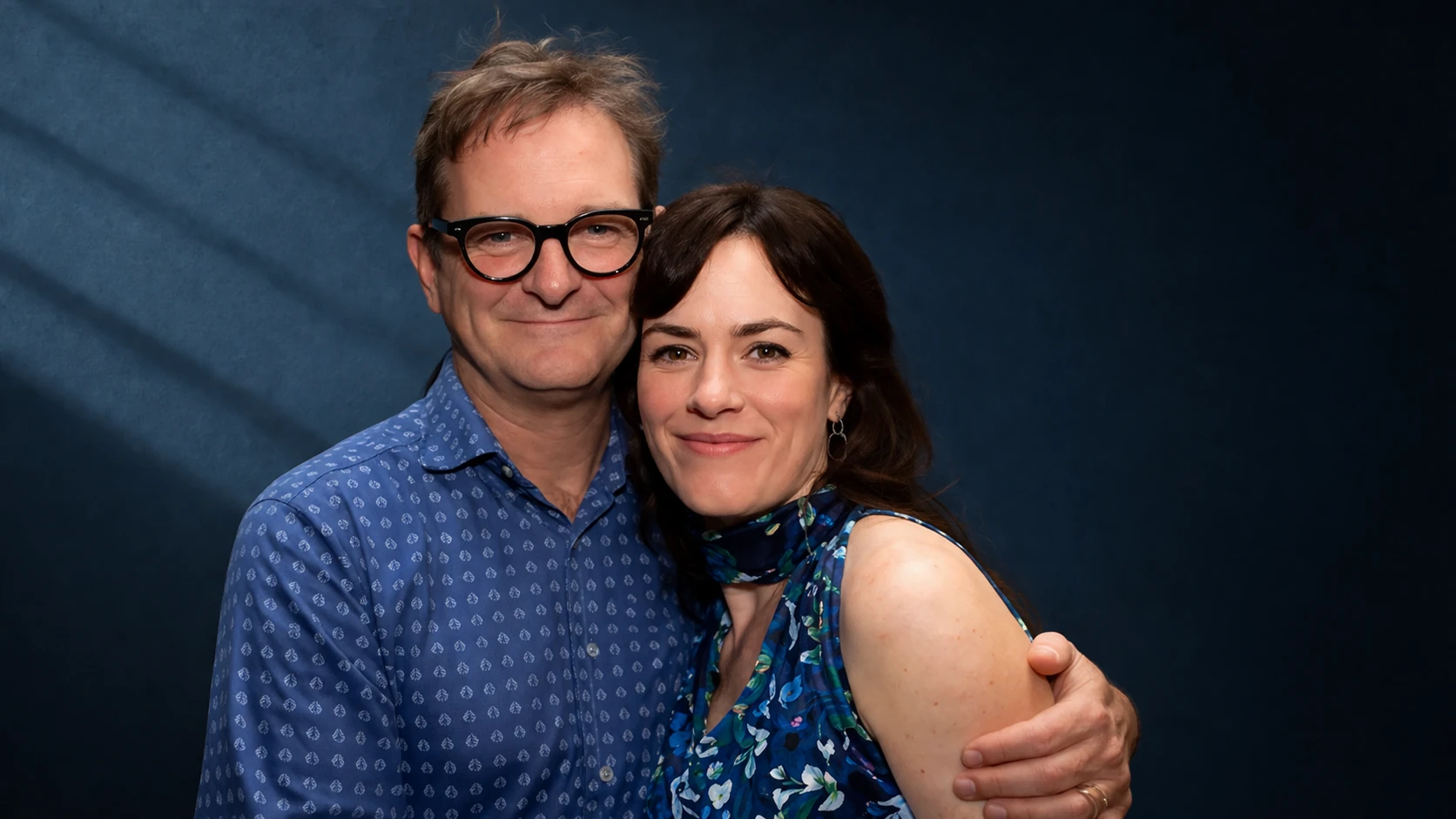
Paul Ratliff lived most of his life outside the kind of attention that tends to flatten a person into headlines. When his name does appear, it is usually in connection with his wife, the actor Maggie Siff, known for her roles in Mad Men, Sons of Anarchy, and Billions. But the scattered record that exists—interviews, professional listings, and a few carefully offered personal details—points to a quieter, more grounded life: one rooted in clinical work, family, and a deliberate distance from public exposure.
That combination has made Ratliff an unusual figure in the ecosystem of celebrity biography. He is at once known and largely undocumented, present in the public imagination but absent from the kind of detailed record that typically surrounds people linked to film and television stars. The result is a biography that must be written with care, balancing what can be confirmed against what remains private.
Early Life and Background
Public information about Paul Ratliff’s early life is limited, and that absence itself says something about the kind of life he led. Unlike many individuals connected to the entertainment industry, he did not cultivate a public-facing persona or a detailed biographical trail. There are no widely verified accounts of his childhood, birthplace, or early schooling in mainstream publications, and most claims that circulate online lack clear sourcing.
What can be said with confidence is that Ratliff came from outside the celebrity sphere. His later professional path in therapy and psychoanalysis suggests a background shaped more by academic and clinical interests than by performance or media exposure. The absence of verified early-life detail has also contributed to confusion, as multiple individuals named Paul Ratliff appear in public databases, including an actor with credits dating to the 1980s and a former athlete.
That ambiguity has led to a persistent problem: biographies that merge separate identities into one. Careful reporting avoids that trap by focusing only on what can be tied directly to Maggie Siff’s husband through credible sources. In that sense, Ratliff’s early life remains largely private, and it is more accurate to acknowledge the limits of the record than to fill them with speculation.
Education and Professional Direction
By the late 2010s, Paul Ratliff was moving into the field of mental health, a shift that offers the clearest view of his professional identity. A 2018 profile of Maggie Siff described him as a “psychoanalyst-in-training,” suggesting he was in the process of advanced study or clinical formation at that time. That phrasing is specific, and it indicates a serious commitment to a field that requires years of supervised work and theoretical training.
Public professional records provide further clarity. A listing in the United States National Provider Identifier database identifies Paul Perkins Ratliff as a licensed marriage and family therapist in New York, with credentials formalized around 2020. This aligns with the earlier description of his training and suggests that he completed the requirements needed to practice clinically.
Marriage and family therapists work with individuals, couples, and families to address emotional, psychological, and relational challenges. The profession is grounded in structured training and licensure, and it is not a casual or secondary career path. Ratliff’s presence in that field places him firmly within a community of clinicians rather than within the orbit of celebrity-related occupations.
What stands out is the timing. The shift into therapy appears to have come later in life, at least in terms of public visibility. That raises the possibility of an earlier career that is not well documented, though there is no verified, consistent record tying him definitively to other professions. The ambiguity has fueled speculation, but the clearest documented fact is his work as a therapist in New York.
A Life Connected to, but Separate from, Hollywood
Paul Ratliff’s connection to public attention came through his marriage to Maggie Siff, but even within that relationship, he remained largely out of view. Siff, known for portraying complex, often intense characters on screen, has spoken sparingly about her personal life, and when she has, her descriptions have been grounded and specific rather than promotional.
The couple reportedly met through mutual friends, with Ratliff living in London at the time. Their relationship began across distance, a detail that suggests a slower, more deliberate start than the whirlwind narratives often associated with celebrity couples. Over time, they built a life that moved between cities, reflecting both Siff’s acting career and Ratliff’s own professional commitments.
They married in 2012, a date that appears in later interviews with Siff and has been repeated in multiple credible sources. Two years later, in 2014, they welcomed their daughter, Lucy. By 2018, the family was living in Brooklyn, where Siff described a daily routine centered on parenting, work, and a degree of normalcy that stood in contrast to her on-screen persona.
That domestic focus is important. Ratliff was not a public figure in the traditional sense, and his role within the family appears to have been defined more by presence and partnership than by visibility. Siff’s interviews describe a household shaped by shared responsibility and an effort to keep their daughter’s upbringing grounded despite the demands of an acting career.
Family Life in Brooklyn
By the late 2010s, Brooklyn had become the center of the family’s life. Siff spoke about raising their daughter there, emphasizing the routines that anchored their days. Morning walks, school schedules, and the rhythms of neighborhood life offered a counterbalance to the unpredictability of television production.
Ratliff’s work as a therapist likely complemented that environment. Clinical practice often allows for a degree of scheduling control, particularly for those in private practice. While details about his specific workplace or clientele are not publicly available, the general structure of the profession suggests a career that could be integrated with family life in a relatively stable way.
The picture that emerges is not one of celebrity excess but of deliberate normalcy. That does not mean the absence of pressure or complexity. Balancing a demanding acting career with family responsibilities is rarely simple, and Siff has spoken about the challenges of commuting between cities and managing time across competing obligations.
Still, Ratliff’s presence appears to have been a stabilizing force. His work, though private, was rooted in listening, analysis, and care—qualities that align with the kind of support system often needed in households where one partner’s career involves public scrutiny and irregular schedules.
Illness and Loss
The most significant turning point in the publicly known story of Paul Ratliff’s life came with his illness. According to later interviews with Maggie Siff, he was diagnosed with brain cancer during the COVID-19 pandemic. The timing added a layer of difficulty, as access to care, travel, and support networks were all affected by global restrictions.
Siff has spoken about this period with restraint but also with clarity. She described continuing to work while caring for her husband, a situation that required both emotional and logistical resilience. The overlap between her professional obligations and his illness created a difficult balance, one that many families faced during the pandemic under similarly constrained circumstances.
Ratliff died in 2021, a fact confirmed in multiple interviews and reports that draw on Siff’s own accounts. The loss marked a profound shift in the family’s life, particularly for their daughter, who was still young at the time. Siff has since referred to herself as a single parent, a detail that underscores the lasting impact of his absence.
The public record does not dwell on the specifics of his illness or final months, and that restraint reflects both the privacy of the family and the limits of what has been shared. What is clear is that his death was not only a personal loss but also a defining moment in the narrative that now shapes how he is remembered.
Public Image and Misconceptions
Paul Ratliff’s relative obscurity has made him unusually vulnerable to misrepresentation. A quick search online produces a mix of accurate information, speculation, and outright confusion. Some sources attribute acting credits to him, while others present detailed biographies that lack verifiable backing.
The acting question is a persistent one. There is a Paul Ratliff listed in entertainment databases with credits from the 1980s, including appearances in television shows and films. However, there is no clear, widely confirmed link between that individual and Maggie Siff’s husband. The shared name has led many sites to assume they are the same person, but careful reporting treats that connection as unverified.
There are also claims about his net worth, education, and early career that circulate without clear sourcing. These often appear on celebrity biography websites that prioritize completeness over accuracy. The result is a body of information that looks authoritative but does not hold up under scrutiny.
What’s surprising is how quickly these details become accepted as fact once they are repeated across multiple platforms. This is a common problem in digital media, where repetition can create the illusion of verification. In Ratliff’s case, the safest approach is to rely on primary interviews, professional records, and consistent reporting, while treating other claims with caution.
Career, Income, and Net Worth
Because Paul Ratliff’s professional life was rooted in therapy, his income and financial standing were not matters of public disclosure. Unlike actors or public executives, therapists do not typically have widely reported earnings, and private practice incomes can vary significantly depending on location, specialization, and client base.
There are online estimates of his net worth, but these figures are speculative and should not be treated as reliable. Without access to financial disclosures or credible reporting, it is not possible to assign a precise number to his personal wealth. What can be said is that his profession, combined with his wife’s established acting career, likely supported a stable, upper-middle-class lifestyle in New York.
Maggie Siff’s own career provides more concrete financial context. As a regular on major television series, she has earned a steady income over many years, contributing to the family’s overall financial security. That context helps explain the environment in which Ratliff lived, even if his individual earnings remain private.
Personal Character and Legacy
The most meaningful insights into Paul Ratliff’s character come indirectly, through the way he is described by those closest to him. Maggie Siff’s interviews suggest a partner who was thoughtful, grounded, and deeply engaged in both his work and his family life. These are not dramatic descriptors, but they carry weight precisely because they are understated.
Therapy as a profession demands patience, empathy, and a willingness to engage with difficult emotional realities. While it would be inappropriate to draw sweeping conclusions from that alone, it does provide a framework for understanding the kind of work Ratliff chose to do. It also aligns with the image of a person who valued depth over visibility.
His legacy, then, is not one of public achievements or widely recognized accolades. It is a quieter legacy, centered on family, professional care, and the relationships he built in private. For those who knew him, that legacy would be measured not in headlines but in the impact of his presence.
Where Paul Ratliff Fits in the Public Story
In the broader narrative of Maggie Siff’s life and career, Paul Ratliff occupies a central but understated role. He was part of the foundation that supported her work during some of her most visible years, including her time on Billions. At the same time, he maintained his own professional identity and did not become absorbed into the entertainment industry’s public-facing culture.
That balance is rare. Many partners of high-profile actors either become public figures themselves or are defined almost entirely by their relationship. Ratliff seems to have resisted both paths, maintaining a degree of independence that is evident in the limited but consistent information available about him.
His story also highlights the limits of what can and should be known about people who choose not to live publicly. In an era where personal details are often treated as content, his life stands as a reminder that not all stories are meant to be fully documented.
Frequently Asked Questions
Who was Paul Ratliff?
Paul Ratliff was the husband of actor Maggie Siff and a licensed marriage and family therapist based in New York. He is best known publicly through his relationship with Siff, but his professional identity was rooted in clinical mental health work.
Was Paul Ratliff an actor?
There is an actor named Paul Ratliff with credits from the 1980s, but there is no definitive public evidence linking that individual to Maggie Siff’s husband. The connection is often assumed online, but it remains unconfirmed.
When did Paul Ratliff marry Maggie Siff?
Paul Ratliff and Maggie Siff were married in 2012. This date has been confirmed through interviews with Siff and is widely accepted in reliable reporting.
Did Paul Ratliff have children?
Yes, he had one daughter, Lucy, born in 2014. She has been mentioned in interviews with Maggie Siff, though the family has kept her life largely private.
What did Paul Ratliff do for a living?
He was a marriage and family therapist and was described earlier in his career as a psychoanalyst-in-training. His work focused on mental health and relationships.
How did Paul Ratliff die?
Paul Ratliff died in 2021 after being diagnosed with brain cancer. The illness and his passing were discussed by Maggie Siff in later interviews.
Conclusion
Paul Ratliff’s life does not fit neatly into the categories that usually define public figures. He was not an entertainer, a politician, or a business leader with a visible track record. Instead, he was a private individual whose presence became known through the life he shared with someone more publicly recognized.
That does not make his story less meaningful. If anything, it highlights a different kind of significance, one rooted in relationships, professional care, and the quiet work of building a life away from the spotlight. His career in therapy suggests a commitment to helping others navigate their own challenges, even as his own life remained largely out of view.
The truth is, there is no exhaustive public record of Paul Ratliff, and there likely never will be. What remains is a set of verified facts, a handful of personal reflections, and the impact he had on the people closest to him. In a culture that often equates visibility with importance, his story offers a quieter, more grounded measure of a life lived with purpose.
For readers, that may be the most honest takeaway. Not every life needs to be fully documented to be understood. Sometimes, the outline is enough to show what mattered. And in Paul Ratliff’s case, what mattered seems to have been family, work, and the kind of presence that does not require an audience to be real.