
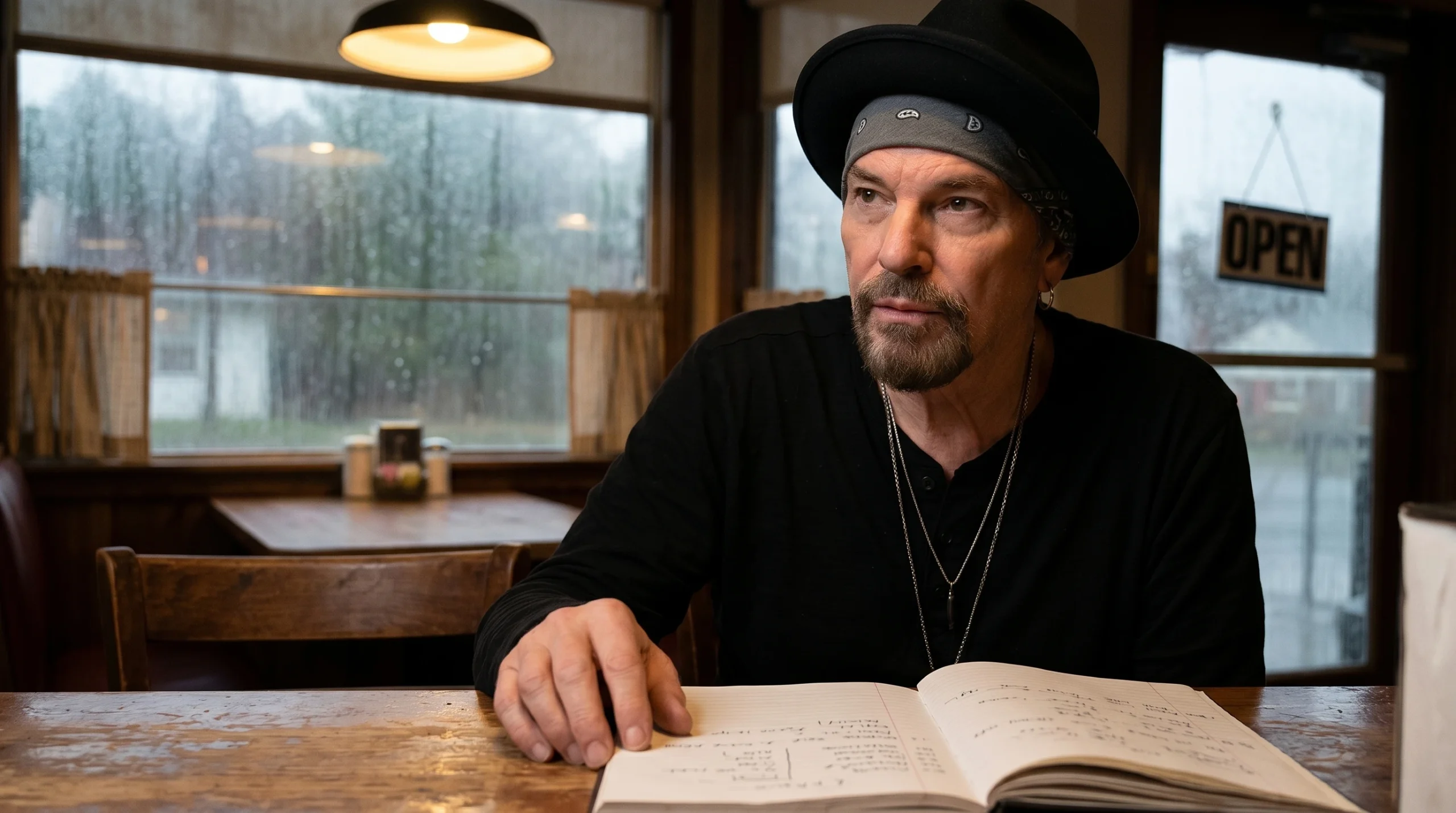
Jimmy Don Thornton lived far from the machinery of fame, yet his name has endured in a way that fame itself cannot always secure. He is remembered today mostly as the younger brother of Billy Bob Thornton, the Oscar-winning actor, screenwriter, director, and musician whose work has often carried a deep current of grief, memory, and family history. But Jimmy Don was not simply a footnote in someone else’s biography. He was a musician, a songwriter, a working man, and a beloved brother whose sudden death at 30 left a mark that Billy Bob Thornton has spoken about for decades.
The public record around Jimmy Don Thornton is small, and that matters. He was not a celebrity in the conventional sense, and much of what people know about him comes through Billy Bob’s interviews, family references, memorial records, and song credits. That makes his story both fragile and revealing. It asks for care, because the truth is more meaningful than the easy myth of the “lost genius” or the “forgotten star.”
Readers usually search for Jimmy Don Thornton because they want to know who he was, how he died, what his connection was to Billy Bob Thornton, and why his memory still appears in public conversations about Billy Bob’s life. The answers are not long, but they are human. Jimmy Don’s life was brief, private, creative, and, for those closest to him, impossible to replace.
Early Life and Family
Jimmy Don Thornton was born James Donald Thornton on April 12, 1958, in Arkansas, into a family that would later become familiar to the public through the career of his older brother, Billy Bob Thornton. The Thornton family’s roots were in Arkansas, and Billy Bob’s own biography places that background at the center of his identity. Their father, William Raymond “Billy Ray” Thornton, worked as a high school basketball coach. Their mother, Virginia Roberta Faulkner Thornton, has often been described in public accounts as a psychic.
Billy Bob Thornton was born in 1955, making him about three years older than Jimmy Don. Public biographies commonly identify Billy Bob as the oldest of the Thornton sons, with Jimmy Don and John David Thornton as his younger brothers. The brothers came of age in a Southern working-class environment where hardship, humor, religion, music, and family stories often sat close together. That background later became part of the emotional material Billy Bob drew from in film, music, and interviews.
The Thornton home has been described by Billy Bob in ways that suggest both creativity and difficulty. He has spoken publicly about fear, anxiety, family strain, and the lasting effects of childhood experience. Those details belong primarily to Billy Bob’s story, but they help explain the atmosphere in which Jimmy Don grew up. He was part of a family where imagination mattered, but where emotional pain was also part of ordinary life.
Growing Up Around Music
Music seems to have been one of the clearest bonds between Jimmy Don Thornton and his older brother. Billy Bob Thornton later became known not only as an actor and filmmaker but also as a musician, and he has often made clear that music was not an afterthought in his life. He played in bands before his Hollywood career took hold, and he has long resisted the idea that his music was merely a celebrity side project. That context makes Jimmy Don’s songwriting feel less like a stray detail and more like part of the family’s shared language.
Jimmy Don is described in public memorial accounts as a musician and songwriter. There is no strong evidence that he had a major commercial music career, released widely known records during his lifetime, or became a public performer on a national level. That distinction is important because it keeps the biography honest. He appears to have been a creative person whose music was known most intimately by family and close circles rather than by a broad audience.
The songs attributed to Jimmy Don suggest a writer drawn to personal feeling rather than show-business calculation. Billy Bob has said in interviews that Jimmy Don wrote songs for people he loved, including songs connected to childhood and family memory. That is a striking detail because it places Jimmy Don’s songwriting in the world of private devotion. He was not only writing for a stage; he was writing to people.
Life Outside the Spotlight
Unlike Billy Bob Thornton, Jimmy Don did not become famous in his lifetime. The available public record shows a man who lived and worked outside Hollywood, even though his family would later become connected to it through Billy Bob’s success. Public memorial sources have described Jimmy Don as working in San Francisco as a chef at the Hard Rock Cafe. That detail gives a rare glimpse of his adult life away from Arkansas.
San Francisco in the 1980s was a city with a strong cultural identity, a vibrant food scene, and a lively music culture. It would be easy to turn that into a larger claim about Jimmy Don’s ambitions, but the record does not support that kind of certainty. What can be said is simpler: he was living and working there, and he appears to have carried his music with him. His life was not empty just because it was not widely documented.
The truth is, most lives are lived this way. They are built through jobs, friendships, unfinished plans, family calls, songs written at home, and private loyalties that never become public record. Jimmy Don Thornton’s biography challenges the habit of measuring a person’s worth by fame, credits, or money. His lasting importance came from the depth of his relationships, especially with the brother who would later become famous.
His Bond with Billy Bob Thornton
Billy Bob Thornton’s public comments about Jimmy Don make clear that the brothers shared a deep bond. In interviews over the years, Billy Bob has described Jimmy Don’s death as a loss that did not fade with time. He has spoken about grief not as a temporary crisis but as a permanent condition, something he learned to live beside rather than overcome. That honesty is one reason Jimmy Don’s name continues to appear in stories about Billy Bob’s life.
The brothers were close enough that Jimmy Don wrote a song for Billy Bob. Billy Bob has referred to a song called “Billy Bob’s Magic Kingdom,” which he described as deeply tied to their childhood and filled with references only the two of them would fully understand. That kind of song is not meant for strangers first. It is a coded family document, written in the language of shared memory.
Billy Bob has also said that Jimmy Don wrote songs for the people he loved most. If taken at face value, that detail tells us more about Jimmy Don than a résumé ever could. He seems to have used music as a way of honoring attachment, turning feeling into something that could be kept. For a private songwriter, that may be the truest audience of all.
The Songs That Survived Him
Jimmy Don Thornton’s best-known public legacy is tied to two songs recorded by Billy Bob Thornton: “Emily” and “Island Avenue.” Both songs are credited to Jimmy Don Thornton on Billy Bob’s 2003 album The Edge of the World. The fact that “Emily” opens the album is especially meaningful. It places Jimmy Don’s writing at the front of the record, giving his voice a posthumous place in Billy Bob’s musical work.
Those credits are among the strongest pieces of public evidence for Jimmy Don’s identity as a songwriter. They show that his work was not only remembered privately but preserved in a commercial recording. For many songwriters who never achieve fame during life, that kind of preservation never happens. Jimmy Don’s songs reached listeners because his brother carried them forward.
There are references to other songs by Jimmy Don as well. Billy Bob has mentioned “Pretoria Burning” and “Billy Bob’s Magic Kingdom,” though these are less familiar to the general public than the songs released on The Edge of the World. The available evidence suggests that Jimmy Don left behind a small body of deeply personal work rather than a large public catalog. That smaller scale does not make the songs less important.
Death in San Francisco
Jimmy Don Thornton died on October 3, 1988, in San Francisco, California. He was only 30 years old. Public accounts commonly describe his death as sudden and related to a heart condition, with some reporting identifying ventricular fibrillation as the cause. Ventricular fibrillation is a serious disturbance of the heart’s rhythm that can cause sudden cardiac death if not treated immediately.
His death came before Billy Bob Thornton’s biggest breakthroughs in film. Billy Bob would later become widely known for Sling Blade, the 1996 film that earned him an Academy Award for Best Adapted Screenplay and changed the course of his career. Jimmy Don did not live to see that success. That fact gives Billy Bob’s later rise a shadow that is easy to miss in ordinary career summaries.
The suddenness of Jimmy Don’s death is central to how Billy Bob has described the loss. A death at 30 leaves little room for preparation, and a sudden cardiac event can turn an ordinary day into a permanent rupture. Public sources do not provide a full medical history or a detailed account of Jimmy Don’s final hours. A responsible biography should not pretend otherwise.
Grief and Billy Bob Thornton’s Public Life
Billy Bob Thornton has spoken about Jimmy Don’s death in unusually direct terms. He has said, in widely reported comments, that after losing his brother he never expected to be fully happy again. The idea that he could be only partly happy has followed him through interviews because it rejects the usual public script about healing. It is not a neat inspirational line; it is a plain description of a wound that stayed.
That view of grief helps explain why Jimmy Don remains present in Billy Bob’s public story. Many celebrities speak about family loss in careful, managed phrases, but Billy Bob’s comments have often felt rawer and less polished. He has not framed his brother’s death as something that made him stronger in a simple way. Instead, he has described a changed life.
This also gives readers a clearer way to understand some of Billy Bob Thornton’s artistic themes. His work has often returned to loneliness, damaged families, outsiders, guilt, tenderness, and the strange comedy that can exist beside pain. Jimmy Don’s death does not explain all of that, and it would be unfair to reduce Billy Bob’s art to one event. But it is part of the emotional history that shaped him.
Public Image and Misunderstandings
Because Jimmy Don Thornton was not a public figure in the way his brother became one, his image online is vulnerable to exaggeration. Some short biographies describe him in sweeping terms without offering much evidence. Others repeat the same few facts but make them sound larger than they are. The safest account is also the most respectful one: he was a private man, a songwriter, a musician, a chef, and a deeply loved brother.
There is no credible basis for treating Jimmy Don as a major celebrity, a wealthy public figure, or an entertainment-industry power player. His name appears today because of family connection, recorded song credits, and Billy Bob Thornton’s testimony about grief. That does not diminish him. It simply places his life in the proper frame.
Another misunderstanding involves the idea of “current status.” Jimmy Don Thornton died in 1988, so there is no current career, business venture, marriage update, or public activity to report. Searches that ask where he is now are really asking what happened to him and how he is remembered. The answer is that he lives on through family memory, burial records, and the songs Billy Bob chose to record.
Relationships, Marriage, and Children
Publicly available information about Jimmy Don Thornton’s romantic life is limited. There is no widely confirmed public record showing a spouse, marriage, or children. Because he was a private person, that absence should not be turned into a claim that he never had close relationships. It means only that such details are not clearly established in reliable public accounts.
This is a place where restraint matters. Low-profile relatives of celebrities often become subjects of thin online biographies that fill private gaps with guesswork. That is unfair to the person and misleading to readers. In Jimmy Don’s case, the most meaningful confirmed relationship in the public record is his relationship with Billy Bob Thornton.
Family clearly mattered to Jimmy Don’s story. The songs Billy Bob has described suggest a man who wrote for people close to him. The way Billy Bob has carried his memory also suggests a bond that remained active long after death. Those are the personal facts that can be discussed with confidence.
Work, Money, and Net Worth
There is no credible public estimate of Jimmy Don Thornton’s net worth. Since he was not a public celebrity, did not have a widely documented entertainment career, and died young, any specific dollar figure would be speculative. Online pages that assign exact or inflated net worth numbers to private individuals should be treated with caution. In this case, a responsible account should say plainly that his net worth is not publicly known.
His known income sources appear to have included ordinary work, including his reported job as a chef in San Francisco. He also wrote songs, but there is no public evidence that songwriting generated major income for him during his lifetime. The later recording of his songs by Billy Bob Thornton gives his work public recognition, but it does not provide enough information to calculate earnings. Royalty arrangements, publishing ownership, and estate details are not clearly available in the public record.
Money is not the main measure of Jimmy Don Thornton’s life. That may sound obvious, but celebrity-adjacent biographies often force a net worth frame onto people who did not live public financial lives. With Jimmy Don, the more honest measure is artistic and personal. His value in the public story lies in the songs he left, the relationships he shaped, and the grief that kept his name alive.
Burial and Memorial
Jimmy Don Thornton was buried at Alpine Cemetery in Clark County, Arkansas. That burial place ties his story back to the state where the Thornton family’s roots run deep. It also gives readers a concrete place in the record, one of the few public markers of a life that otherwise remained mostly private. Memorial records list his birth and death dates and identify him through family connection and personal description.
Cemeteries can feel like the quietest form of biography. They reduce a life to dates, names, and family ties, but they also preserve a claim: this person was here, and this person mattered. For Jimmy Don, that record stands beside the musical record created by his brother. One is stone; the other is song.
The memorial record cannot tell the whole story. It cannot describe his voice, his habits, his humor, or what he was like in a room with people who knew him. But that limitation is also a reminder to be careful. The missing details should be treated as private space, not as an invitation to invent.
Why Jimmy Don Thornton Still Matters
Jimmy Don Thornton matters because his story shows how private lives can shape public art. He did not need to become famous to leave an imprint on someone who did. Billy Bob Thornton’s continued references to him suggest that Jimmy Don’s influence was emotional, creative, and lasting. That kind of influence rarely fits into ordinary career timelines.
His story also gives readers a more complete picture of Billy Bob Thornton. Behind the actor’s sharp humor, rough edges, and restless creativity is a man who has spoken openly about permanent loss. Jimmy Don’s death became one of the defining absences in that life. It is part of the emotional background to Billy Bob’s music and public reflections.
But here’s the thing. Jimmy Don Thornton should not matter only because Billy Bob Thornton became famous. He matters because he represents the many creative people whose work survives through family memory rather than public acclaim. His life was short, but it was not empty, and his songs found their way beyond him.
Frequently Asked Questions
Who was Jimmy Don Thornton?
Jimmy Don Thornton was the younger brother of Billy Bob Thornton. His full name is commonly given as James Donald Thornton, and he was born on April 12, 1958. He is remembered as a musician, songwriter, and chef whose public legacy is tied closely to his brother’s later interviews and recordings.
He was not a major public celebrity during his lifetime. Most readers know his name because Billy Bob Thornton has spoken about him with deep affection and grief. His songs “Emily” and “Island Avenue” later appeared on Billy Bob Thornton’s album The Edge of the World.
How did Jimmy Don Thornton die?
Jimmy Don Thornton died suddenly on October 3, 1988, in San Francisco, California. He was 30 years old at the time of his death. Public accounts describe the cause as a heart condition, with some reporting identifying ventricular fibrillation as the specific cause.
There is no widely available full medical record for his death. Because of that, the most accurate phrasing is that he died suddenly from a serious heart-related event. More detailed claims about his health history should be treated carefully unless supported by reliable records.
Was Jimmy Don Thornton a musician?
Yes, Jimmy Don Thornton is publicly identified as a musician and songwriter. The clearest evidence is that he is credited with writing “Emily” and “Island Avenue,” both recorded by Billy Bob Thornton. Those songs helped preserve his name beyond family memory.
There is no strong evidence that Jimmy Don had a large commercial music career during his lifetime. He appears to have been a private songwriter whose work mattered deeply to those close to him. That private scale is part of what makes his story distinct.
What was Jimmy Don Thornton’s connection to Billy Bob Thornton?
Jimmy Don Thornton was Billy Bob Thornton’s younger brother. Billy Bob has spoken publicly about the emotional impact of Jimmy Don’s death and has described the loss as something that permanently changed him. Their relationship is one of the central reasons Jimmy Don remains a subject of public interest.
Billy Bob also helped keep Jimmy Don’s songwriting alive. By recording songs written by his brother, he gave that work a public life it might not otherwise have had. The connection between them was personal first, but it later became part of Billy Bob’s artistic story.
Did Jimmy Don Thornton have a wife or children?
There is no widely confirmed public information showing that Jimmy Don Thornton had a wife or children. Because he was a private person and not a celebrity, many details about his personal life were never documented publicly. Responsible accounts should avoid making firm claims without evidence.
That does not mean he lacked important relationships. Billy Bob Thornton’s comments about his brother’s songs suggest Jimmy Don cared deeply about the people close to him. The public record simply does not support a detailed account of his romantic or family life beyond the Thornton family.
What was Jimmy Don Thornton’s net worth?
Jimmy Don Thornton’s net worth is not publicly known. Any exact figure attached to his name online should be treated as an estimate at best and likely speculation. He was not a public business figure or major celebrity with reported earnings.
His known work included music and a reported job as a chef in San Francisco. While his songs later appeared on a Billy Bob Thornton album, public information does not establish the financial details of those recordings. The better focus is his creative and personal legacy rather than a guessed dollar amount.
Where is Jimmy Don Thornton buried?
Jimmy Don Thornton is buried at Alpine Cemetery in Clark County, Arkansas. That burial place connects his story back to the state associated with the Thornton family’s roots. Memorial records list his birth and death dates and identify him in relation to his family.
His grave is one of the few public markers of his life. The other major public marker is musical: the songs Billy Bob Thornton recorded after Jimmy Don’s death. Together, those records preserve a small but meaningful public memory.
Conclusion
Jimmy Don Thornton’s life does not fit the usual celebrity biography pattern. There is no long list of awards, no public scandal cycle, no late-career reinvention, and no carefully managed public image. There is, instead, a brief life remembered through family, music, work, and grief. That kind of story can be easy to overlook, but it often tells us more about what people truly leave behind.
His name endures because Billy Bob Thornton refused to let it disappear. By speaking about Jimmy Don and recording his songs, Billy Bob turned private memory into public tribute. The result is not a full archive, but it is enough to show that Jimmy Don was loved, missed, and artistically present in ways that outlasted his 30 years.
The most respectful way to understand Jimmy Don Thornton is to keep the facts clear and the claims modest. He was a songwriter, a musician, a chef, a son, a brother, and a man whose sudden death changed the life of someone who would later become famous. His story matters because it reminds readers that legacy is not always measured by fame.
For many people searching his name, the answer is simple but not small. Jimmy Don Thornton was Billy Bob Thornton’s younger brother, but he was also more than that. He was the person behind songs that survived him, and the absence behind grief that never fully left.