
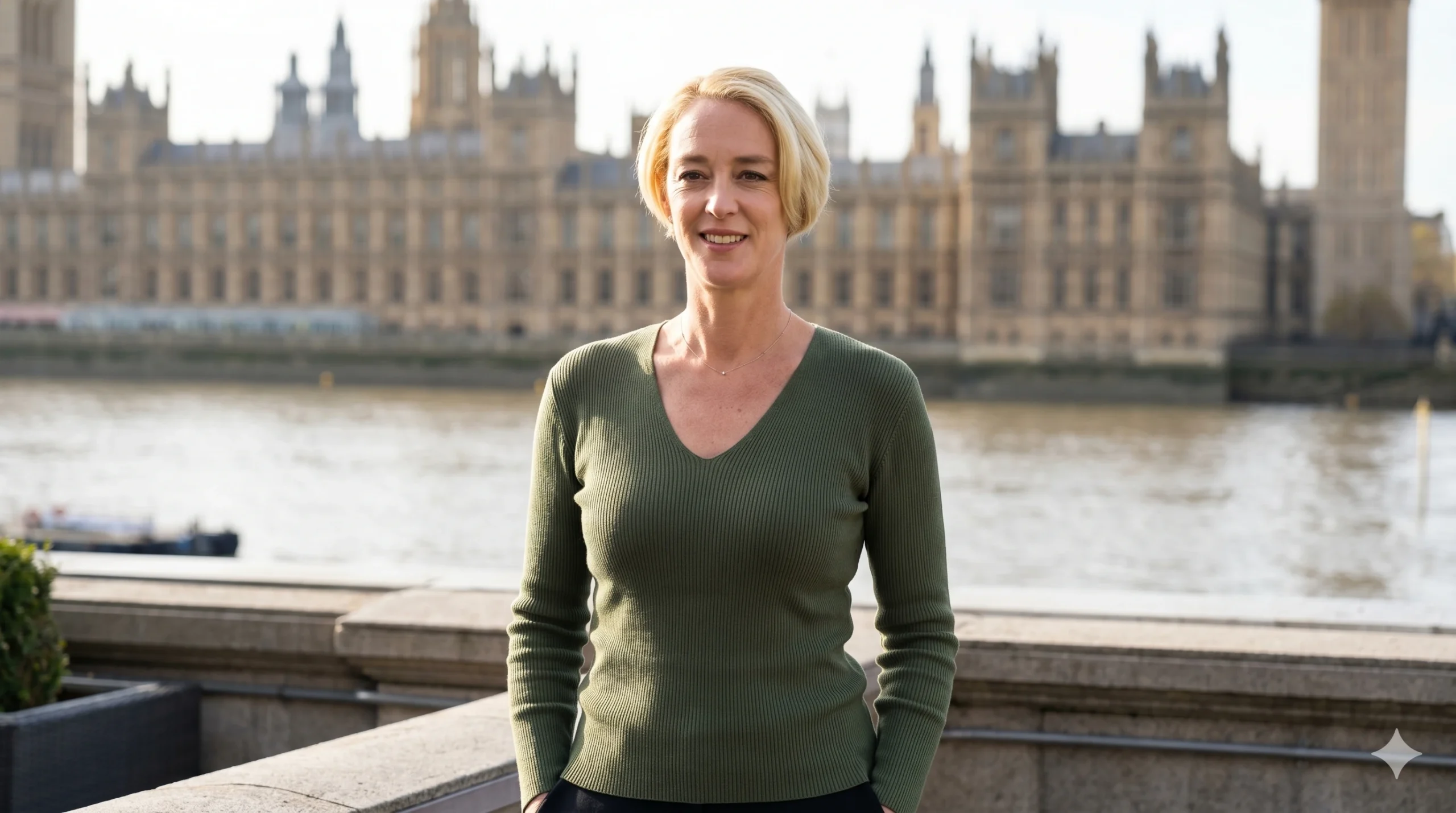
Claire Pearsall is not the kind of public figure who built her name through celebrity, scandal, or a single viral moment. Her profile has grown in the more traditional corridors of British public life: Parliament, local government, party politics, Whitehall, and the broadcast studios where political arguments are tested in real time. To viewers who have seen her on television discussing immigration, elections, or the Conservative Party, she can seem like a familiar face whose background is less widely understood. That gap is one reason so many people search for Claire Pearsall today.
Pearsall is best known as a British political commentator, former Conservative councillor, former Home Office special adviser, and long-serving parliamentary staffer. Her career has placed her close to some of the central forces in modern British politics, including Brexit, immigration reform, local governance, and the internal pressures facing the Conservative Party. She is also publicly known as the wife of veteran political journalist Nigel Nelson, though her own career stands on a separate foundation. Her story is less about sudden fame than about years of political work that gradually became visible to a wider audience.
What makes Pearsall interesting is the route she took into public commentary. She did not arrive as a career television presenter or campaign celebrity. She came through the system itself, working behind the scenes before becoming one of the people asked to explain what is happening inside it. That gives her public image a particular texture: part Westminster insider, part local councillor, part media contributor, and part political operator who understands both message and machinery.
Early Life and Family Background
The publicly confirmed details of Claire Pearsall’s early life are limited. Unlike many entertainers, authors, or elected national politicians, she has not built a brand around childhood stories, family memoir, or a heavily documented personal history. Reliable public material does not clearly establish her exact date of birth, parents’ names, hometown, schools, or childhood circumstances. That lack of detail should not be treated as mystery; it is simply the difference between a person with a public political career and a celebrity whose private biography has been widely reported.
What can be said responsibly is that Pearsall’s later career shows a strong familiarity with British institutions, Conservative politics, and the practical demands of public administration. Her path suggests someone who became comfortable operating in formal political settings long before she became a regular media voice. The public record begins to sharpen around her professional life rather than her childhood. For readers, that means the most reliable biography starts with her work rather than with unsupported claims about her upbringing.
Some online profiles attempt to fill these gaps with confident but poorly supported details. That is risky, especially with a figure whose private life has not been widely documented by major news organizations or official biographies. A careful account should not invent certainty just to make a life story feel fuller. Pearsall’s public identity is best understood through the roles she has held and the institutions she has worked in.
Education and Early Political Path
There is no widely verified public account of Pearsall’s education in the way there is for senior ministers, judges, or major media presenters. Public profiles focus instead on her years in Parliament, her later advisory role at the Home Office, her council service in Sevenoaks, and her work as a commentator. That absence matters because education often becomes a space where online biographies casually repeat claims without strong evidence. In Pearsall’s case, the responsible approach is to say that her formal education has not been clearly established in the reliable public record.
Her early ambitions are also not documented in detail, but her career points toward a long-standing interest in politics and public service. Working in Parliament for many years requires patience with procedure, confidence around elected officials, and a high tolerance for pressure. It also demands the ability to move between policy, people, communication, and crisis management. Pearsall’s later roles suggest she developed those skills through sustained work rather than through a single public breakthrough.
That practical grounding helps explain her later move into media commentary. Political broadcasters often look for guests who can do more than repeat party lines. They want people who understand how decisions are made, why governments stumble, and what political messages are really trying to achieve. Pearsall’s background gave her that kind of fluency before most viewers knew her name.
Years Inside Parliament
One of the clearest facts about Claire Pearsall’s career is her long experience in Parliament. Public profiles have described her as having nearly two decades of parliamentary experience and as having served for more than a decade as chief of staff to a senior Conservative MP. That kind of role is demanding, discreet, and rarely glamorous. It is also one of the best vantage points from which to understand how British politics actually works.
A parliamentary chief of staff is often the person who keeps an MP’s working life functioning. The job can include managing staff, handling correspondence, preparing for debates, dealing with constituents, coordinating media requests, tracking legislation, and responding to political crises. It requires political judgment as well as administrative discipline. People in those roles often know a great deal about Westminster without becoming household names themselves.
Pearsall’s years in Parliament are central to understanding her later authority as a commentator. She did not merely observe politics from television panels or opinion columns. She spent years close to the daily rhythm of parliamentary life, where politics is not only speeches and headlines but casework, pressure, compromise, and timing. That experience gives her commentary a different base from someone who came to politics mainly through academia or journalism.
The work also helps explain her comfort with political argument. Westminster staffers learn quickly that public messages and private realities do not always match. They see how policy is shaped by party management