
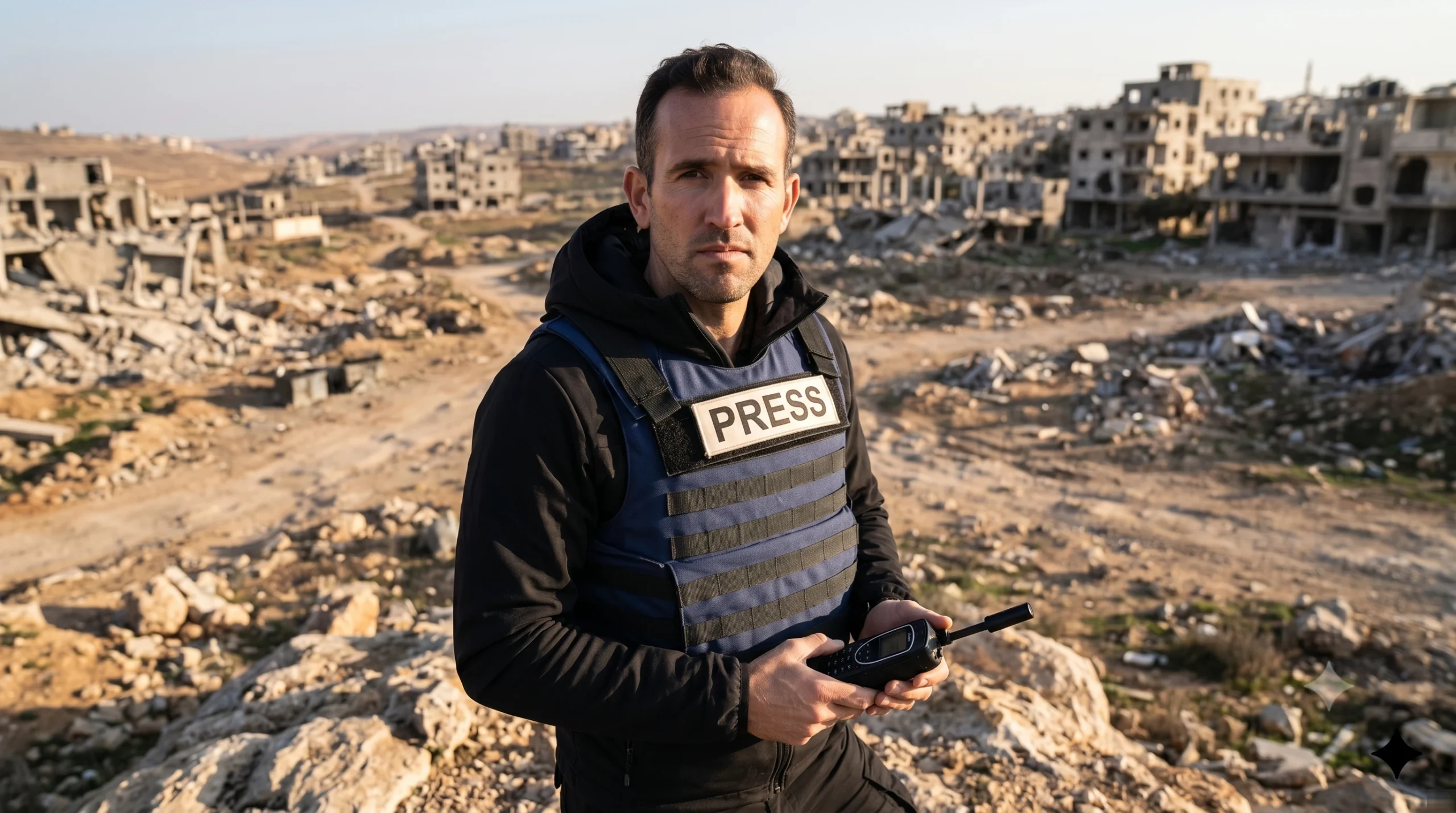
Hugo Bachega became widely recognizable to many viewers in a few tense seconds from Kyiv. He was reporting live for the BBC in October 2022 when explosions were heard in the Ukrainian capital, forcing him and his crew to stop the broadcast and move to safety. The clip spread quickly because it showed, without drama or staging, what foreign correspondents often face while trying to explain a war in real time.
But Bachega’s career is not defined by that one interruption. He is a BBC foreign correspondent whose recent public work has centered on the Middle East, especially Lebanon, Israel, Gaza, Hezbollah, and the political fallout of war. His appeal to readers is straightforward: people have seen him calmly reporting from dangerous places and want to know who he is, where he comes from, and what is actually known about his life beyond the broadcast frame.
The honest biography of Hugo Bachega is also a lesson in careful reporting. His professional record is visible through BBC work, field dispatches, and bylines, but much of his private life is not publicly confirmed. That gap has led to many online claims about his age, family, salary, wife, and net worth, yet a serious profile has to separate the facts from repetition and guesswork.
Who Is Hugo Bachega?
Hugo Bachega is a journalist and BBC Middle East correspondent known for reporting from conflict zones and politically sensitive regions. His work has appeared across BBC platforms and through international syndication, with recent stories focused on Gaza, Lebanon, Israel, Hezbollah, and regional diplomacy. He has also been associated with BBC News Brasil and Portuguese-language reporting, which has led many readers to connect him with Brazil and Brazilian journalism.
His public identity is built around field reporting rather than personality branding. Unlike television presenters with polished personal biographies, Bachega is mostly known through his work, live reports, and written dispatches. That makes him familiar to viewers but less documented as a private individual, a combination that often fuels search interest.
What stands out in his career is the kind of assignment he has handled. Bachega has reported from Ukraine during Russia’s war, from Lebanon during conflict with Israel, and from the wider Middle East during one of the most volatile periods in recent memory. He is not simply a studio analyst discussing war from a distance; his public profile comes from being close to events while trying to keep the reporting measured and clear.
Early Life and Family Background
Verified public information about Hugo Bachega’s early life is limited. He is widely described online as being of Brazilian background, and his professional record includes work connected to Portuguese-language media. That said, his exact birthplace, date of birth, parents, siblings, and childhood details have not been clearly established in widely reliable public sources.
This matters because many biography pages present personal details about him with more certainty than the evidence supports. Some repeat claims about his age, family, nationality, and upbringing without showing a clear source. A responsible biography should not turn those claims into fact simply because they appear in search results.
What can be said with confidence is that Bachega’s career reflects a journalist comfortable working across languages, regions, and international newsrooms. His connection to Portuguese-language journalism suggests a background or professional path shaped by Brazil or Brazilian media, but the public record is stronger on his career than on his childhood. For a correspondent covering war and armed groups, that privacy is not unusual and may also be intentional.
Education and Early Ambitions
Details about Bachega’s formal education have not been clearly verified in the public record. Some online profiles make claims about his studies or early training, but they do not consistently point to primary sources. Without a confirmed institutional biography, it is better to treat his educational background as private or at least not firmly documented.
His career path, however, points to a journalist shaped by international reporting rather than by celebrity media. Bachega’s work requires fluency in fast-moving news, strong editorial judgment, and the ability to report across political, military, and humanitarian subjects. Those skills usually come from years of newsroom experience, field assignments, and the discipline of filing under pressure.
The pattern of his career suggests early ambitions rooted in serious news rather than fame. He has not built his public presence around opinion, personal disclosure, or punditry. Instead, his reputation has come from the slower work of being useful during difficult stories, which is often how foreign correspondents earn trust.
Career Beginnings
The early stages of Hugo Bachega’s journalism career are not documented in one neat public timeline. Several secondary sources associate him with Reuters in São Paulo before his BBC career, but that detail should be treated with care unless tied to a stronger source. What is clear is that he developed into a journalist with international range and a record of reporting on major global stories.
His byline history shows a professional path that moved through major news organizations and international platforms. Bachega’s work has been linked to BBC News, BBC News Brasil, BBC Mundo, and other outlets that publish or republish BBC journalism. That footprint reflects a modern correspondent’s reality, where one report may travel across television, digital, radio, and multiple language services.
By the time he became widely recognized by global viewers, Bachega was already working in the demanding space of foreign news. He was not an overnight figure created by a viral clip. The Kyiv moment may have introduced him to a wider audience, but it was built on the skills of a journalist already trusted with difficult live coverage.
The BBC Years
Bachega’s BBC career has placed him in some of the most closely watched conflicts of the past decade. He has reported on Ukraine, the Middle East, Lebanon, Gaza, Israel, and the wider regional consequences of war. His work often involves explaining not just what happened, but why it matters and what remains uncertain.
The BBC correspondent role is not a narrow television job. A reporter may file live shots, write online analysis, contribute to radio, brief editors, follow official statements, speak to sources, and update stories as facts change. Bachega’s public record reflects that cross-platform model, with his name appearing on written stories and in broadcast segments tied to major international developments.
His reporting style is restrained rather than theatrical. He tends to foreground the facts, the place, and the political stakes rather than making himself the center of the story. That approach is especially valuable in conflict coverage, where the correspondent must keep attention on civilians, officials, military claims, and verified developments instead of personal performance.
The Kyiv Broadcast That Changed His Public Profile
On October 10, 2022, Hugo Bachega was reporting live from Kyiv when explosions were heard in the Ukrainian capital. The moment came during a period of intense Russian attacks on Ukrainian cities, and the danger became clear on air. Bachega paused, looked away from the camera, and the broadcast was cut as he and his crew moved to safety.
The clip spread because it brought the risk of war reporting into the viewer’s living room. There was no need for commentary to explain what had happened; the sound and reaction were enough. For many people outside regular BBC audiences, this was the first time they remembered his name.
The BBC later confirmed contact with Bachega and his team, who were reported safe. That detail mattered because the broadcast had created immediate concern among viewers. It also showed the strange burden placed on foreign correspondents: they are expected to remain calm for the audience while managing their own safety in unpredictable conditions.
Reporting From Conflict Zones
Bachega’s work belongs to a long tradition of foreign correspondence, but the job has changed sharply in the digital age. A live report can be clipped, shared, judged, mistranslated, or politicized within minutes. A correspondent covering war must report for the audience in front of them while knowing that every phrase may be examined by governments, activists, critics, and people with personal ties to the conflict.
That pressure is especially intense in Ukraine and the Middle East. These are not stories with simple divisions or static facts. A reporter has to handle military claims, civilian casualties, displacement, hostage negotiations, ceasefire language, diplomatic pressure, and the political goals of state and non-state actors.
Bachega’s strength is that he does not appear to chase drama for its own sake. His public work is at its best when it connects events on the ground to the larger political picture. That is the core value of a foreign correspondent: to make a frightening and confusing story understandable without making it smaller than it is.
Move Toward Middle East Coverage
In recent years, Bachega has become closely associated with Middle East reporting. His work has focused on Lebanon, Israel, Gaza, Hezbollah, ceasefire negotiations, and the wider regional consequences of conflict. Public author descriptions have identified him as a BBC Middle East correspondent, and his reporting has placed him in Beirut and southern Lebanon.
The Middle East assignment is one of the hardest in international journalism. Every word carries political weight, and every story has a long history behind it. A report about a strike, a border village, or a ceasefire clause often touches decades of conflict, state weakness, foreign influence, armed groups, and civilian suffering.
Bachega’s Lebanon reporting shows why location matters. Reporting from Beirut or southern Lebanon gives a correspondent access to the atmosphere, fear, anger, and uncertainty that official statements cannot fully capture. It also allows the journalist to show how regional conflict is lived by ordinary people, not just described by diplomats and military spokespeople.
Lebanon, Hezbollah, and the Border With Israel
Lebanon has become one of the central locations in Bachega’s recent work. He has reported on the impact of conflict between Israel and Hezbollah, the destruction in southern border towns, and the pressure on Lebanon’s political system. These stories are difficult because Hezbollah is not only an armed group; it is also a political force and a social presence in parts of Lebanese life.
That complexity does not excuse violence or erase accountability. It simply means the story cannot be told well with slogans. A serious correspondent has to explain Hezbollah’s military role, Iranian backing, domestic support, political influence, and the fears of Lebanese citizens who do not want another war.
Bachega’s reporting has also dealt with the question of what happens after major fighting stops. Border communities may be destroyed, families displaced, infrastructure damaged, and political trust weakened. In that phase, the story shifts from explosions to reconstruction, blame, disarmament, grief, and whether the state can regain authority.
Gaza, Israel, and Regional Diplomacy
Bachega’s recent public work has also included Gaza and Israel, especially during the period after the October 7, 2023 Hamas attacks and Israel’s military campaign in Gaza. Reporting on this conflict demands unusual care because the human pain is immense and the information environment is highly contested. Casualty figures, military claims, hostage negotiations, aid access, and ceasefire terms all require precise language.
His stories have addressed ceasefire negotiations, Israeli military plans, hostage issues, and the political pressure surrounding the war. These are not only battlefield questions. They involve families waiting for news, governments trying to shape outcomes, mediators pressing for agreements, and civilians trapped in conditions that change by the day.
The best conflict reporting does not ask readers to choose between understanding power and recognizing suffering. It does both. Bachega’s role is to help audiences follow the decisions being made by leaders and armed groups while keeping sight of the people who live with the consequences.
Public Image and On-Air Presence
Bachega’s public image is shaped by calm under pressure. The Kyiv broadcast gave viewers a visible example, but his broader manner is consistent with the expectations of a BBC foreign correspondent. He speaks plainly, avoids unnecessary flourish, and tends to keep the focus on the story rather than himself.
That restraint may be one reason viewers search for him after seeing his reports. In a media culture crowded with argument and performance, a calm live report from a dangerous place can feel striking. Bachega’s presence tells the audience that the situation is serious without needing to dramatize it.
He also represents a type of journalist whose fame is almost accidental. People recognize him because the news around him is urgent, not because he has invited attention to his personal life. That makes his public image different from that of a presenter, columnist, or social media-driven commentator.
Marriage, Children, and Private Life
There is no strong public record confirming Hugo Bachega’s marital status, spouse, children, or close family details. Many readers search for those facts because biography websites often promise them, but the information is not reliably established. Some online pages make claims about his wife or family, yet they rarely provide clear evidence.
A careful biography should respect that boundary. Bachega reports on wars, armed groups, and political violence, and personal privacy can be more than a preference for journalists in that position. Publishing unverified family details about a conflict correspondent is not only poor reporting; it can also create unnecessary risk.
What readers can fairly know is that Bachega has chosen, or at least maintained, a public profile centered on work rather than domestic life. That choice is common among serious foreign correspondents. It allows the reporting to remain the focus and keeps private people out of the public attention created by dangerous assignments.
Salary, Income Sources, and Net Worth
Hugo Bachega’s exact salary and net worth are not publicly verified. As a BBC correspondent, his income would be tied primarily to journalism, including broadcast reporting, written work, and foreign correspondence duties. However, without official disclosure or a reliable financial record, any precise net worth figure should be treated as speculation.
This is an area where many online profiles become misleading. They may assign a net worth number to a journalist based on generic estimates, assumed salary ranges, or copied claims from other sites. Those figures can look authoritative, but they often have no direct connection to the person’s actual finances.
The most accurate statement is that Bachega earns his living as a professional journalist and foreign correspondent. His financial status has not been publicly documented in a way that supports a credible estimate. For readers, his professional standing is clearer and more meaningful than an unsupported number.
Awards, Recognition, and Professional Standing
There is no widely confirmed public list of major individual awards for Hugo Bachega. That does not mean his work lacks standing. Foreign correspondents often build reputations through assignments, trust from editors, and repeated presence on major stories rather than through public prize campaigns.
His recognition comes from visibility during important news events. The Kyiv broadcast brought him global attention, while his Middle East reporting has kept his name in front of audiences following Lebanon, Gaza, Israel, and regional diplomacy. In journalism, being repeatedly assigned to high-stakes stories is itself a sign of newsroom confidence.
Bachega’s professional standing rests on reliability, clarity, and field experience. Those qualities are less flashy than awards but often more important to audiences. In moments of crisis, viewers want a correspondent who can keep the story grounded while the situation around him changes quickly.
What Makes His Reporting Distinctive
Bachega’s reporting is distinctive because it often begins from the ground and moves outward. Instead of treating conflict as an abstract contest between powerful actors, he places political developments in real locations. That helps readers understand how decisions made by leaders are felt in border towns, damaged neighborhoods, and displaced communities.
His work also reflects the discipline of not overstating certainty. Conflict reporting is full of claims that may change as new information emerges. A correspondent has to move quickly while still signaling what is confirmed, what is alleged, and what remains unclear.
That discipline may seem quiet, but it is central to trust. The audience does not need a reporter to know everything immediately. It needs a reporter who can say clearly what is known now and why the next detail matters.
Rumors and Misleading Online Claims
The online information environment around Hugo Bachega is crowded with weak biography pages. These pages often repeat claims about his age, wife, nationality, height, salary, or net worth without showing original sourcing. Some may contain accurate details, but accuracy by accident is not the same as verification.
This pattern is common for journalists who become visible during breaking news. A viral clip creates search demand, search demand creates quick biography content, and quick biography content often fills gaps with guesses. Once enough pages repeat the same claim, it can appear to be established fact even when no reliable source supports it.
Readers should treat personal claims about Bachega with caution unless they come from him, the BBC, a reputable profile, or another credible source. The strongest public facts concern his role, his reporting subjects, his locations, and his work. Those facts are enough to understand why he matters without turning private uncertainty into public fiction.
Where Hugo Bachega Is Now
Hugo Bachega is currently best understood as a BBC Middle East correspondent with a recent focus on Lebanon, Gaza, Israel, and regional conflict. His reporting has placed him in Beirut and other parts of the region during a period of heavy violence and political strain. His work continues to appear in connection with major international stories.
The Middle East remains a demanding assignment, and Bachega’s current role puts him close to some of the world’s most closely watched crises. Lebanon’s future, Hezbollah’s position, Israel’s security decisions, Gaza’s devastation, hostage negotiations, and ceasefire diplomacy all remain live issues. A correspondent covering them has to balance speed with caution and human detail with political context.
For readers searching his name now, the most useful answer is that Bachega is still an active journalist rather than a public figure living off one viral moment. His career continues through the steady, difficult work of explaining conflict as it unfolds. That work may not always attract the attention of a dramatic live clip, but it is where his real professional value lies.
Frequently Asked Questions
Who is Hugo Bachega?
Hugo Bachega is a BBC journalist and Middle East correspondent known for reporting from conflict zones. His public work has included coverage from Ukraine, Lebanon, Gaza, Israel, and the wider Middle East. He became especially recognizable after a live report from Kyiv was interrupted by explosions in October 2022.
What is Hugo Bachega known for?
He is known for foreign reporting, especially from areas affected by war and political crisis. Many viewers remember him from the Kyiv broadcast, but his recent work has focused heavily on the Middle East. His reporting often explains military developments, ceasefire talks, regional diplomacy, and the effect of conflict on civilians.
Is Hugo Bachega Brazilian?
Bachega is widely associated with Brazil and Portuguese-language journalism, and his work has appeared through BBC News Brasil and other Portuguese-language platforms. Many secondary sources describe him as Brazilian or Brazilian-born. However, the most reliable public information confirms his professional role more clearly than it confirms every detail of his nationality or citizenship.
Is Hugo Bachega married?
There is no reliable public confirmation of Hugo Bachega’s marriage, wife, partner, or children. Some biography websites make claims about his personal life, but those claims are often poorly sourced. A careful profile should treat his family life as private unless confirmed by a credible source.
What is Hugo Bachega’s net worth?
Hugo Bachega’s net worth is not publicly verified. His income appears to come primarily from his journalism career, especially his work as a BBC correspondent. Any precise online figure should be treated as an estimate at best and speculation at worst.
Where is Hugo Bachega based?
Bachega has been publicly associated with Beirut through his recent Middle East reporting. His work has taken him to Lebanon, southern border areas, and other parts of the region connected to major conflict stories. Like many foreign correspondents, his location may change depending on assignment and security conditions.
What happened to Hugo Bachega in Kyiv?
In October 2022, Bachega was reporting live from Kyiv when explosions were heard nearby. The broadcast was interrupted as he and his crew moved to safety. The moment spread widely because it showed the danger of reporting from an active war zone in real time.
Conclusion
Hugo Bachega’s biography is not the story of a media personality carefully selling his private life. It is the story of a working correspondent whose public significance comes from being present during dangerous and important events. His name became familiar to many viewers through a frightening live moment in Kyiv, but his career is larger than that clip.
The most reliable portrait of him comes through his reporting. He has built a public reputation by covering war, diplomacy, displacement, armed groups, and political uncertainty with a calm and disciplined style. That kind of journalism rarely announces itself loudly, but it becomes valuable when readers and viewers are trying to understand events that carry real human cost.
There is also something telling in what remains unknown. Bachega’s family life, exact finances, and some early biographical details are not fully public, and they do not need to be invented to make his story complete. A serious biography can respect privacy while still explaining why his work matters.
For now, Hugo Bachega remains one of the BBC correspondents audiences turn to during some of the hardest stories in the world. His place in public life is shaped less by celebrity than by trust, steadiness, and the demanding craft of reporting from places where facts are urgent and safety is never guaranteed.