
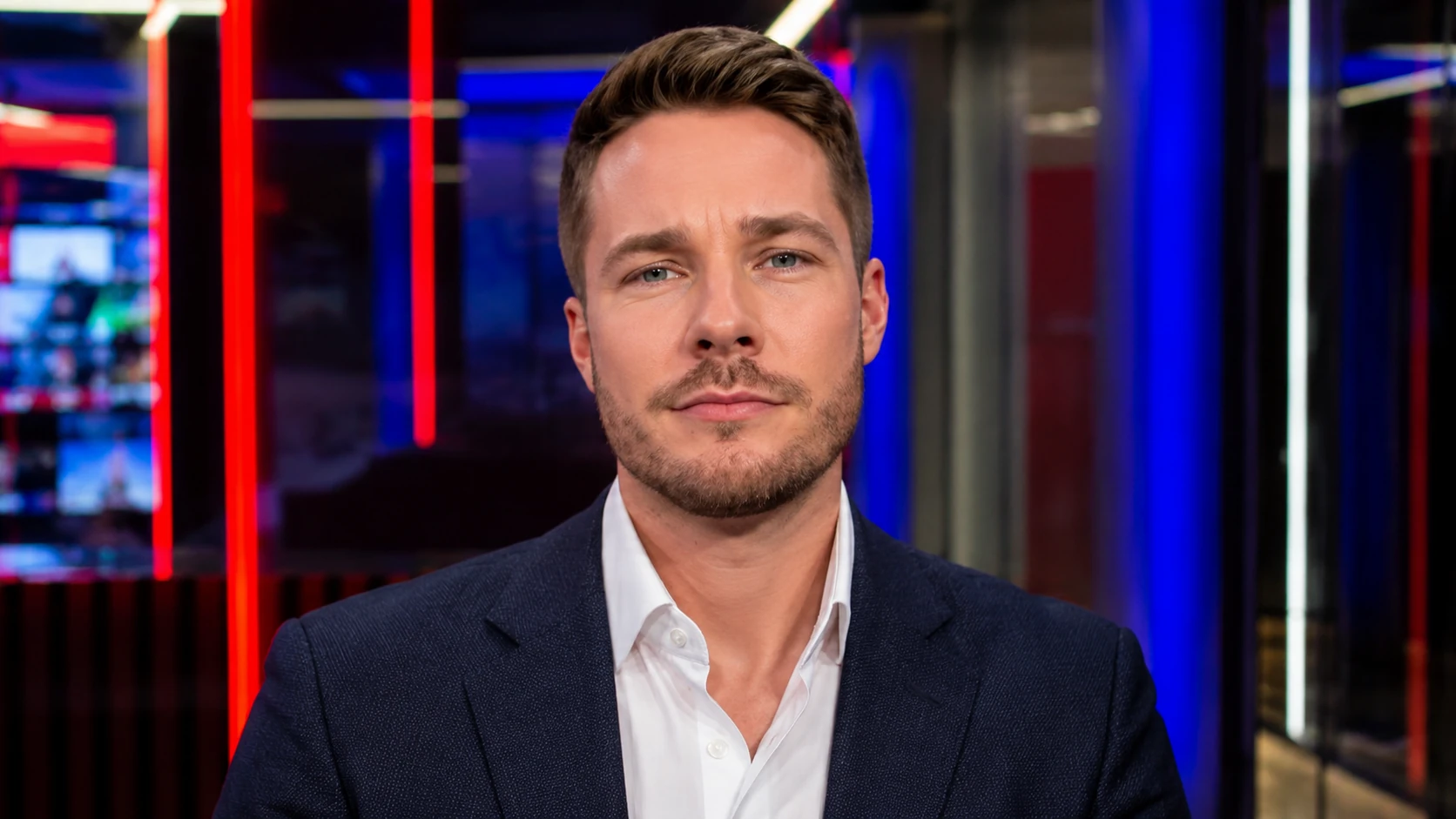
Alex Armstrong has become one of the younger faces associated with GB News, a channel built around argument, opinion, and a direct challenge to Britain’s older broadcast habits. Viewers usually discover him through a sharp studio exchange, a paper review, or his own programme, Alex Armstrong Tonight. What keeps people searching his name is not only his work on screen, but the fact that his public profile is still being assembled in real time.
The phrase “alex armstrong gb news” often comes from readers trying to answer a simple question: who is he, and why is he on television? Armstrong is a presenter, commentator, and writer whose work sits in the world of political discussion, cultural debate, and right-leaning current affairs. He is not the same person as Alexander Armstrong, the entertainer known for Pointless, which is one reason his name can cause confusion online.
Armstrong’s public story is clearer on career than on private life. He has a visible role at GB News, a growing identity as an opinion presenter, and a business connection through the food technology company Sayvr. His family background, relationship status, and personal finances are much less publicly documented, so a responsible biography has to separate what is known from what is guessed.
Who Is Alex Armstrong?
Alex Armstrong is best known as a GB News presenter and commentator. He hosts Alex Armstrong Tonight and appears across the channel’s wider programming, where he discusses politics, immigration, free speech, public services, policing, and cultural issues. His tone is direct, and his broadcast style fits GB News’s audience-facing promise of giving voice to people who feel ignored by traditional media.
His work is not limited to television presenting. Armstrong has also written opinion pieces for GB News, giving readers a clearer sense of his political interests and public point of view. His columns often focus on national identity, Labour politics, immigration policy, integration, and the gap between Westminster decision-making and ordinary public frustration.
That combination of presenting and opinion writing makes him different from a conventional newsreader. Armstrong is not usually positioned as a neutral bulletin anchor who simply introduces stories. He is part of a presenter-led model where the host’s voice, judgment, and attitude are central to the programme.
Alex Armstrong and the GB News Identity
To understand Armstrong’s rise, it helps to understand GB News itself. The channel launched as a challenger to Britain’s established broadcast news culture and built much of its identity around debate, free speech, and distrust of elite consensus. That format gave space to presenters who could argue a case rather than simply introduce a balanced panel.
Armstrong fits that model because he speaks in clear, forceful terms. His television work often presents politics as a test of common sense, public trust, and institutional honesty. That approach attracts viewers who want a stronger editorial voice, but it can also divide audiences who prefer slower, less opinion-led broadcasting.
GB News has always relied heavily on recognizable personalities. Its best-known figures are not anonymous newsroom readers but hosts with clear identities and loyal followings. Armstrong’s movement from contributor and paper reviewer into a named presenter role shows how the channel develops voices that connect with its core audience.
Early Life and Background
Compared with many public broadcasters, Armstrong has shared relatively little verified information about his early life. His hometown, parents, childhood details, and school history are not widely established in reliable public records. That absence has led some online biography pages to speculate, but speculation should not be treated as fact.
What can be said safely is that Armstrong’s public career suggests an early interest in media, politics, business, and communication. His later work shows confidence in live debate, a comfort with public argument, and a strong instinct for framing stories in ways that travel online. Those qualities rarely appear overnight, even if the exact path behind them is not fully public.
There is also a business side to his background. Armstrong is connected with Sayvr, a food technology venture that presents itself as a way to help people make easier food decisions and reduce waste. That link suggests his ambitions have not been limited to broadcasting alone.
Education and Early Ambitions
There is no widely confirmed public account of Armstrong’s full education history. For readers looking for exact schools, university dates, or academic qualifications, the available public record does not yet provide a firm answer. A careful profile should acknowledge that rather than filling the gap with unsupported claims.
His career, though, points to someone comfortable at the crossing point of politics, media, and entrepreneurial work. He speaks the language of television debate, but he also appears connected to the start-up world through Sayvr. That mix is increasingly common among younger media figures who build careers across broadcasting, social platforms, and business projects.
Armstrong’s early ambitions seem to have taken shape around communication and public influence. Whether in a studio, in an opinion column, or through a consumer app, his public work involves persuading people to see choices differently. That is one reason his GB News role feels like part of a larger personal brand rather than a standalone job.
Career Breakthrough at GB News
Armstrong has described his early GB News path as beginning through newspaper discussion on breakfast television. He has written about appearing alongside Eamonn Holmes, who encouraged him to keep returning and helped him grow more confident on air. That kind of segment is a demanding training ground because it requires speed, judgment, and the ability to turn the day’s headlines into live conversation.
Paper reviews have long been a route into British political commentary. They give younger voices a chance to show whether they can speak clearly, challenge others, and react without sounding scripted. Armstrong appears to have used that opening well, moving from guest contributor into a more regular presence on the channel.
His breakthrough was not a single overnight moment. It was a gradual build through repeat appearances, audience recognition, and the channel’s willingness to place him in more visible slots. By the time he had his own named programme, Armstrong had already become familiar to regular GB News viewers.
Working With Eamonn Holmes
Eamonn Holmes is one of the most experienced figures in British breakfast television, and Armstrong has spoken warmly about his influence. Holmes’s decades on screen gave him a status that younger presenters could not easily ignore. For Armstrong, working near Holmes appears to have been both a professional lesson and a confidence boost.
When Holmes suffered a stroke in 2026, Armstrong stepped in during his absence. That moment brought Armstrong wider attention because he was not simply filling a schedule gap. He was temporarily taking a place connected with one of the channel’s most recognizable names.
Armstrong responded publicly with respect and humility. He made clear that Holmes’s role could not simply be copied, and that his task was to support the programme while Holmes recovered. For a presenter often known for political bluntness, the episode showed a more personal side of his public character.
Alex Armstrong Tonight
Alex Armstrong Tonight is the programme most closely associated with his name. It is built around debate, interviews, and Armstrong’s own reading of major political and cultural stories. The show gives him space to speak not just as a host, but as a commentator with a clear editorial position.
The programme’s subject matter reflects the core concerns of GB News. Immigration, national identity, policing, Labour politics, free speech, public disorder, and social change all fit naturally into Armstrong’s broadcast territory. His role is to turn those issues into conversations that feel urgent to the channel’s audience.
The format also suits the clip-driven media environment. Strong openings, heated exchanges, and direct questions can move easily from television to social platforms. Armstrong’s rise makes sense in that setting because modern political presenters are often judged as much by their shareable moments as by full-length broadcasts.
His Political Voice and Public Positioning
Armstrong’s public commentary is generally right-leaning and critical of progressive politics. He has written and spoken about immigration control, integration, speech restrictions, Labour leadership, public safety, and what he sees as failures of governing institutions. His work often suggests that mainstream politics has avoided difficult conversations.
That does not mean every view he expresses fits neatly inside a party label. His public identity is more issue-driven than strictly party-driven. He is most closely associated with themes such as borders, national cohesion, media bias, crime, public frustration, and distrust of elite decision-making.
Supporters see him as clear and unafraid. Critics are more likely to see his style as confrontational or too closely aligned with culture-war broadcasting. Either way, Armstrong’s position is not vague, and that clarity is part of why audiences notice him.
Business Ventures and Sayvr
Outside GB News, Armstrong is connected with Sayvr, a food technology company. Sayvr presents itself as a platform designed to make food decisions easier, reduce waste, save money, and help users think more practically about meals. The company’s public materials name Alex Armstrong as a co-founder.
This business link gives Armstrong a broader public profile than that of a presenter alone. It places him in the world of consumer technology, where branding, problem-solving, and user habits matter. That background may also help explain why he seems comfortable with digital media and direct audience engagement.
The Sayvr connection should not be exaggerated, though. Public information about the company does not provide enough detail to calculate Armstrong’s personal wealth or long-term financial position. It is best understood as a meaningful business interest rather than proof of a specific fortune.
Net Worth and Income Sources
There is no credible public figure for Alex Armstrong’s net worth. Some websites may publish estimates, but those numbers should be treated with caution unless they are tied to reliable filings, salary disclosures, or serious financial reporting. GB News does not publicly list presenter-by-presenter salary details for Armstrong.
His likely income sources are easier to identify in broad terms. He may earn from television presenting, commentary work, writing, public appearances, and business interests linked to Sayvr. The exact value of those streams is not publicly confirmed.
A responsible estimate would avoid pretending precision. Armstrong is a working media figure with a growing television profile and an entrepreneurial connection, but there is no solid basis for attaching a verified net worth number to his name. For now, the honest answer is that his finances remain private.
Age and Public Records
Public company records linked to Sayvr list an Alexander Harry Armstrong with a birth month and year of February 1991. If that record refers to the GB News presenter and Sayvr co-founder, it would make him 35 years old in 2026. This is one of the few age-related details that can be grounded in public documentation.
It is still worth being careful with wording. Companies House records usually provide a month and year of birth, not a full birth date. They also relate to company officers, so the connection should be stated through the Sayvr link rather than treated as a celebrity biography entry on its own.
Readers searching for “Alex Armstrong age” are often trying to place him within the GB News lineup. Compared with many of the channel’s veteran presenters, Armstrong appears to represent a younger generation of political broadcaster. That generational contrast is part of his appeal and part of his media identity.
Family, Marriage and Private Life
Armstrong’s family life is not widely documented in reliable public sources. There is no firm public record confirming a spouse, children, or detailed family background. Because of that, claims about his marriage or close relatives should be handled carefully.
This privacy is not unusual for a broadcaster whose career is still developing. Many political commentators share strong views in public while keeping family details away from media attention. Armstrong appears to fall into that category, at least based on what is currently available.
The lack of information should not be treated as mystery or scandal. It simply means his public identity is professional rather than domestic. For readers, the most reliable portrait of Armstrong comes from his work, writing, business activity, and on-air development.
Public Image and Audience Appeal
Armstrong’s public image is built around directness. He speaks in a way designed to be understood quickly, and he often frames issues as choices between common sense and political failure. That style can feel refreshing to viewers who are tired of cautious broadcast language.
His age also helps shape his image. GB News has several veteran broadcasters, but Armstrong offers a younger voice inside the same ideological space. He can speak to traditional concerns while using the pace and tone of newer media.
The challenge is that directness has limits. A presenter who speaks with certainty must also be careful with accuracy, context, and fairness. As Armstrong becomes more visible, his ability to balance conviction with discipline will matter more.
Controversy, Criticism and GB News Scrutiny
Armstrong’s public profile is tied to a channel that attracts regular criticism and regulatory attention. GB News has faced scrutiny over impartiality, politicians as presenters, and the border between news and opinion. That wider debate affects how every presenter on the channel is judged.
Armstrong himself works in a format where opinion is part of the appeal. That makes his role different from a traditional reporter gathering information from the field. Viewers expect him to react, challenge, and interpret, but critics may question whether that style deepens division.
Not everyone agrees about whether GB News is correcting old media failures or creating new ones. Armstrong’s career sits inside that argument. His future reputation will depend not only on his popularity, but on how well he handles accuracy, tone, and responsibility in a highly watched environment.
Where Alex Armstrong Is Now
As of 2026, Armstrong is an active GB News presenter with a growing on-air profile. His name is attached to Alex Armstrong Tonight, and he continues to appear in political discussion across the channel. His work places him among the newer generation of GB News figures rather than among its inherited legacy names.
He is also connected to Sayvr, giving him a business identity beyond television. That combination of broadcaster and founder may become more important as media figures build careers across several platforms. Armstrong’s public life already shows signs of that modern pattern.
The next phase of his career will likely depend on whether he can keep expanding his audience. GB News gives him a platform, but longevity requires more than visibility. It requires judgment, consistency, and the ability to grow without losing the voice that made viewers notice him.
Frequently Asked Questions
Who is Alex Armstrong on GB News?
Alex Armstrong is a GB News presenter, commentator, and opinion writer. He is best known for hosting Alex Armstrong Tonight and appearing in debate-led programming on politics, culture, immigration, free speech, and public affairs. His role is closer to an opinion presenter than a traditional neutral newsreader.
Is Alex Armstrong the same person as Alexander Armstrong from Pointless?
No, Alex Armstrong of GB News is not the same person as Alexander Armstrong, the actor, comedian, singer, and presenter known for Pointless. The similarity in their names often causes confusion in search results. The GB News figure works in political commentary, while Alexander Armstrong is mainly known for entertainment and music broadcasting.
How old is Alex Armstrong from GB News?
Public company records connected with Sayvr list an Alexander Harry Armstrong born in February 1991. If that record refers to the GB News presenter and Sayvr co-founder, he would be 35 years old in 2026. A full public birth date has not been widely confirmed.
What show does Alex Armstrong present?
He presents Alex Armstrong Tonight on GB News. The programme features debate, interviews, and Armstrong’s take on major political and cultural stories. He has also appeared across other GB News programming, including coverage linked to the channel’s breakfast output.
Is Alex Armstrong married?
There is no widely confirmed public information establishing Alex Armstrong’s marital status. He appears to keep his private life away from detailed media attention. Any claims about a spouse, partner, or children should be treated carefully unless backed by reliable public evidence.
What is Alex Armstrong’s net worth?
There is no credible verified net worth figure for Alex Armstrong. His likely income sources include television presenting, opinion writing, commentary work, and business interests connected with Sayvr. Exact earnings, assets, and private finances have not been publicly confirmed.
What is Sayvr?
Sayvr is a food technology company connected with Alex Armstrong as a co-founder. The company presents itself as a platform designed to help people make better food decisions, save money, reduce waste, and simplify meal planning. It gives Armstrong a business profile outside his work as a GB News presenter.
Conclusion
Alex Armstrong’s biography is still being written in public. He is not yet a long-established national broadcaster with decades of archive behind him, but he has already become a recognizable GB News figure. His rise reflects the kind of presenter modern opinion television rewards: clear, fast, confident, and strongly identified with a worldview.
What makes his story interesting is the mix of media and business. Armstrong is not only building a screen career; he is also tied to a start-up identity through Sayvr. That combination gives him a broader public profile than many viewers may realize.
The most honest portrait of Armstrong is one that keeps firm boundaries. His career, GB News role, political voice, age clues, and business interests can be described with care. His family life, wealth, and private relationships remain largely unconfirmed, and responsible coverage should not pretend otherwise.
For now, Alex Armstrong matters because he represents a newer face of British opinion broadcasting. Whether he becomes a long-term fixture will depend on how he handles greater attention, sharper scrutiny, and the demands that come with turning visibility into credibility.