
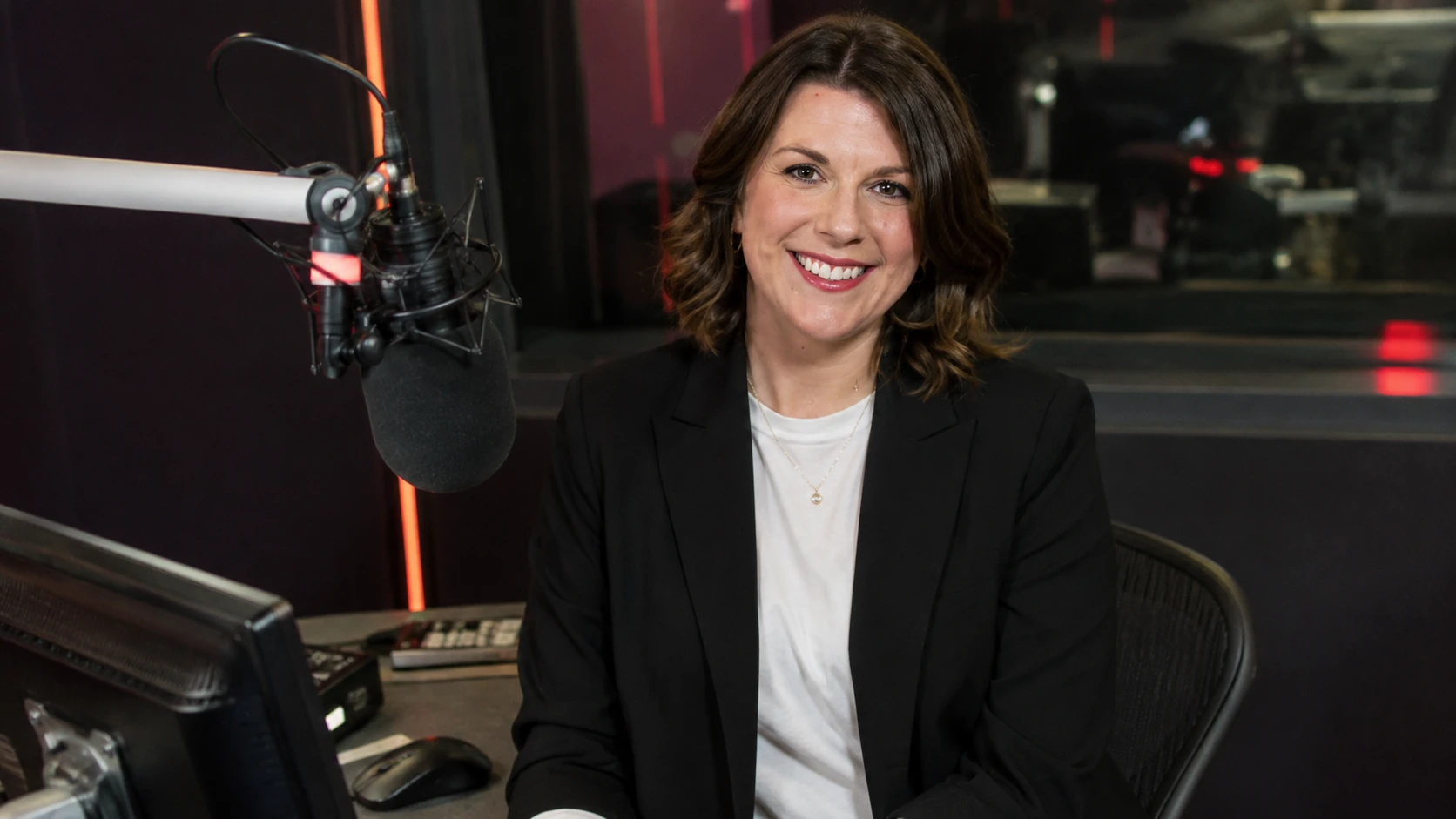
Ellie Brennan built her name in one of radio’s most demanding spaces: the daily morning show, where energy has to sound natural before most listeners have finished their first coffee. To many people, she is the clear, steady voice giving travel updates on BBC Radio 2, helping commuters decide whether to stay on the motorway, avoid a junction, or brace for a delay. But her career did not begin on a national platform. It came through student radio, commercial stations, local breakfast shows, live events, recovery from Long Covid, and the kind of behind-the-microphone work that turns a presenter into part of a listener’s routine.
Brennan’s story is not a celebrity tale built on scandal, spectacle, or sudden fame. It is the biography of a working broadcaster who moved carefully through the ranks, developing the instincts that radio demands: timing, warmth, accuracy, and trust. Her public profile grew as she moved from regional broadcasting into BBC network radio, especially through BBC Radio 5 Live and then BBC Radio 2. For readers searching her name, the most useful answer is also the most honest one: Ellie Brennan is a British radio presenter, travel broadcaster, events host, and voice-over artist whose career reflects both the old discipline of local radio and the newer reality of media work across many platforms.
Early Life and Family Background
Ellie Brennan has kept much of her early private life out of the public record, which is not unusual for a radio presenter whose reputation rests mainly on professional work rather than celebrity exposure. Reliable public information does not confirm a full date of birth, the names of her parents, or detailed family history. That absence should not be filled with guesswork, especially because several people share the name Ellie Brennan online. What can be said with confidence is that Brennan’s professional life has been shaped by British radio, live presenting, and a career path that began well before national listeners came to know her voice.
Her public biography points to a broadcaster who found radio early enough to treat it as a craft rather than a side interest. Student radio and internships formed part of that early route, giving her the kind of practical start that has long mattered in broadcasting. Radio is often learned in small rooms before it is heard by large audiences, and Brennan’s path appears to follow that pattern. Before national shows and BBC travel bulletins, there was the work of getting airtime, learning clocks, building confidence, and understanding how to speak to listeners who may never see your face.
Because Brennan has not made her family life a major part of her public identity, the respectful approach is to keep the focus where the evidence is strongest. There is no verified public record showing that she is married, has children, or has chosen to discuss close family relationships in detail. That privacy does not make her biography incomplete; it simply places a boundary around what should be reported. In Brennan’s case, the better story is the one her career already tells.
Education and First Steps in Radio
Brennan’s early professional route included student radio and an internship at Capital FM in Scotland. That combination says a great deal about how she entered the industry, because student radio often gives future presenters their first taste of live pressure. It also gives them permission to make mistakes before the stakes are higher. An internship at a major commercial brand such as Capital FM would have exposed her to the pace, polish, and structure of professional broadcasting.
After graduating, Brennan moved into presenting work across Bauer stations, including Key 103, Radio City, and Rock FM. Those stations sit within a commercial radio culture that prizes consistency, personality, music knowledge, and the ability to sound relaxed while keeping to strict timing. For a young presenter, the learning curve can be steep because every link has to land quickly. There is little room for self-indulgence when the audience wants music, travel, local information, and a reason to stay tuned.
Her Friday night work across those stations later expanded across Scotland and parts of the North East. That kind of networked presenting teaches a broadcaster how to speak beyond one local patch while still sounding direct and personal. It is a different skill from talking only to one town or city, because the presenter must avoid sounding too vague while also not becoming too narrow. Brennan’s later career would depend on exactly that balance.
Minster FM and the Breakfast Radio Test
Brennan’s first breakfast show came at Minster FM in York, a station rooted in local identity and everyday listener contact. Breakfast radio is not simply another slot on the schedule; it is the daily test of a presenter’s stamina, judgment, and connection with an audience. The hours are early, the pace is relentless, and the tone has to fit people’s homes, cars, kitchens, school runs, and workplaces. A breakfast presenter needs enough energy to lift the morning without sounding artificial.
At Minster FM, Brennan became part of a team that won Gold for Team of the Year at the ARIAs after she joined. That recognition matters because radio awards tend to value more than microphone confidence. They reflect production, audience connection, ideas, teamwork, and the ability to make a show feel alive day after day. For Brennan, the award helped mark her transition from a presenter gaining experience to a broadcaster with a growing professional reputation.
The York period also likely gave her a close understanding of local radio’s special contract with listeners. Local radio presenters are not distant voices; they are often tied to school closures, charity events, weather problems, road disruptions, competitions, and community stories. Listeners expect them to know the area and speak as if they belong there. That expectation can be demanding, but it can also create the strongest foundation a broadcaster gets.
The Viking FM Years
In 2018, Brennan joined Viking FM, serving Yorkshire and Northern Lincolnshire. The station gave her a larger regional platform and placed her in front of an audience that expected a breakfast show to feel lively, familiar, and useful. She co-hosted the Viking FM breakfast show with Alex Duffy, and the programme became an important part of her public career. It also gave her the kind of daily visibility that turns a radio presenter from a name on a schedule into a familiar presence.
Brennan’s work at Viking FM included interviews with major artists such as Sean Paul, Robbie Williams, and George Ezra. Celebrity interviews on local commercial radio are often short, tightly timed, and designed to fit around music, news, and listener features. They require preparation, but also speed and ease. A presenter has to make the guest sound comfortable while also serving an audience that may be listening in fragments on the way to work.
The Viking years also sharpened Brennan’s identity as a broadcaster who could move between warmth and information. A breakfast show needs both, especially in a region where travel conditions, local events, and listener messages matter. She was not just introducing songs or reading lines from a script. She was helping create a rhythm that listeners could return to every morning.
Building a Public Voice
Brennan’s career has not been limited to radio presenting in the narrow sense. She has also worked as an events host, voice-over artist, podcast presenter, and live or virtual event presenter. That wider portfolio reflects the modern broadcasting career, where a presenter often needs to move between studio, stage, camera, corporate work, and digital audio. The common thread is the ability to hold attention and communicate clearly.
Event hosting is a natural extension of radio, but it brings different pressures. On stage, a presenter has to read a room, handle delays, respond to technical problems, and keep the tone right for the audience in front of them. Radio teaches timing; live events teach recovery. Brennan’s public work across both areas suggests a presenter who has built confidence in formats where things can change quickly.
Voice-over work draws on a related but quieter skill. The voice has to carry meaning without the support of visible expression, and it must fit the needs of a brand, programme, or production. For broadcasters like Brennan, that work can become a steady part of a media career alongside on-air roles. It also reinforces the fact that her professional asset is not simply recognition, but control, clarity, and tone.
Long Covid and a Career Forced to Adapt
One of the most personally significant public chapters in Brennan’s life has been her experience with Long Covid. She has written about the condition and its effect on her work, describing the need to pace herself, set boundaries, and plan carefully around fatigue. Her account stands out because it avoids the easy language of a perfect comeback. Instead, it shows recovery as a daily process of adjustment.
Long Covid affected many people in ways that were difficult for others to see or understand, especially when symptoms fluctuated. For a broadcaster, that uncertainty can be especially hard because live work depends on energy, timing, and reliability. Brennan’s writing has described the physical cost of pushing too hard and the importance of recognizing limits before a setback arrives. That kind of public honesty gave listeners and readers a more realistic view of what living and working with Long Covid can involve.
During her recovery, Viking FM supported her by allowing her to broadcast from home. That detail matters because it shows both workplace flexibility and the uneven reality of illness. Brennan herself acknowledged that not everyone with Long Covid had the same support or the kind of job that could be adapted remotely. Her experience therefore became not only a personal health story, but also a reminder of how much recovery can depend on working conditions.
Moving Into BBC Radio
Brennan’s move into BBC work marked the next major stage of her career. She presented travel news on BBC Radio 5 Live’s Breakfast and Drive programmes, placing her in a faster, more news-driven environment than commercial music radio. BBC Radio 5 Live is built around live information, sport, interviews, breaking news, and audience reaction. In that setting, travel updates have to be sharp, accurate, and calm.
The skill of travel broadcasting is often underestimated. A travel presenter has to take changing information from roads, rail networks, airports, police reports, and transport agencies, then decide what listeners most need to know. The language has to be concise, the order has to make sense, and the tone has to be steady even when delays are serious. A good bulletin can save a listener time; a poor one can confuse them at the exact moment they need clarity.
For Brennan, BBC Radio 5 Live offered a bridge between regional breakfast personality and national service broadcasting. It required a sharper information style, but it still drew on the same human skills she had developed in commercial radio. She had to sound authoritative without becoming cold. That balance would become central to her next step at BBC Radio 2.
Joining BBC Radio 2
Brennan joined BBC Radio 2’s morning team in January 2025, becoming traffic and travel reporter for the Scott Mills Breakfast Show. The launch followed Zoe Ball’s departure from the Radio 2 breakfast programme and gave Mills one of the most closely watched jobs in British radio. Brennan’s role placed her alongside Mills and newsreader Tina Daheley in a programme heard by a large national audience. It was a major step in both visibility and responsibility.
Radio 2’s breakfast show carries a particular weight because it is not just a slot for music and chat. For many listeners, it is part of the daily structure of life. The presenter, newsreader, and travel voice become familiar companions during commutes, school runs, and work routines. Brennan’s travel role may be brief in airtime compared with the host’s, but its importance lies in trust.
Her appointment also connected her to Vernon Kay’s mid-morning team, expanding her presence beyond a single show. That move suggested confidence in her ability to fit the Radio 2 tone: warm, direct, useful, and relaxed without being careless. Radio 2 has a broad audience, and the station’s presenters need to feel accessible across generations. Brennan’s regional and BBC background made her a natural fit for that kind of work.
The Role of a Travel Presenter
Travel reporting can sound like a support role, but on a live national breakfast show it is a demanding discipline. The presenter has to choose what matters most from a stream of updates and deliver it in language that is useful immediately. There is no benefit in sounding dramatic if the information becomes unclear. There is also no room to sound bored when listeners may be dealing with serious delays or safety concerns.
Brennan’s background helps explain why she works well in that role. Commercial breakfast radio gave her a sense of pace and audience connection. BBC Radio 5 Live gave her the discipline of fast, practical information. Radio 2 asks her to combine both, creating updates that feel human but never loose.
The best travel presenters develop a quiet authority. They do not need to dominate the show, but listeners learn to trust them. They become part of the daily sound, and their absence can be noticed even if their presence is brief. Brennan’s growing national recognition comes from that kind of repeated usefulness.
Public Image and Professional Reputation
Brennan’s public image is built around approachability rather than celebrity performance. She comes across as a broadcaster who values preparation, opportunity, and connection with listeners. Her advice to journalism and media students has emphasized saying yes to opportunities, building experience, meeting people, and staying open to unexpected paths. That advice fits closely with her own career, which moved through several kinds of radio before reaching Radio 2.
There is also a steadiness to her reputation. She has not built her name through controversy or oversharing, and there is little reliable public material suggesting a public scandal. Instead, her profile has grown through work, health candor, and professional visibility. In an industry often drawn to loud personalities, that steadier route can feel quietly distinctive.
Her Long Covid writing also adds depth to how people understand her. It shows vulnerability without turning her private life into spectacle. It also gives readers a clearer sense of the work required to maintain a demanding career while managing health limits. That honesty has become part of her public identity, but it has not overwhelmed the professional story.
Relationships, Marriage, and Private Life
Publicly reliable information about Brennan’s romantic life is limited. There is no well-established public record confirming a spouse, partner, or children, and she has not made those details a central part of her public profile. For that reason, any claim about her marriage, family life, or children should be treated carefully unless it comes from Brennan herself or a reliable outlet. A biography should not confuse curiosity with evidence.
This privacy is consistent with many broadcasters who are known primarily by voice rather than by a celebrity lifestyle. Radio presenters can become deeply familiar to listeners while still protecting large parts of their personal lives. The intimacy of radio can create the feeling that audiences know the presenter fully, but that feeling has limits. Brennan’s case is a good reminder that public warmth does not cancel a person’s right to privacy.
What she has chosen to share publicly tends to focus on work, recovery, and professional advice. Those areas provide enough material to understand her values without pressing into private territory. She has spoken about opportunity, resilience, and the need to adapt when health changes what is possible. Those themes say more about her public life than unverified personal details would.
Money, Income Sources, and Net Worth
There is no credible, verified public net worth figure for Ellie Brennan. Some online biography pages may publish estimates for media figures, but such numbers are often unsourced and should not be treated as fact. Brennan’s income is more responsibly understood through her known work rather than a guessed total. Her likely income sources include BBC presenting work, previous commercial radio roles, event hosting, voice-over work, podcasts, and corporate presenting.
Radio pay can vary widely depending on station, market, contract type, schedule, and whether the presenter is staff, freelance, or working across several projects. National BBC work generally carries more visibility than regional commercial radio, but public assumptions about presenter earnings are often unreliable. Travel reporters and supporting presenters are not automatically paid at the level of headline hosts. Without contract details, any exact figure would be speculation.
The more useful financial picture is that Brennan has built a diversified presenting career. She is not tied only to one form of broadcasting. By working across radio, events, voice-over, and related media, she has created the kind of mixed income base common among modern presenters. That flexibility can be important in an industry where schedules change and permanent roles are less certain than outsiders may think.
Awards, Recognition, and Industry Standing
Brennan’s career includes association with award-recognized radio work, including the ARIA-winning team at Minster FM and the ARIA-nominated Viking FM breakfast show. These markers matter because they show that her work developed inside respected professional environments. Radio awards are not just decorative; they often recognize the combined strength of presenting, production, audience service, and creativity. Brennan’s presence in those spaces reflects a career built through serious radio practice.
Her move to BBC Radio 2 is itself a sign of industry trust. National breakfast radio is not a training ground; it is a place where broadcasters are expected to arrive ready. Travel reporting on that scale demands accuracy and confidence, especially because mistakes can affect listeners’ decisions. Being selected for that role says something about how Brennan is viewed professionally.
Her standing also comes from her ability to speak to younger media workers. At journalism and media events, she has framed her career in terms of openness, teamwork, and taking chances. That kind of advice carries weight because it is not abstract. It comes from someone who has moved through the less glamorous stages of the industry and understands that progress often arrives through small opportunities taken seriously.
Where Ellie Brennan Is Now
Ellie Brennan is currently best known for her BBC Radio 2 work, especially traffic and travel updates connected to the station’s morning output. Her national profile grew with Scott Mills’s Breakfast Show, where she became part of a refreshed on-air team. She also continues to be associated with presenting work beyond radio, including events, voice-over, podcasts, and corporate media. That range keeps her career wider than one job title.
Her present position reflects the accumulation of earlier experience rather than a sudden reinvention. The student radio start, the Bauer stations, Minster FM, Viking FM, BBC 5 Live, and Radio 2 each added a layer to her professional identity. By the time she reached Radio 2, she had already learned how to be local, regional, networked, live, practical, and personal. That is a rare combination, and it explains much of her appeal.
The next phase of Brennan’s career could move in several directions. She may remain a trusted travel voice, expand into more presenting, or continue building a varied media portfolio around hosting and voice work. What seems clear is that her career is not defined by one narrow role. It is defined by adaptability, which may be the most valuable quality a broadcaster can have now.
Frequently Asked Questions
Who is Ellie Brennan?
Ellie Brennan is a British radio presenter, travel broadcaster, events host, and voice-over artist. She is best known nationally for her work on BBC Radio 2, especially as a traffic and travel presenter on the station’s morning output. Before that, she worked on BBC Radio 5 Live and built her career in commercial and regional radio.
Her background includes presenting work at stations such as Minster FM and Viking FM. She also worked across Bauer stations early in her career, including Key 103, Radio City, and Rock FM. Her career shows a steady move from student and commercial radio into BBC network broadcasting.
What is Ellie Brennan famous for?
Ellie Brennan is best known for her radio presenting work, especially travel news on BBC Radio 2 and BBC Radio 5 Live. Many listeners know her voice from morning travel updates, where she gives practical information about road and transport conditions. She also gained recognition as part of the Viking FM breakfast show.
Her fame is not based on celebrity gossip or reality television. It comes from regular broadcasting work and her role in daily listener routines. That kind of recognition can be quieter, but it is often more durable because audiences hear the presenter repeatedly over time.
Did Ellie Brennan work at Viking FM?
Yes, Ellie Brennan joined Viking FM in 2018 and became part of the station’s breakfast output. She co-hosted the breakfast show with Alex Duffy and became associated with the station’s strong regional presence in Yorkshire and Northern Lincolnshire. That role was one of the major steps in her career before BBC network radio.
The Viking FM period helped establish her as a warm and capable breakfast presenter. It also gave her experience with celebrity interviews, listener interaction, local travel, and the pace of daily morning broadcasting. Those skills later carried into her BBC work.
Has Ellie Brennan spoken about Long Covid?
Yes, Ellie Brennan has publicly discussed her experience with Long Covid. She has written about pacing, fatigue, work boundaries, and the adjustments she had to make while recovering. Her account has been valuable because it presents recovery as a practical and uneven process rather than a simple comeback story.
Her experience also showed the importance of workplace support. During part of her recovery, she was able to broadcast from home with support from Viking FM. She has also recognized that many people with Long Covid did not have the same flexibility or support in their jobs.
Is Ellie Brennan married?
There is no reliable public information confirming that Ellie Brennan is married. She has not made her romantic life, spouse, partner, or children a central part of her public profile. Because those details are private and not well established, they should not be stated as fact.
Radio presenters often become familiar to listeners while keeping their personal lives separate from their professional identities. Brennan appears to follow that pattern. Her public material focuses mainly on her broadcasting career, health experience, and professional work.
What is Ellie Brennan’s net worth?
There is no verified public net worth figure for Ellie Brennan. Any exact number found on low-quality biography sites should be treated as an estimate at best and possibly unreliable. Her known income sources are likely connected to radio presenting, BBC work, event hosting, voice-over work, podcasts, and corporate presenting.
Because contract details are private, it is not possible to calculate her earnings accurately. The safest statement is that Brennan has built a professional media career across several income streams. That kind of career can be financially stable, but exact figures would be speculation.
What is Ellie Brennan doing now?
Ellie Brennan is currently best known for her BBC Radio 2 work, especially traffic and travel presenting. Her role places her in one of the most visible daily radio environments in the UK. She is also associated with wider presenting work, including events, voice-over, podcasts, and corporate media.
Her current profile reflects years of gradual career building. She moved from student and commercial radio into regional breakfast broadcasting, then into BBC Radio 5 Live and BBC Radio 2. That path has made her a recognizable national radio voice with a broad presenting skill set.
Conclusion
Ellie Brennan’s biography is not a story of overnight fame. It is the story of a broadcaster who earned trust through repetition, skill, and the ability to sound clear when listeners needed useful information quickly. Her career shows that radio still rewards people who can do the fundamentals well. Warmth, timing, accuracy, and stamina remain hard to fake.
Her experience with Long Covid adds another layer to that story. It shows a professional life interrupted by illness, then reshaped through pacing, support, and adaptation. That chapter makes her public profile more human without turning it into melodrama. It also gives her career a kind of quiet resilience.
Today, Brennan stands as part of a national radio tradition that depends on voices listeners invite into their mornings. She may not be a headline-seeking celebrity, but that is part of what makes her interesting. Her value lies in the work itself: being useful, familiar, and trusted. For a broadcaster, that is no small achievement.